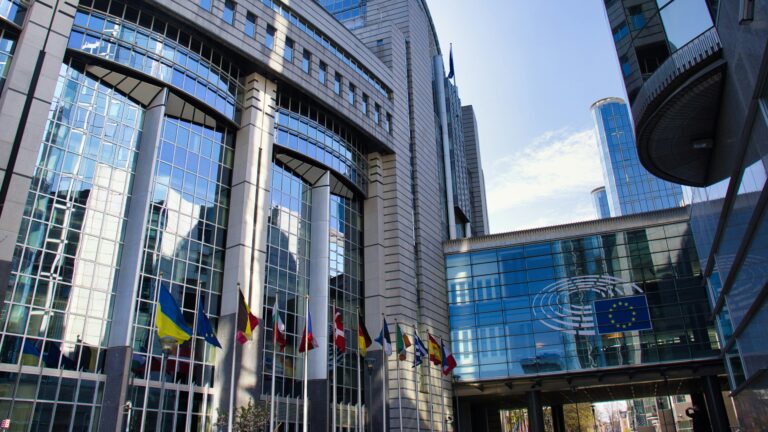
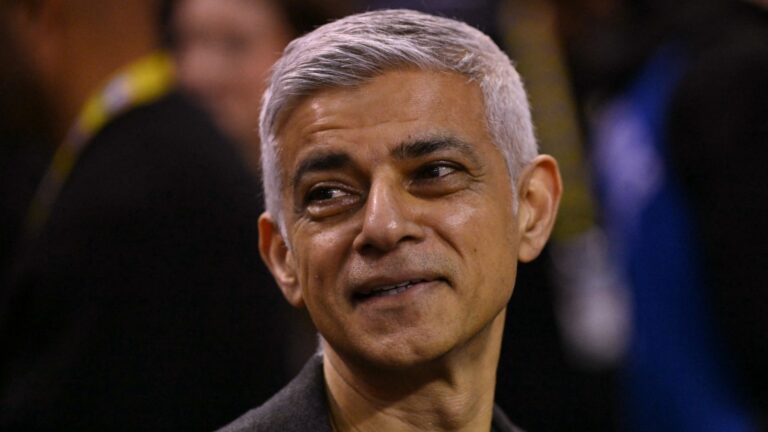
Thierry Breton in 2024
By © European Union, 2025, CC BY 4.0, https://commons.wikimedia.org/w/index.php?curid=151271375
The European Union’s Digital Services Act (DSA) has crossed the Atlantic and become a subject of debate in the United States, with President Donald Trump calling it a “censorship” tool against American companies.
The House Judiciary Committee, chaired by Republicans, has announced that it will hold a hearing next Wednesday, September 3rd, entitled ‘The Foreign Censorship Threat.’ Among those invited to testify is Thierry Breton, former European Commissioner in charge of the digital agenda and one of the architects of the EU’s regulatory framework.
Although Breton has not yet confirmed his attendance, his name appears on the list of summoned witnesses. The hearing, however, already has one confirmed guest: Reform UK leader Nigel Farage, a key figure in the Brexit movement and a reference point for the hardline wing of Euroscepticism. His participation guarantees a critical tone against Brussels and any European attempt to extend its regulatory model beyond its borders.
Republicans aim to highlight what they consider an effort to export European censorship to the United States. In a preliminary report released in July, the committee accused the European Commission of forcing major digital platforms to modify their content moderation policies on a global scale. According to this document, the DSA not only restricts freedom of expression in Europe but also ends up shaping that of American users by imposing European standards.
🚨 HEARING ADVISORY:
— House Judiciary GOP 🇺🇸🇺🇸🇺🇸 (@JudiciaryGOP) August 27, 2025
“Europe's Threat to American Speech and Innovation”
Confirmed witness: @Nigel_Farage
Invited witness: @ThierryBreton
September 3, 2025. 10:00 a.m.
More to come… pic.twitter.com/KWYnhadBhz
The report further warns that Brussels’ regulation has been used to silence legitimate political speech—including satire or slogans common in conservative circles—which have been categorized as ‘hate speech’ in Commission-led workshops. The most serious accusation is that the European framework is exerting disproportionate pressure on platforms under the threat of multi-million-euro fines, which in practice translates into restrictive filters that even affect political debate in the U.S.
Beyond the American controversy, the debate over the DSA remains alive within the Union itself. The regulation, in force since 2023, was presented as an instrument to guarantee a “safer and more transparent” internet by requiring big tech to remove illegal content, combat disinformation, and provide greater algorithmic transparency. However, several member states and political groups have questioned its scope and consequences.
In the European Parliament, criticism is split between those who accuse Brussels of imposing a “paternalistic and censorious” model and those who argue that, in practice, tech giants continue to find loopholes to evade responsibility. Countries such as Poland and the Czech Republic have expressed reluctance to apply the DSA strictly, while France and Germany have called for its reinforcement.
Breton himself, now under Washington’s scrutiny, has insisted that the DSA “is not a censorship law, but a law of digital sovereignty.” Nevertheless, the invitation to testify on Capitol Hill confirms that Europe’s digital rules have become a battlefield in global politics, challenged both by segments of the American right and by critical voices within the Union.