Ursula von der Leyen
Ludovic MARIN / AFP
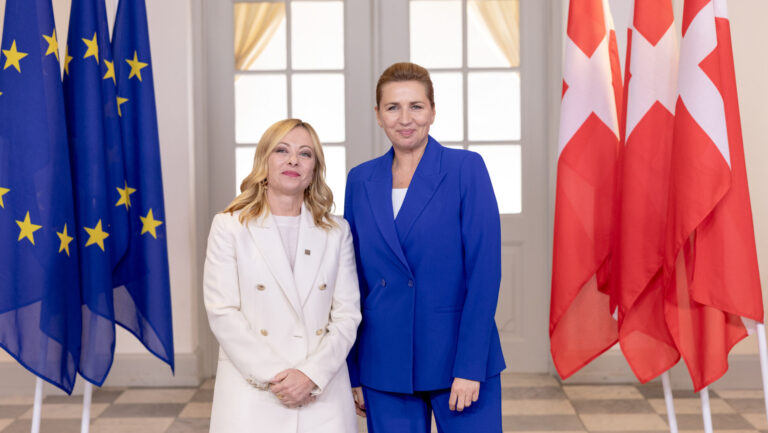
Ursula von der Leyen welcomed new EU measures to speed up deportations this week, presenting them as proof that Brussels is finally getting tougher on illegal immigration. Yet the measures are intended to deal with a problem created in large part by immigration policies that her own European People’s Party (EPP) spent years supporting.
On Wednesday, the European Parliament approved legislation allowing member states to expand detention powers, accelerate deportations and establish so-called “return hubs” in non-EU countries for migrants ordered to leave the bloc. The measures passed by 418 votes to 218 and were hailed by von der Leyen as a major step towards a more effective migration policy.
“The Return Regulation will provide the necessary tools to make returns more efficient, with faster and more effective procedures,” the Commission president wrote ahead of the vote.
The celebration marks a remarkable shift in Brussels.
Barely two years ago, the European Union was focused on implementing the Pact on Migration and Asylum. At the time, the debate centred on sharing responsibility between member states, speeding up asylum procedures, and creating schemes to redistribute migrants across the EU.
The focus was not on deportations, detention centres or return hubs. Instead, the priority was finding ways to process, accommodate, and redistribute migrants within the Union. Countries that rejected that approach, such as Hungary, faced financial penalties and sustained political pressure from Brussels.
The EPP was one of the main political forces behind those policies.
Together with socialists, liberals, and greens, the centre-right party helped negotiate and approve the Migration Pact while defending the need for a common European approach. For years, it criticised those who called for tougher border controls or a substantial reduction in migration.
Today, however, the political climate has changed dramatically.
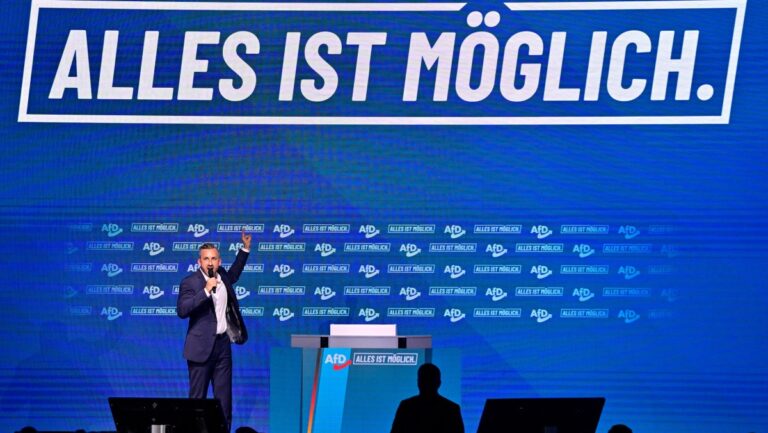
Immigration has become one of the biggest electoral issues across Europe. Patriotic parties have made migration a central theme of their campaigns and have gained ground in countries including Italy, Austria, France, the Netherlands, Belgium, and Germany.
That shift is now beginning to reshape policy in Brussels.
Proposals to speed up deportations, expand the list of safe countries, strengthen external borders, and strike more return agreements with third countries are becoming increasingly common. Measures that would have encountered strong resistance inside the European institutions only a few years ago are now being presented as necessary reforms.
The EPP appears to have recognised which way the political wind is blowing.
Rather than defending the immigration policies it spent years supporting, the party is increasingly presenting itself as the force that can fix the problems those policies helped create. The difficulty is that many of the measures now being reformed were introduced with the active support of the same political forces that are demanding change.
The contradiction is particularly visible in Spain.
Esto de @NunezFeijoo sobre la inmigración hay que escucharlo.
— Partido Popular Europeo (@ppeuropeoo) June 17, 2026
Seguiremos trabajando desde el Parlamento Europeo para asegurar una inmigración legal, ordenada y vinculada a un empleo. #FeijóoEH pic.twitter.com/o1P9lBlJkF
The Spanish People’s Party has gradually toughened its rhetoric on immigration and is seeking to occupy political ground associated with stronger borders, deportations and stricter integration requirements. Yet for years, it supported many of the migration policies promoted from Brussels and strongly criticised those who challenged that approach.
This evolution reflects a broader trend across Europe’s centre-right. As public concern over immigration continues to grow, many conservative leaders are attempting to distance themselves from policies they once championed.
What is happening now is the breakdown of the approach to migration that dominated Brussels for much of the past decade. The EPP increasingly appears determined to move away from a position it spent years defending before the political cost of doing so becomes even greater.
Whether voters will remember who helped create the current situation remains another question entirely.