“I hoped it was not an Arab Muslim but a white Christian.”
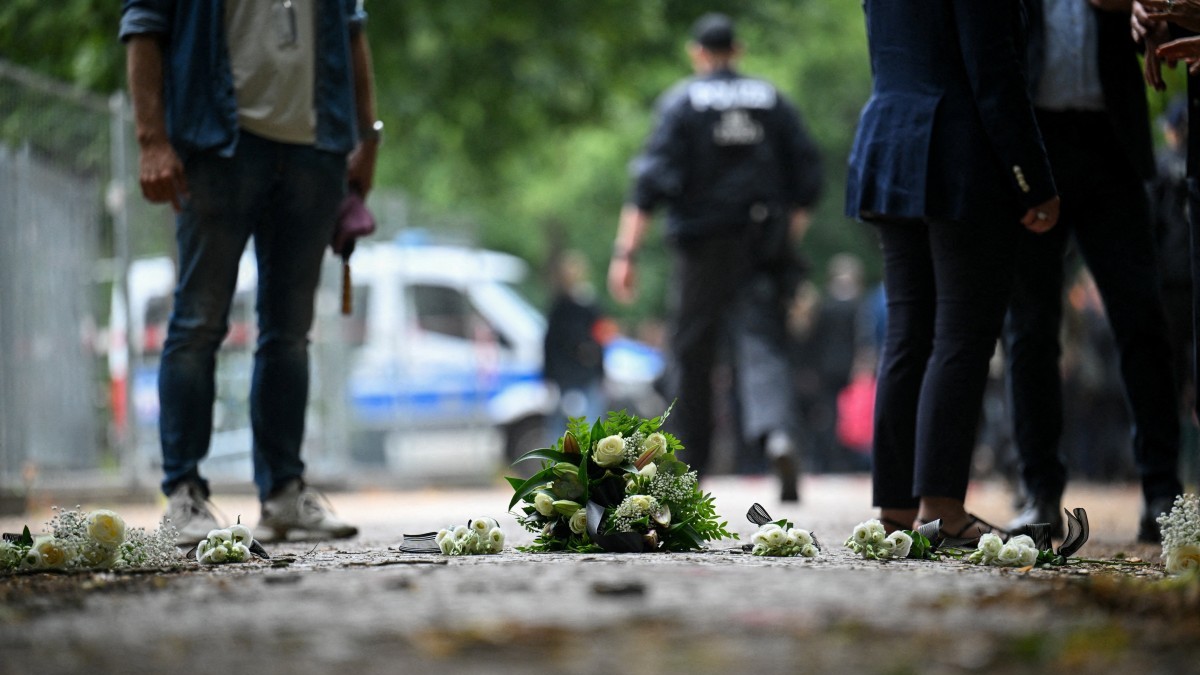
The remark was made during a vigil held in Berlin for the victims of the attack on the Christopher Street Day (CSD) parade on Saturday. The woman who spoke revealed something more telling than a mere emotional reaction: a desire for the terrorist to fit a politically convenient frame.
She was not hoping that the attacker did not exist. She was hoping he was someone else.
The attack took place on July 25th in Berlin’s Tiergarten park. A man drove into the crowd, and then attacked people with a bladed weapon. One woman was killed and another 29 people were injured.
The suspect was later identified as Abdul B., a 21-year-old German of Lebanese origin known for his Islamist connections. German authorities classified the incident as Islamist terrorism. The attacker was shot dead by police the following day.
The facts forced part of the Left to confront its own reflection. A white Christian attacker would have allowed the assault to be presented as a direct consequence of supremacism, the far Right, or Western intolerance. A radicalised Islamist, by contrast, forces an acknowledgement that there are religious and political currents incompatible with the rights the LGBT movement claims to defend.
The CSD organisers, predictably, called for the attack not to be politically “instrumentalised” and insisted that no community should be placed under general suspicion. The principle is reasonable: no citizen should be held responsible for another person’s actions because of their origin or religion. The problem arises when caution is used to prevent any discussion of the terrorist’s specific ideology.
The attack must not be politicised, they say—except to decide in advance which interpretation is forbidden.
The episode reinforces a familiar pattern. When an attacker happens to belong to the far Right (a much less common occurrence in Germany than violence committed by Islamists or left-wing extremists), the Left demands an examination of the political climate, “hateful” public rhetoric and speaks of collective responsibility. When the perpetrator is an Islamist, the debate shifts towards Islamophobia, social exclusion, or the danger that the Right might exploit the facts. Sometimes, a veil of silence is simply drawn over the incident in the hope that it will be forgotten.
The identity of the perpetrator ends up mattering the most, lest it further shatters the diversity myth.
Those attacked in Berlin were not victims of an abstraction. They were attacked by a radicalised individual whose ideology regarded violence as legitimate. Acknowledging that does not criminalise all Muslims. Denying it is a disservice to all Germans.