Pope Leo XIV holds a baby in his arms in the popemobile as he leaves St. Peter’s Square at the Vatican after the Jubilee Mass for the missionary world and migrants, on October 5, 2025.
Andreas Solaro / AFP
On September 30th, Pope Prevost, upon leaving Castel Gandolfo, took a moment to speak with journalists who had gathered to ask him a few questions. An American journalist asked for his opinion on Cardinal Blase Cupich’s recent decision to give the Rerum Novarum Award for lifetime achievement to Democrat U.S. Senator Dick Durbin—a self-declared Catholic known for having supported pro-choice policies for decades. For this reason, since 2004 he has been barred from receiving Communion in the Diocese of Springfield, Illinois.
Cupich justified the award by citing Durbin’s contributions in other areas, such as immigration and aid to the poor, arguing that Catholic doctrine “cannot be reduced to a single issue—not even abortion”. But are we certain that Durbin’s policies in those other areas truly align with Catholic social teaching?
To be fair, the decision drew strong criticism from other American Catholic bishops as well, including Archbishop Cordileone of San Francisco and Bishop Conley of Lincoln, both of whom publicly expressed shock and indignation.
It’s worth noting that Cupich is a prominent figure within the progressive wing of the U.S. episcopate, which has historically been dominated by conservative or at most moderate voices. His appointment to Chicago by Pope Francis marked the beginning of a deliberate strategy: to weaken the conservative axis and reorient the American episcopate toward a more pastoral and socially engaged vision.
The theology of the people, to which Pope Francis was deeply committed, led him to view with suspicion ecclesial structures that were overly hierarchical or reliant on forms of funding independent of the state—traits that characterize American Catholicism. Within this framework, Cupich became the emblem of a new paradigm: less doctrinal, more inclusive, more state-dependent, and more attentive to the “peripheries” and to the “historical processes” that emerge from below.
Prompted by the question, Pope Leo responded after an initial moment of visible discomfort:
I’m not terribly familiar with this particular case. I think that it’s very important to look at the overall work that a senator has done during his 40 years of service in the United States Senate. I understand the difficulty and the tensions, but I think—as I myself have spoken in the past—it’s important to look at many issues that are related to what is the teaching of the Church. Someone who says: I’m against abortion but I’m in favor of the death penalty, is not really pro-life. So, someone who says: I’m against abortion but in agreement with the inhuman treatment of immigrants, I don’t know if that’s pro-life. So they’re very complex issues. I don’t know if anyone has all the truth on them.
The response understandably provoked considerable disappointment—even indignation—within the Catholic world. First, because although the pope stated he was not familiar with the details of the case, he nonetheless repeated, more or less verbatim, the same words used by Cupich when asked to justify his decision to honor Durbin. That gives one pause.
Secondly, because the Pope uttered a genuine sophism—one that, moreover, contradicts two thousand years of Catholic doctrine. Granted, he spoke as a private theologian (interviews do not fall within the scope of the papal Magisterium), but it remains a contradiction nonetheless. Frankly, such a statement might be expected from the average man at a bar, not from the Pontiff. The pope ought to confirm his brothers in the faith, not confuse them with pseudo-truths that betray centuries of Catholic teaching.
Abortion and capital punishment are not comparable, regardless of one’s opinions on either. Abortion extinguishes an innocent life, without any reference to moral culpability. Capital punishment, by contrast, acts upon the life of someone deemed guilty, as an extreme measure of public justice. To conflate the two is to ignore the distinction not only between the innocent and the guilty, but also between private life and public responsibility.
Pope Leo’s statement, however, should not surprise: he is a spokesperson for an abolitionist current which, at least in Europe, holds the majority among both the lower and upper clergy. What we should rather ask is: why does the Pope so openly contradict two thousand years of Catholic doctrine?
At the root of this relatively recent shift in Catholic authority toward abolitionism—and toward the new idea, anomalous within theological tradition, that human dignity is ‘infinite’—lies not only a progressive drift with theological-Masonic undertones, but also geopolitical considerations.
The problem is also evident in so-called ecumenism: an interreligious dialogue which, within the Vatican, has become an obsessive focus and has morphed into the notion that all religions are equally valid paths to God. What drives this approach is not so much a love of truth as a pursuit of social peace—the idea that only imposed religious pluralism can guarantee harmony. This logic, too, contradicts centuries of Christian teaching, which holds that true social peace can arise only from the establishment of Christ’s social kingship.
It would be naïve, however, to think that these shifts are purely theological.
Let us not forget that the Vatican is situated at the heart of Europe, and its relations with the European Union are far from marginal: there is a permanent diplomatic mission to the EU, with ongoing dialogue on migration, bioethics, the environment, and human rights.
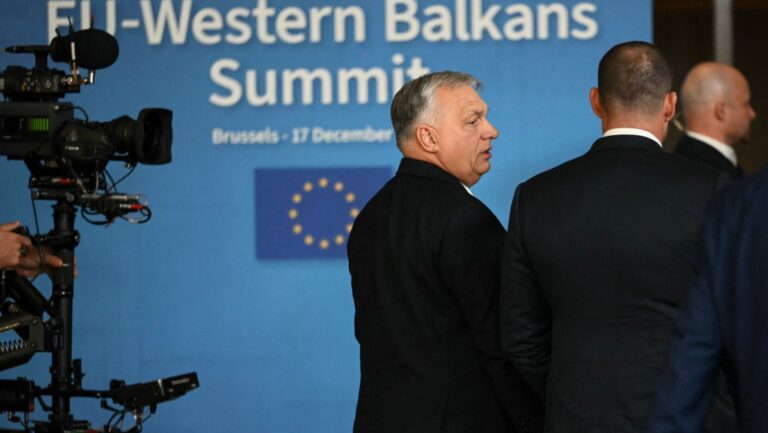
Brussels, for its part, has made the abolition of the death penalty a core identity marker: no State may join the Union without abolishing it or at least suspending its application—as evidenced by negotiations with Serbia and Turkey. This principle is enshrined in the European Convention on Human Rights (1983) and in the Charter of Fundamental Rights of the European Union (2009).
In this context, it is not difficult to understand how the Holy See, though not formally bound, is subject to constant cultural and diplomatic pressure. To continue affirming the traditional teaching—namely, that capital punishment, in limited cases, accords with natural law, as stated in the Catechism of the Council of Trent—would mean entering into direct conflict with the EU’s prevailing legal and moral paradigm.
The abolitionist turn taken by Pope Francis and Pope Leo XIV reflects not only theological motivations, but also the Vatican’s strategic positioning within a European framework that regards capital punishment as barbaric. In such a climate, resistance risks diplomatic isolation. Let us not forget the weight carried in the Vatican by the Secretariat of State—a force which rivals that of the Pope himself.
Here, then, is the real point: contemporary Vatican abolitionism does not arise from the Gospel or from Catholic Tradition, but from a blend of progressive theology and European political pressure. The result is a Church that, instead of being a teacher, ends up echoing the agendas of major supranational political institutions.
Pope Leo XIV is perceived as enigmatic because both progressives and conservatives project opposing expectations onto him, following twelve years of ecclesial governance marked by authoritarianism and divisive strategies. Yet Leo XIV is neither a revolutionary nor a restorationist: he was elected to preserve the Church’s cohesion amid latent tensions and schisms.
While he sincerely admires Pope Francis’s views, Leo XIV has rejected his method, deeming it too impulsive and authoritarian. His own style is phlegmatic, cautious, and delegative; he entrusts many decisions to the Secretariat of State (see the recent Chinese case) and pursues a strategy of balance between opposing forces, as evidenced by recent appointments to the Dicastery for Bishops.
In light of this broader picture, it is understandable that Prevost will never seek to oppose the abolitionist and politically compliant stance of the contemporary Church.