Hungary and the United States are holding a summit in Washington on November 7th, one that promises to redefine relations between the two countries and, indirectly, the balance within Europe.
Hungarian Prime Minister Viktor Orbán arrives with a clear agenda: to secure his country’s energy supply, defend the right to maintain stable trade relations with Russia, and strengthen ties with Donald Trump’s administration.
The meeting is not an isolated gesture. It marks the return of political realism on a continent that has spent nearly three years trapped in its own labyrinth of sanctions. While Brussels celebrates “European unity” against Moscow, European citizens are paying the price of a strategy that has driven up energy costs, weakened industry, and fractured consensus within the bloc.
Since 2022, the European Union has approved 19 packages of sanctions against Russia, imposing thousands of restrictions on companies, banks, and individuals. Although the stated goal was to cut the Kremlin’s revenues fueling its war machine, the most visible impact has been internal: energy prices have soared, industries have lost competitiveness, and the cost of living has risen sharply across much of the continent.
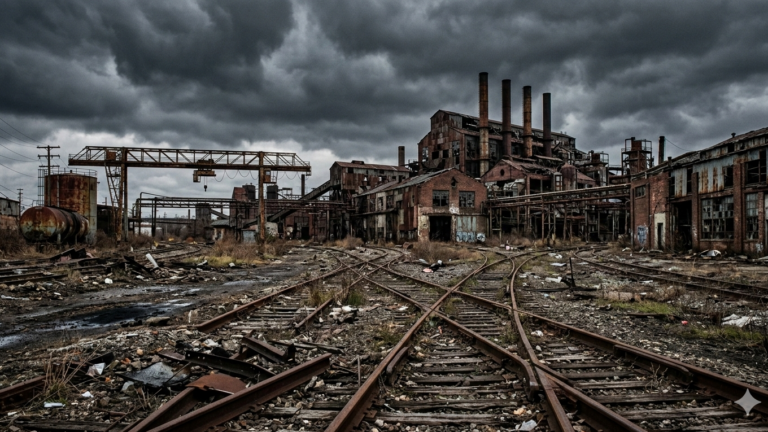
Germany, once the economic engine of Europe, has slipped into repeated technical recessions, and its industrial output has fallen to early-2000s levels. In France, farmers have taken to the streets over energy costs and unfair competition. And in Italy, the government itself has admitted that around 40% of price inflation in consumer goods stems from post-sanctions energy increases.
From the beginning, Hungary was one of the few European capitals to warn against this trajectory. Orbán opposed the harshest measures, arguing that isolating Russia from the European market would harm Europe more than Moscow. While Brussels spoke of “strategic autonomy,” Budapest pursued continuity in Russian energy supplies and direct agreements with its regional neighbors.
That stance—once dismissed as ‘selfish’—has proven to be pragmatic. Hungary maintains controlled inflation, enjoys steady economic growth, and household energy prices notably lower than those of most EU countries. Yet this balance could change overnight if Brussels forces Budapest to stop receiving Russian energy directly and cheaply. Such a move, beyond its economic impact, would also inflame political tensions at home.
Orbán’s trip to Washington symbolizes the growing proximity between two leaders who share a similar worldview: political sovereignty, defense of national industry, and rejection of the ideological currents dominating European institutions.
During the summit, Orbán is expected to negotiate exemptions from U.S. sanctions on Russian oil, allowing Hungary to continue importing crude at reasonable prices. Washington, in turn, would be granted deeper cooperation regarding Hungary’s nuclear industry, with in particular with regard to modular reactors, nuclear fuel and nuclear waste management, according to Hungarian press reports. In addition, the U.S. continues to views Budapest as a reliable partner in Central Europe—one with a predictable foreign policy and an economy guided by national interest rather than ideological compliance. That is no small matter.
Trump, who during his presidency criticized both Europe’s dependence on Russian gas and Brussels’ bureaucratic rigidity, has repeatedly stated that Europe needs partners who act with economic logic rather than moral impulses. In that sense, his alignment with Orbán feels natural: both men believe Western prosperity depends on affordable energy and foreign relations built on mutual benefit, not on sanctions that erode competitiveness. Whether their interests can fully converge, however, remains to be seen.
The Budapest–Washington summit takes place amid visible political fatigue across the European Union. Countries such as Austria, Slovakia, and Greece have expressed growing unease with the escalation of sanctions and are calling for a reassessment of the EU’s approach toward Russia and China. The so-called “European unity” is eroding as the economic fallout becomes unsustainable.
Even the internal debate over whether to include Israel in the sanctions list—following the bombings in Gaza—has exposed deep divisions within the European Council. Italy, Germany, Austria, and Hungary have all opposed such a move, fearing further commercial and diplomatic repercussions.
Meanwhile, European consumers now pay twice as much for heating as they did before 2021, and small and medium-sized enterprises face electricity costs that drastically reduce profit margins. Member states have been forced to introduce massive subsidy packages to offset the damage—financed, ultimately, through increased public debt.
Against this backdrop, Hungary has become a symbol of political realism within Europe. Its government has managed to balance EU membership with a firm defense of national sovereignty—at significant economic and diplomatic cost, but with the support of much of its population. Orbán has maintained open relations with Russia and China without severing ties with the West, showing that energy independence can coexist with political stability.
Budapest insists that sanctions should be a means of negotiation, not an end in themselves. “Peace and prosperity cannot be built through punishment,” the prime minister often says, convinced that Europe needs to build bridges, not walls. His vision can be summarized in one formula: security first, ideology later.
The Hungary–U.S. summit arrives at a decisive moment for Europe’s future. The continent, caught between moral posturing and economic fragility, urgently needs to return to reality. Orbán’s visit to Washington is not merely about oil; it is a reminder that foreign policy should serve citizens, not ideologies. While Brussels continues to preach unity while deepening its divisions, Hungary stands out as a voice of pragmatic dissent—a reminder that, in politics as in economics, realism remains the first condition of freedom.