Norman Lewis
MCC Brussels
Norman Lewis is one of the European analysts who has most clearly warned about the silent transformation of the EU project in the areas of freedom of expression, control of public discourse, and the political management of democracy. A researcher, essayist, and visiting research fellow at MCC Brussels, Lewis has spent more than two decades studying the relationship between power, technology, regulation, and democratic legitimacy in Europe. His work has focused in particular on how, under the rhetoric of rights protection and the fight against disinformation, control mechanisms are being built that erode the foundations of political pluralism.
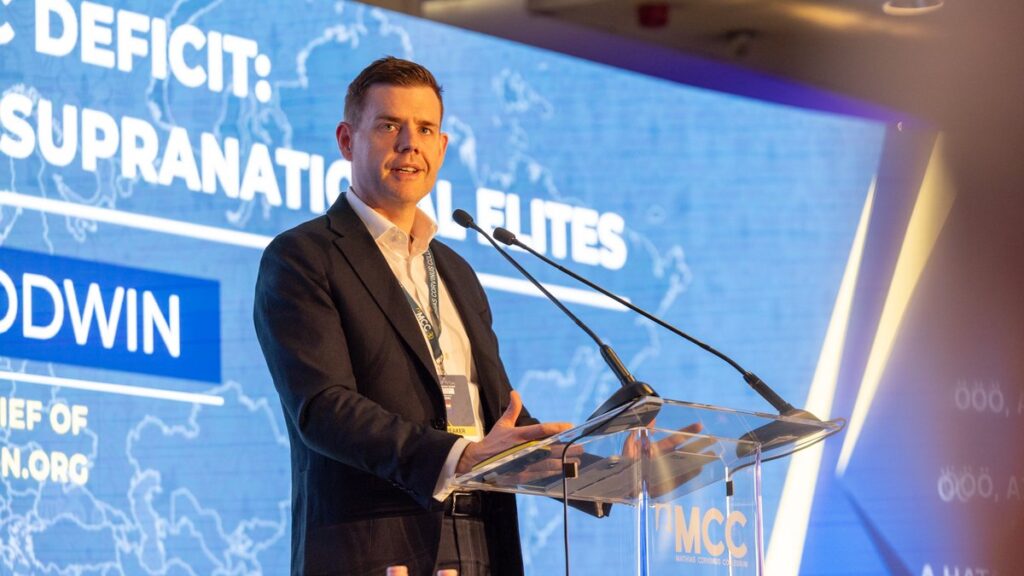
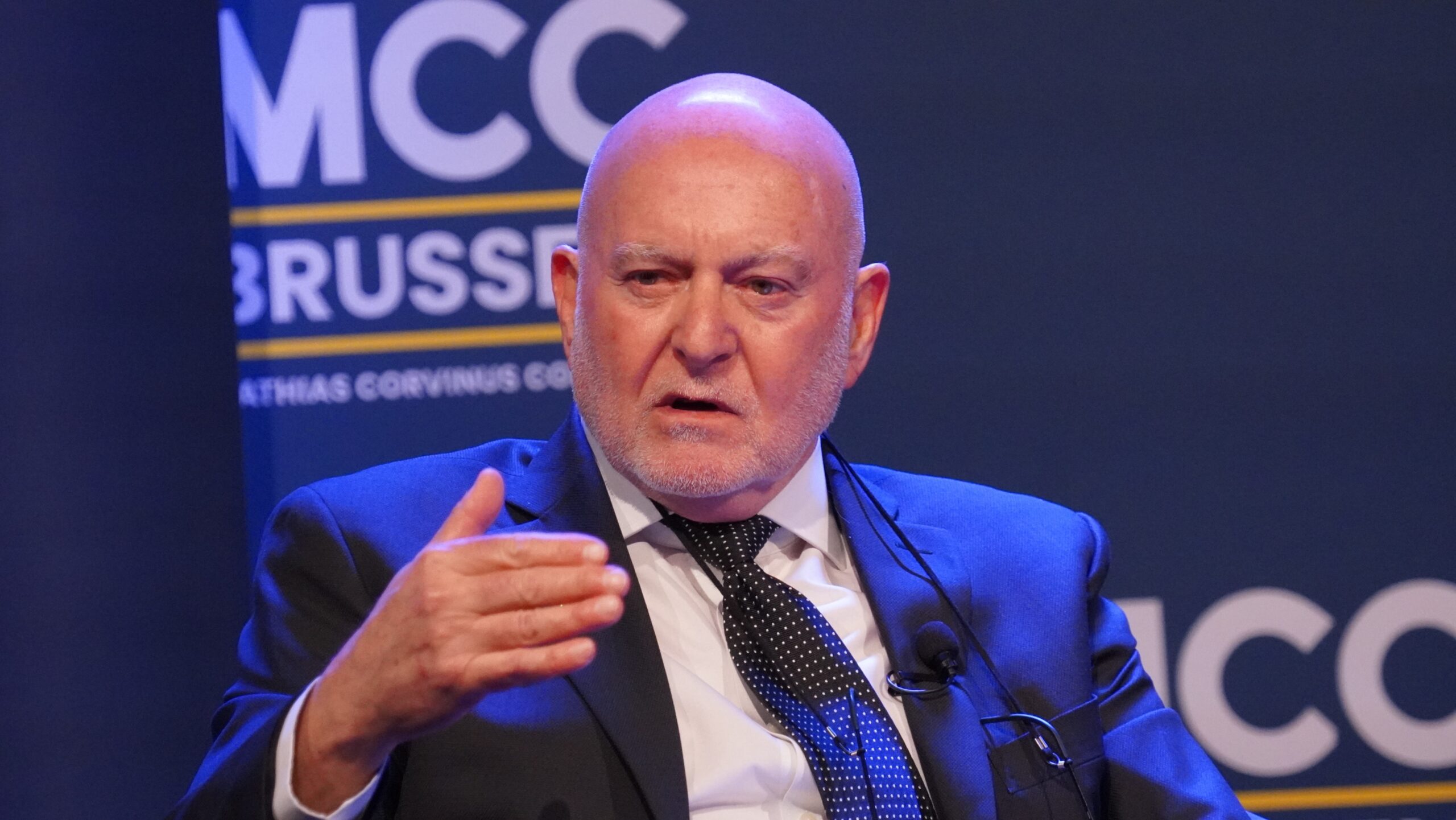
The report recently presented by Lewis for MCC Brussels—and publicly discussed at an event held on January 28th in Brussels—fits squarely within this critical line of analysis. Focusing on the so-called Democracy Shield and the European Union’s new regulatory architecture, the document examines how Brussels has moved from managing a well-known ‘democratic deficit’ to attempting to shield itself from political dissent. The objective is no longer to strengthen citizen participation, but to contain it, reinterpret it, or, when necessary, delegitimise it when electoral outcomes do not align with the Commission’s priorities.
The January 28 event confirmed that this debate has moved beyond the academic sphere to become a central political issue. The annulment of elections, the securitisation of public discourse, and the growing role of unelected actors—NGOs funded by the Commission itself, ‘trusted flaggers,’ and major technology platforms—reveal a pattern that increasingly concerns analysts, jurists, and journalists alike. In this context, the conversation with Norman Lewis offers a direct, unvarnished diagnosis of where the European model of democratic governance is heading.
It is by no means a reactive measure. What we are seeing is the outcome of a long process that dates back at least to the early 2000s. That was when major European debates began around racism, hate speech, and social cohesion. Initially, these debates had a relatively narrow scope, but they quickly expanded. With the rise of identity politics, the EU began searching for narratives capable of giving coherence to an increasingly fragmented ideological landscape.
Crucially, from the outset these narratives did more than describe social problems—they provided the justification for political intervention in public discourse. As time went on, and especially as more robust forms of political contestation began to emerge, these tools were clearly redirected towards controlling the democratic space.
The shift occurs when the concept of ‘hate speech’ ceases to be precise and becomes entirely elastic. It begins with racial issues, then expands to religion, then to gender, sexual orientation, and so on. Each expansion adds a new category that must be protected, while simultaneously narrowing the range of what can be said publicly.
The problem is that this is not done based on clear legal criteria, but political ones. It is not about defining specific prohibited conduct; it is about creating an environment in which freedom of expression is permanently conditional. In that context, freedom of expression is transformed into ‘freedom from expression’—the idea that certain opinions must be silenced to guarantee social stability. That represents a profound paradigm shift.
Because they fundamentally break with the classical model of political communication. The internet is, by nature, decentralised. There is no clear centre of control, and anyone can publish, express opinions, and organise. For institutions like those of the EU, which were historically built at a distance from direct electoral pressure, this represents a structural threat.
With social media, citizens cease to be passive recipients and become political actors. They no longer depend on traditional media or institutional intermediaries. From Brussels’ perspective, this means not only a loss of narrative control, but something deeper: the loss of moral authority to define what is acceptable and what is not in public debate.
It connects entirely. The democratic deficit is not merely an academic concept; it is a structural reality. The European Commission, for example, is not directly elected by citizens and, strictly speaking, is not accountable to them. For many years, this was offset by a form of passive consensus: people accepted the European project because it delivered stability and prosperity.
That consensus broke down with the financial crisis, the economic deterioration experienced by large segments of society, and the emergence of parties that openly challenge EU policies. From that point on, institutions began to view the vote as a problem to be managed rather than as a legitimate expression of popular sovereignty.
The perception of risk changes. Until then, dissent was uncomfortable but tolerable. From 2016 onwards, it has been interpreted as an existential threat. Voting ceases to be seen as a mechanism of democratic correction and becomes something potentially dangerous if it produces the “wrong” outcomes.
That is when the idea takes hold that democracy itself needs to be “protected”—even from voters. And once that happens, democracy ceases to be democracy in any meaningful sense.
Through the securitisation of political debate. Internal social, economic, and cultural conflicts are reinterpreted as the result of external interference. In this way, dissent is delegitimised: it is no longer political opposition rooted in citizens’ lived experience, but the product of foreign manipulation.
From an institutional perspective, this is extremely convenient, because it allows any form of self-criticism to be avoided. If people protest or vote ‘incorrectly,’ it is not because policies have failed, but because they have been misled.
Because it allows this logic to be translated into everyday practice. Through the DSA, the Commission can control discourse without appearing to act as a censor. Censorship is outsourced to technology platforms operating under the threat of sanctions, and to NGOs funded by the Commission itself that flag problematic content.
The result is an extraordinarily effective system in which no one assumes direct political responsibility. The Commission says it is merely applying the law, platforms claim they are simply complying with regulations, and NGOs act as moral arbiters without democratic legitimacy. Yet the result is a very real restriction of public debate.
Yes, and that is the most troubling aspect. Cases such as Romania reveal a very clear pattern: NGO reports, rapid response mechanisms, media pressure, and ultimately the annulment of elections or the exclusion of inconvenient candidates. All of this is wrapped in technical and legalistic language that conceals the political nature of the intervention.
It is no longer just about controlling the narrative, but about ensuring electoral outcomes that are compatible with institutional interests.
A deeply paternalistic one. Citizens are assumed to be vulnerable, easily manipulated, and morally immature. The language of ‘democratic resilience’ conceals a profound distrust of the electorate. At its core, there is a clear contempt for citizens’ capacity to make autonomous political decisions.
The primary objective is to bring all of this into the open. The observatory will bring together free-speech organisations, investigative journalists, and citizens from across Europe. We will monitor institutional interventions, electoral processes, NGO funding, covert influence campaigns, and the political use of digital regulation.
This is not about backing any particular party. It is about defending a basic principle: political contestation is not a threat to democracy—it is its essence. The only way to stop this process is to expose it publicly and subject it to citizen scrutiny.
It is a clear sign of weakness. If legitimacy were solid, these instruments would not be necessary. The real problem is not external interference, but internal loss of trust. And that cannot be resolved through censorship or technocracy, but by restoring real power to citizens.