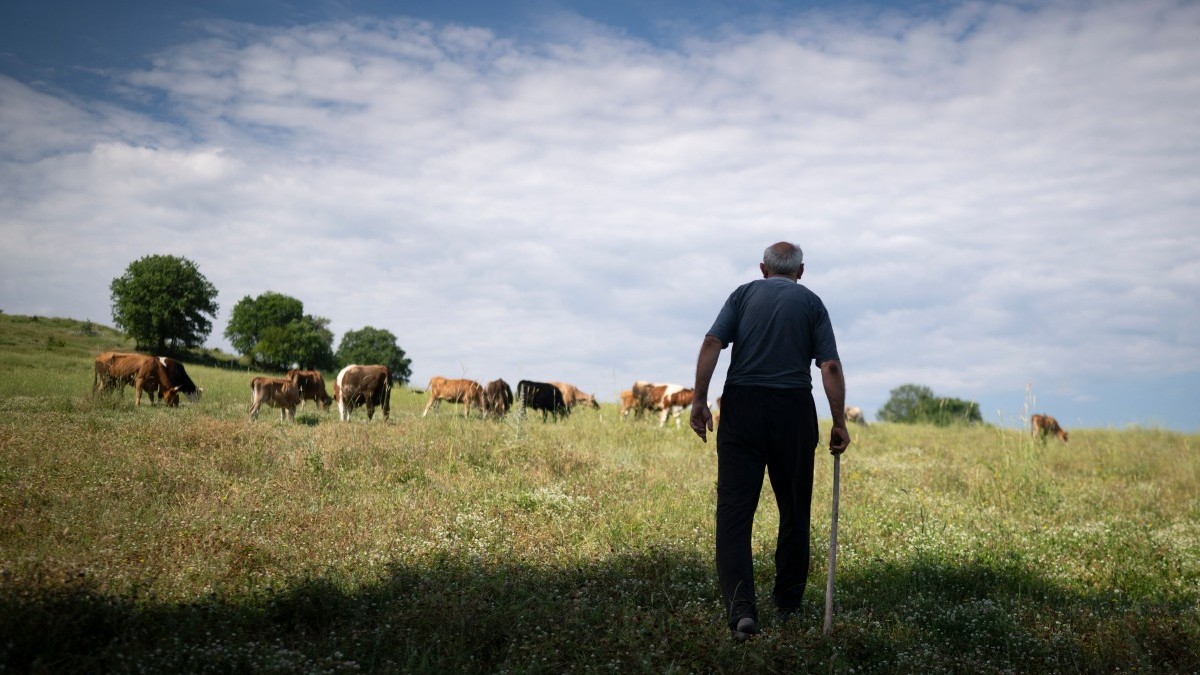
Bulgarian livestock farmer Emil Deliev, 58, walks through a meadow as his caws graze near the village of Sofiytsi, in Dzhebel municipality, southeastern Bulgaria on June 9, 2026.
NIKOLAY DOYCHINOV / AFP
Monday, July 13th saw Bulgaria’s labour minister acknowledge importing significant numbers of foreign workers.
Over the past three years, Bulgaria has brought in more than 108,000 individuals, according to Minister of Labour Nataliya Efremova:
There are groups of people registered with the employment offices, but unfortunately nearly half of them are very low-skilled or have no qualifications at all.
This is the major challenge that the labour market faces nowadays. It is the reason why employers are increasingly looking abroad in an effort to secure the workforce they need.
March figures from Bulgaria’s National Employment Agency—prior to the summer tourist season began—18,989 new foreign workers had already started work. The total number for 2025 peaked at 49,179 workers.
Bulgaria has relatively low unemployment rates, but is challenged both by skills shortages and an ageing population. These trends converge on driving-based work, where many Bulgarian operatives are approaching retirement age. Uzbekistan is a popular source of new recruits, prompted in part by the differences in the average national wage. Officially, the former Soviet republic also lists Croatia, Serbia, and Montenegro as the major Balkan destinations for its expatriates.
At present Bulgaria also draws on labour from India, Indonesia, and Nepal: sources expected to peak in 2026.