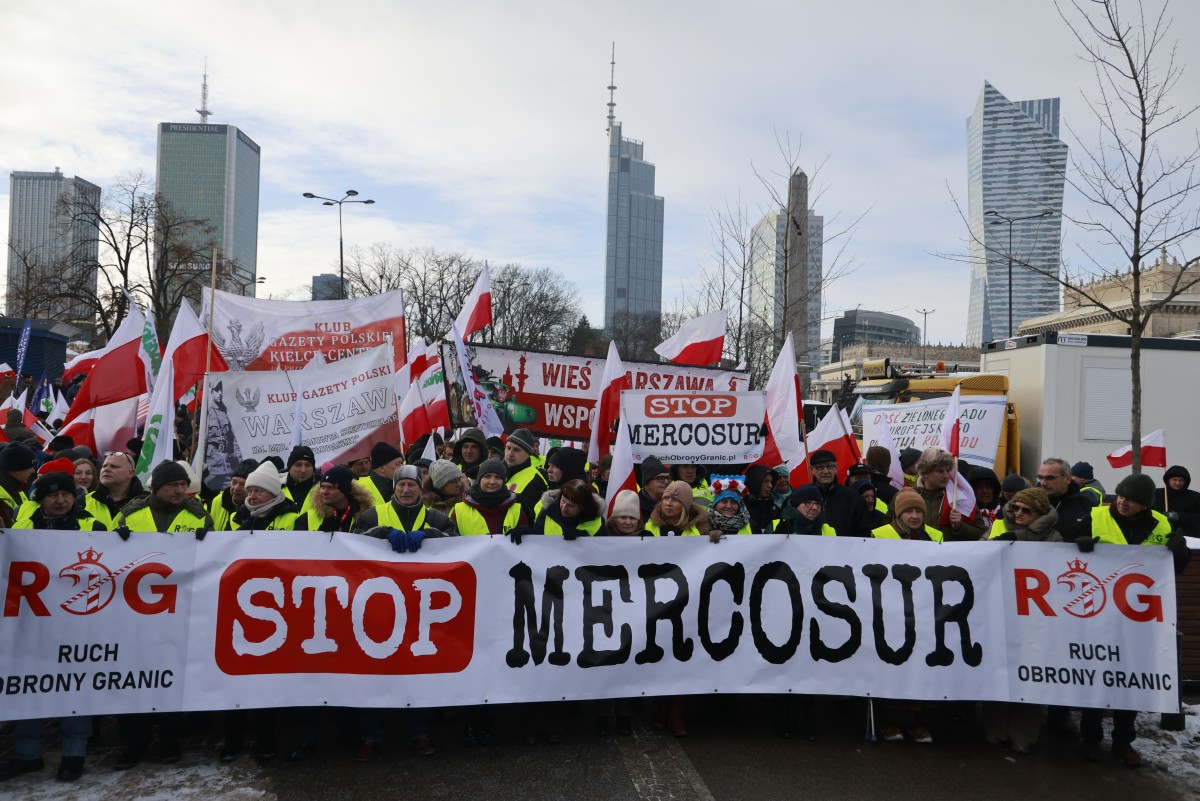
Polish farmers protest against the EU-Mercosur agreement in Warsaw, Poland on January 9, 2026.
Wojtek RADWANSKI / AFP
Poland has filed a legal challenge to the EU-Mercosur free trade agreement at the Court of Justice of the European Union, seeking to suspend its implementation until a ruling is issued. The move follows Warsaw’s long-standing opposition to the deal, which it argues could negatively affect its agricultural sector.
The agreement, which recently entered provisional force despite not yet receiving full ratification from all Brussels institutions, reduces tariffs on a wide range of goods between the EU and the South American Mercosur bloc, which includes Argentina, Brazil, Paraguay, and Uruguay. Poland voted against the deal in January but was outvoted by a majority of EU member states.
Agriculture Minister Stefan Krajewski declared
We promised and we have delivered. Poland is the only country in the European Union that has challenged the Mercosur agreement before the Court of Justice.
He added that “the security of our farmers and consumers is the top priority,” stressing that while farmers accept competition, it must be “fair.”
Deputy foreign minister Marcin Bosacki confirmed that the complaint was submitted to the court, with Poland also requesting that implementation of the agreement be suspended during the legal process.
At the centre of Poland’s concerns are the potential impacts on European agriculture. EU farmers operate under strict food safety, environmental, and animal welfare standards, which increase production costs. In contrast, Mercosur producers often face less stringent regulations, allowing lower production costs and cheaper exports to Europe.
A study for the Greens/EFA group in the European Parliament warns that this imbalance could distort competition and place more pressure on EU farmers. While export volumes may rise, the report suggests benefits for European producers could remain limited, with risks to farm income, rural employment, and already vulnerable agricultural regions.