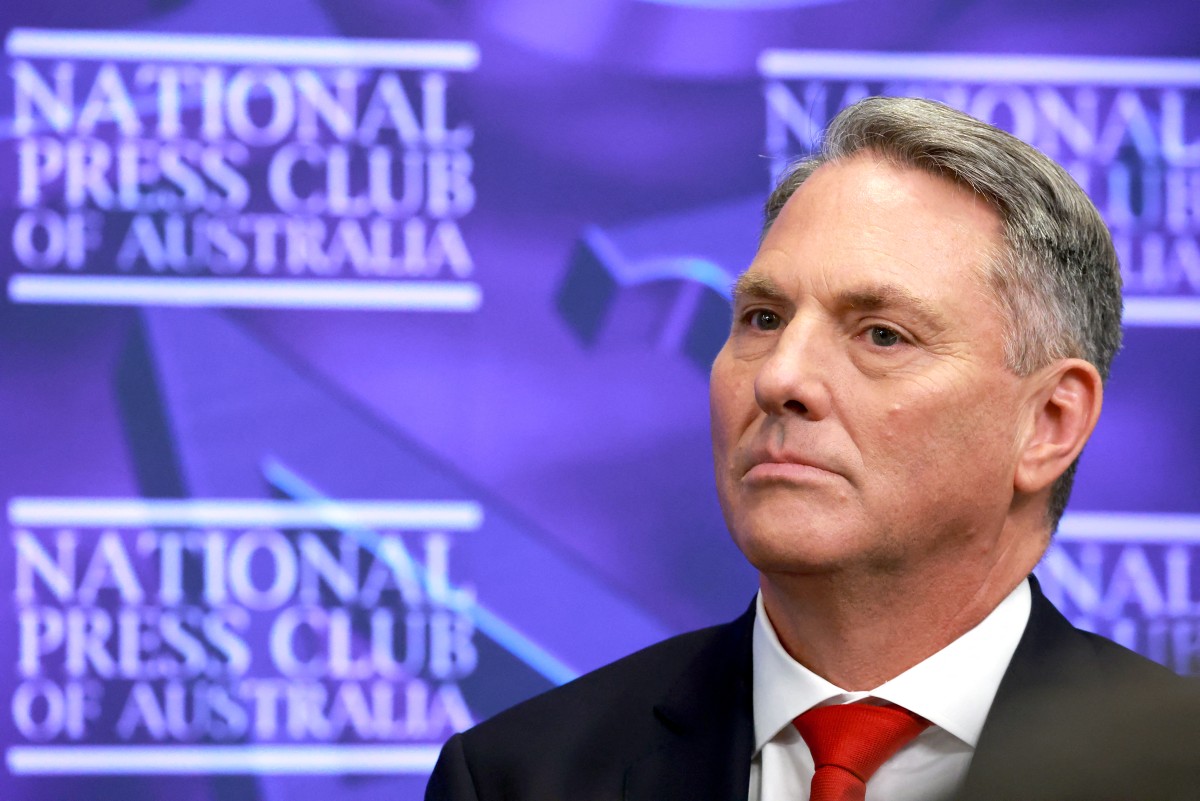
Australian defence minister Richard Marles
DAVID GRAY / AFP
Australia has announced a significant increase in defence spending, with plans to raise it to 3.0% of GDP by 2033.
Defence minister Richard Marles said the move reflects growing instability worldwide, warning that
international norms that once constrained the use of force and military coercion continue to erode.
He added that more countries are now engaged in conflict “than at any time since the end of World War II,” across multiple regions.
The new target marks a notable increase from earlier projections, which predicted defence spending reaching 2.3% of GDP by 2033. Under the updated plan, Australia will allocate an additional AU$53 billion (€31.8 billion) over the next decade compared to its 2024 defence strategy, alongside a near-term boost of AU$14 billion (€8.4 billion) over four years.
The decision also comes amid pressure from the United States for allies to increase defence spending. While the new target brings Australia closer to U.S. expectations, it remains below the 3.5% of GDP previously urged by U.S. defence secretary Pete Hegseth.
To reach the higher spending level, Australia has adjusted how it calculates defence expenditure, aligning it with NATO standards that include items such as military pensions and defence intelligence. According to Marles, this allows for better comparison with other countries and places Australia’s current spending at around 2.8% of GDP.