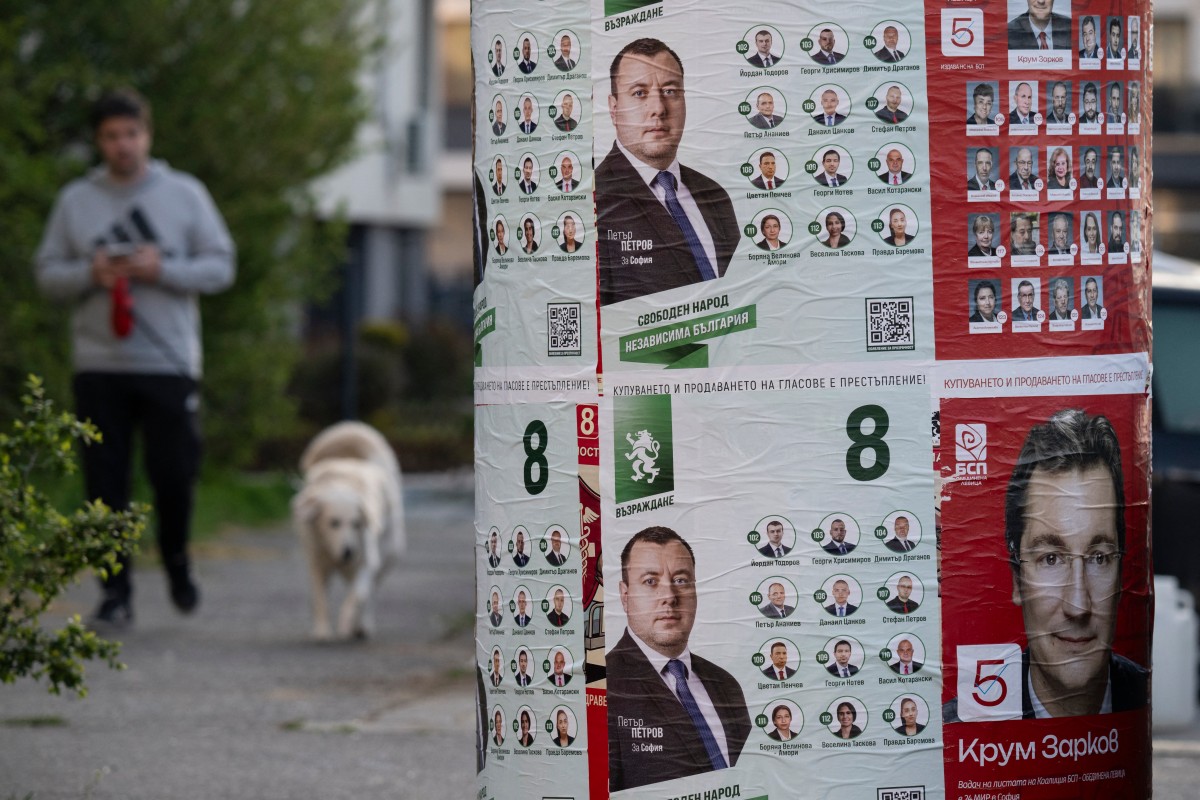
Sofia: a man walks his dog by an electoral posters of the Vazrazhdane (Revival) party and Bulgarian Socialists party on April 17, 2026.
NIKOLAY DOYCHINOV / AFP
Bulgarians vote in the country’s eighth election in five years on Sunday, April 19th.
The latest vote comes after renewed public frustration over corruption and governance. Former president Rumen Radev, who stepped down in January, is now leading a newly formed political grouping.
The frequent elections stem from the instability sparked by anti-corruption protests in 2021, which brought an end to the government of long-time leader Boyko Borissov.
Opinion polls ahead of the election suggested Radev’s bloc could receive around 35% of the vote. During his time in office, he supported closer ties with Russia and opposed military aid to Ukraine.
Radev has also pledged to dismantle what he described as an “oligarchic governance model” and backed anti-corruption protests in late 2025, which led to the collapse of the most recent government.
At polling stations in the capital, Sofia, voters expressed a desire for transformation. “I’m voting for change,” said 57-year-old Decho Kostadinov after casting his ballot, adding that corrupt politicians
should leave—they should take whatever they’ve stolen and get out of Bulgaria.
Some voters arrived early, lining up before polling stations opened at 7:00 am. Voting is set to close at 5 p.m., with exit polls expected shortly afterward. Final results are not expected before Monday.