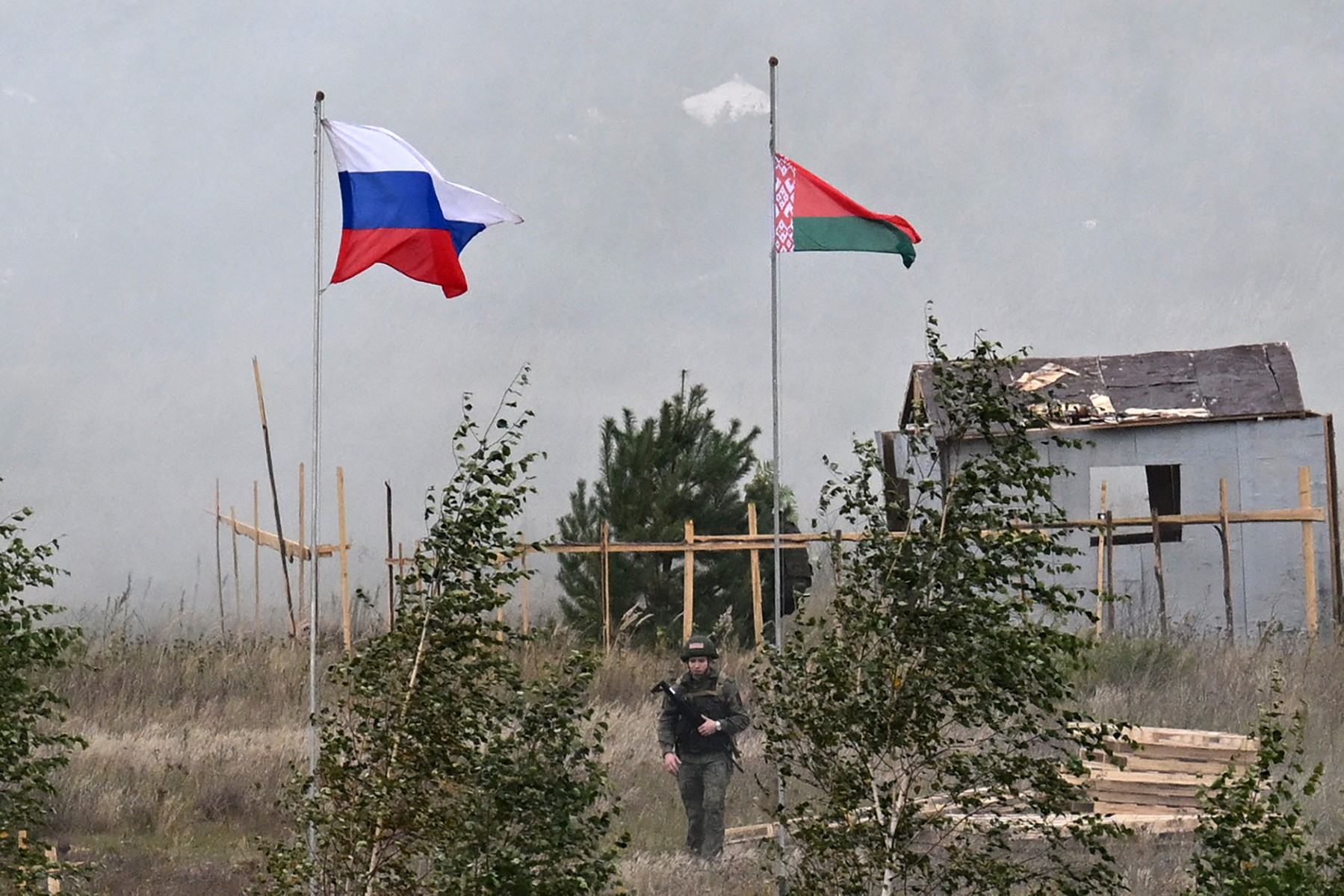
On Monday, May 18th, Belarus authorities admitted conducting nuclear-related military drills with Russia. The initiative coincides with ongoing tensions with NATO and a continued lack of progress in nuclear arms control discussions with the United States.
The Belarus defence ministry said the exercises included training on the delivery of nuclear munitions and preparations for their potential use in coordination with Russian forces:
During the exercise, it is planned to practise issues related to the delivery of nuclear munitions and preparation of their use in cooperation with the Russian side.
The ministry’s statement added that the drills “are not directed against third countries and do not pose a threat to security in the region.”
Officially, aviation and missile forces are taking part in the exercises. Russia and Belarus have increased military cooperation in recent years, particularly since Moscow deployed its nuclear-capable Oreshnik hypersonic missile system to Belarus last year.
The drills come at a time of heightened regional tensions. Ukrainian president Volodymyr Zelensky recently ordered troops to reinforce Ukraine’s border with Belarus, warning that Russia could be preparing a new offensive from Belarusian territory. Zelensky said Moscow was attempting to draw Belarus deeper into the war.
The Kremlin rejected these claims on Monday, calling them “an attempt at further incitement.”
Russian president Vladimir Putin has increasingly referenced nuclear capabilities in the context of the war in Ukraine, while Moscow has continued testing nuclear-capable systems, including the Sarmat intercontinental ballistic missile.
Tensions have also been shaped by the expiration of key arms control frameworks, including the New START treaty, which previously limited Russian and U.S. nuclear arsenals.