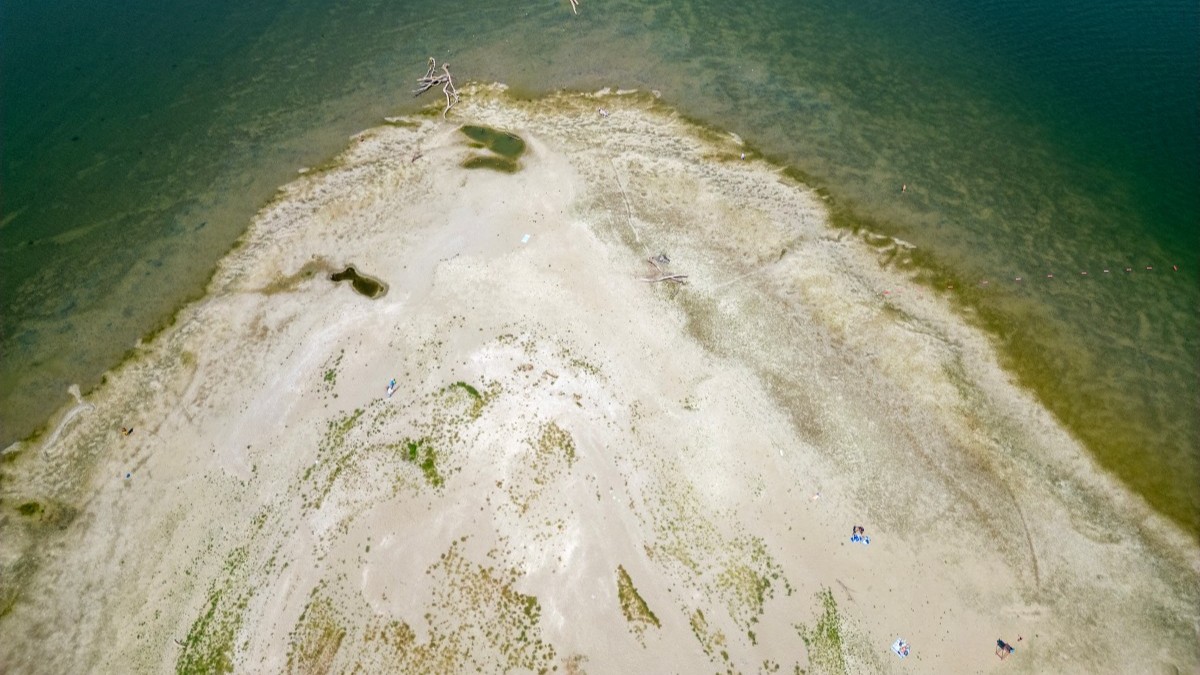
This aerial photograph shows people sunbathing on a sandbar exposed by the low water level of the Danube River in Belgrade.
ANDREJ ISAKOVIĆ / AFP
Record-low water levels on the Danube River are threatening Serbia’s domestic electricity generation and critical fuel imports, bringing the country into the ranks of European nations suffering from heat-related power disruptions.
Extremely low water inflows have forced the state-owned utility company, the Electric Power Industry of Serbia (EPS), to scale back power generation at the massive Đerdap hydropower plants. As reported by Balkan Insight, while EPS Director Dušan Živković insisted that the electricity supply remains temporarily stable, the persistent lack of rainfall and low winter snowpack in the Alps continue to stress the national grid.
The environmental crisis has also severely disrupted Serbia’s energy import routes along the Danube, which serves as a major commercial transit corridor. Low water levels have left boats and pontoons stranded on dry ground, halting the river transport of essential petroleum products. More than half of the 39,000 tonnes of diesel scheduled for import in August was expected to arrive by river, but these deliveries are now highly uncertain. In response, Minister of Mining and Energy Dubravka Đedović Handanović met with major oil representatives on Wednesday to organize alternative rail transport and secure domestic supply channels.
To mitigate the threat of acute fuel shortages and keep the domestic energy sector running, the Serbian government has implemented strict emergency measures. The petroleum industry of Serbia (NIS) announced it will release approximately 23,000 tonnes of its operational fuel reserves to other domestic oil companies while stepping up daily crude oil processing. Additionally, the government has extended a ban on fuel exports until the end of August.
These protective steps highlight the mounting challenges Southern European governments face as climate-related disruptions increasingly threaten basic civilian infrastructure.