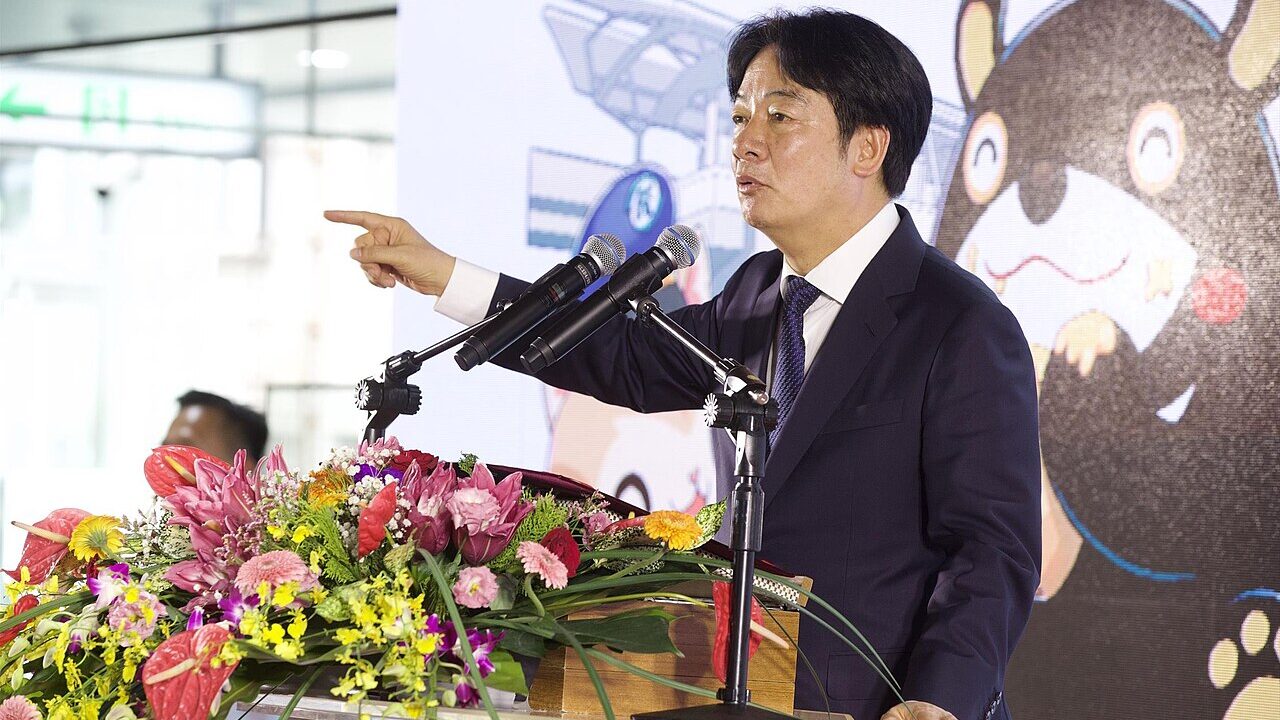
Taiwanese president Lai Ching-te speaking at the opening of Gangshan Station
Mass Rapid Transit Bureau, Kaohsiung City Government, Attribution, via Wikimedia Commons
In the aftermath of U.S. president Donald Trump’s official visit to China, Taiwan has reasserted its status as a sovereign nation.
Saturday, May 16th saw presidential spokesperson Karen Kuo say it was “self-evident” that Taiwan was “a sovereign, independent democratic country.” The announcement followed Chinese president Xi Jinping warning Trump that missteps on Taiwan could push the two nations into “conflict,” since “the Taiwan question is the most important issue in China-U.S. relations.”
Trump himself warned Taipei against advocating independence just hours after his meeting with Xi. The U.S. position is complicated by a long-term legal and military commitment to support the island in the event that China seeks to impose its control on the country by force.
Despite Washington’s latest ambiguity on the issue of Taiwan’s future, President Lai Ching-te’s official representative declared
Our nation is grateful to President Trump for his continued support for security in the Taiwan Strait since his first term in office.