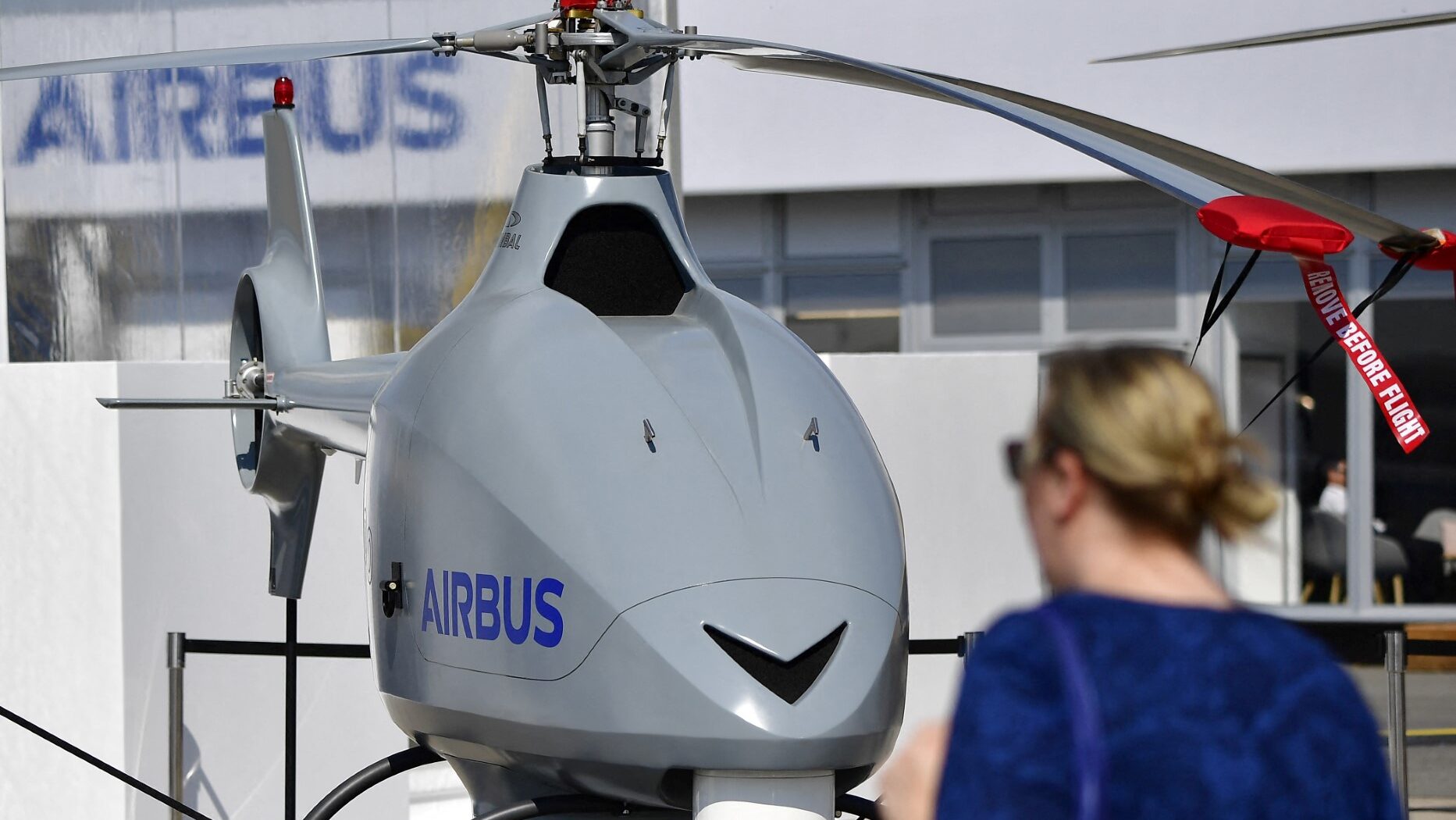
An Airbus drone VSR-700 unmanned aerial vehicle (UAV) in 2018
Tobias SCHWARZ / AFP
June’s Berlin airshow saw four companies–Airbus, Boeing, General Atomics, and Helsing–selling their latest technology to Germany’s military. Key products include armed, artificial intelligence (AI)-powered drones designed to support fighter aircraft, typically carrying extra sensors and jammers.
Collaborative combat aircraft (CCA), as these ‘wingman drones’ are known, range in size from small interceptors to some as big as planes. They are intended to fly in formation alongside actual manned aircraft.
Speaking to Reuters, Stephanie Lingemann of the German defence start-up Helsing described AI as
the brain of these systems, [which] needs to be controlled in a sovereign fashion.
For companies promoting European rearmament, sovereignty is a key theme. This is partly due to pressure from the U.S. Trump administration for NATO members to pay their own way on defence.
Supporters of collaborative combat aircraft cite the war in Ukraine as proof that modern warfare increasingly depends on advanced drones, artificial intelligence, and other emerging technologies.
Similar pressures influenced recent decisions on France’s future tank purchases. However, much of the weaponry now in the spotlight is unlikely to be operational before 2029 at the earliest.