Mandel NGAN / AFP
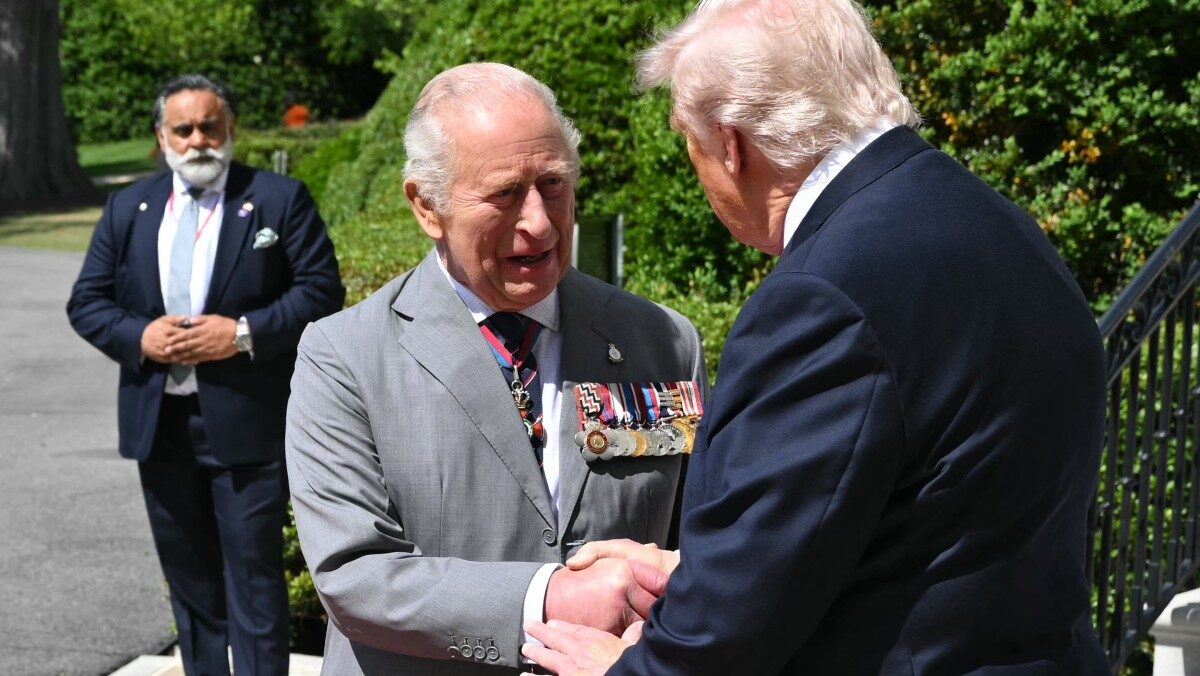
U.S. president Donald Trump said on Thursday, April 30th he would remove tariffs on Scottish whisky in honour of Britain’s King Charles III and Queen Camilla as they wrapped up their state visit.
The announcement—made as the royal couple concluded a four-day trip to the United States—marks a notable trade concession to a key ally, even as the war with Iran continues to strain transatlantic relations.
Shortly after bidding farewell to the royals at the White House, Trump said he was making the gesture “in honor of the King and Queen of the United Kingdom.”
“The King and Queen got me to do something that nobody else was able to do, without hardly even asking!” he wrote on Truth Social.
Scotch whisky has faced a 10% tariff during Trump’s second presidency. That rate had been set to rise later this year, with the suspension of an earlier 25% tariff—part of a previous trade truce—due to expire.
Trump said he was “removing the tariffs and restrictions” on whisky, adding that the decision also related to trade between Scotland and the bourbon-producing state of Kentucky, particularly regarding wooden barrels.
U.S. Trade Representative Jamieson Greer later confirmed that the measure applies to whisky itself.
“The United States will allow preferential duty access for whiskey produced in the United Kingdom,” Greer said in a statement.
He added that the move forms part of a broader trade agreement announced by Washington and London during an Oval Office appearance by Trump last year.
Since Trump returned to power, Britain has pushed for whisky to be exempted from tariffs. During his first term, tariffs imposed in 2019 on the European Union—which then included Britain—also hit the UK’s whisky industry.
The United States remains the largest export market for Scotch whisky, accounting for $1.2 billion annually.
The timing suggests the royal visit may have helped unlock the concession. Trump praised Charles as the “greatest king” as he waved him and Queen Camilla off at the White House.
The visit was officially intended to celebrate transatlantic ties ahead of the United States’ 250th anniversary of independence. In practice, however, much of Charles’s time was spent easing tensions over Iran.
Trump has sharply criticised British prime minister Keir Starmer for opposing the U.S.-Israeli campaign against Iran, underscoring the wider political strains behind the ceremonial diplomacy.