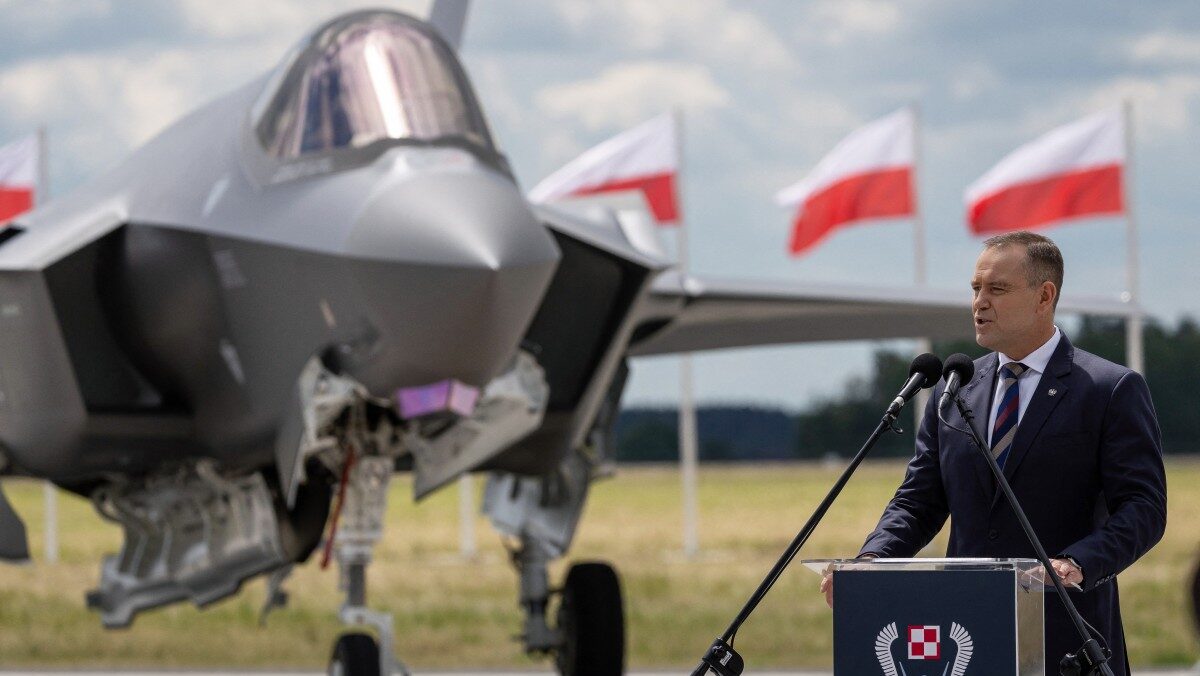
Polish President Karol Nawrocki speaks during the induction of the first three U.S.-made F-35 fighter jets into the Polish Air Force at Łask Air Base on June 12, 2026.
Wojtek RADWANSKI / AFP
Polish prosecutors have charged an 18-year-old Ukrainian citizen, identified as Illia K., with carrying out 47 criminal acts on behalf of Russian intelligence in an alleged effort to inflame tensions between Poland and Ukraine.
Arrested in August 2025, he faces life imprisonment on charges that include recruiting accomplices through encrypted messaging apps and paying them with cryptocurrencies registered in Russia and China. He is also accused of preparing to fly a drone over President Karol Nawrocki’s motorcade during last year’s Armed Forces’ Day parade in Warsaw. He was arrested three days before the event.
According to Poland’s Internal Security Agency (ABW), the suspect acted for financial rather than ideological reasons, although investigators believe most of the alleged offences were carried out for the benefit of Russian intelligence. Prosecutors say he sent photographs of completed tasks to his handlers as proof.
Several of the alleged acts involved vandalising sites of historical importance, including the Monument to the Jewish Heroes of the Warsaw Ghetto. He is also accused of defacing memorials in Domostawa and Wrocław dedicated to Polish victims of the Second World War-era Volhynia massacres by painting inscriptions and symbols glorifying the Ukrainian Insurgent Army (UPA).
The UPA remains one of the most divisive issues in Polish-Ukrainian relations. Between 1943 and 1945, the nationalist movement killed up to 100,000 members of the Polish minority living in what is now western Ukraine during a campaign to create an independent Ukrainian state. The issue flared up again after Ukrainian President Volodymyr Zelensky named a military unit after UPA figures, prompting President Nawrocki to revoke the Order of the White Eagle, Poland’s highest state honour, which had previously been awarded to Zelensky.
According to Wojciech Konończuk, director of Warsaw’s Office for Eastern Studies, Poland and Ukraine continue to view the UPA through sharply different historical perspectives. While many Ukrainians honour the movement for resisting Soviet rule after the Second World War, Poles regard it primarily as the group responsible for the Volhynia massacres. The ABW said Russian intelligence has deliberately exploited these long-standing historical grievances to discredit Poland internationally and inflame tensions between Poland and Ukraine.