euconedit / Grok
The 62nd Munich Security Conference takes place this weekend in a context that can no longer be described as a mere ‘crisis.’ What is at stake is the very architecture of the international order built after the Second World War.
For decades, that system rested on three pillars: American leadership, multilateral rules, and Western cohesion. Today, all three are under review. Munich thus becomes the stage not only for debating regional conflicts but for confronting the very meaning of global power.
The central question revolves around the United States. Washington’s strategic shift in recent years has been unmistakable: greater emphasis on national sovereignty, extensive use of trade instruments as tools of pressure, and less attachment to traditional multilateral frameworks.
The transatlantic relationship reflects this tension. Differences are no longer merely tactical—over Ukraine, trade, or energy—but conceptual. Should the international order continue to be based on universal norms, or on agreements among major powers? Should multilateralism prevail or bilateral negotiation from positions of strength?
At the same time, the use of tariffs, sanctions, and economic pressure has reinforced a more transactional logic in U.S. foreign policy. For some, this represents a realistic adaptation to a multipolar world. For others, it risks weakening the mechanisms that provided stability to the West for decades.
The question hovering over Munich is whether the United States is correcting past excesses—or opening a period of structural uncertainty.
While the West debates its internal cohesion, China continues to consolidate its influence in the Indo-Pacific. Beijing combines military pressure in its immediate neighborhood with technological expansion and control over strategic supply chains.
Washington’s Asian allies require credible security guarantees against China, yet they perceive ambiguous signals regarding the long-term depth of American commitment.
The rivalry is not merely territorial or military. It is technological, industrial, and normative. Control over critical minerals, artificial intelligence, digital infrastructure, and trade routes forms part of a broader contest in which China seeks to reduce its vulnerabilities and expand its sphere of influence.
Munich cannot ignore the fact that the strategic center of gravity in the 21st century is steadily shifting toward Asia. To do so would be a fatal mistake for the West.
Russia remains a key actor, particularly in Europe. The war in Ukraine has demonstrated that Moscow retains both endurance and adaptability, even under sanctions.
Yet Russia’s role today extends beyond the battlefield. It functions as an accelerant of divisions within the West. Every transatlantic or intra-European disagreement widens Moscow’s room for maneuver.
In a world where major powers increasingly gravitate toward negotiating spheres of influence, Russia seeks to consolidate its regional position and present itself as an unavoidable interlocutor in any future European security architecture.
Europe arrives in Munich facing an evident identity crisis. Defense spending has increased, and ‘strategic autonomy’ has become a recurring theme, yet the continent remains heavily dependent on the American security umbrella.
Internal divergences complicate any qualitative leap: differing threat perceptions, divergent economic priorities, and fiscal constraints. While some member states call for geopolitical firmness, others prioritize economic stability and dialogue.
The reality is that Europe aspires to assume greater responsibility but still lacks the political and military instruments required to do so coherently. It is not even clear whether such autonomy is feasible under the current balance of power.
This gap between ambition and capability is one of the central themes underlying the conference.
The 2026 Munich Security Conference will not be a routine gathering. It takes place at a moment when the post-1945 order can no longer be taken for granted.
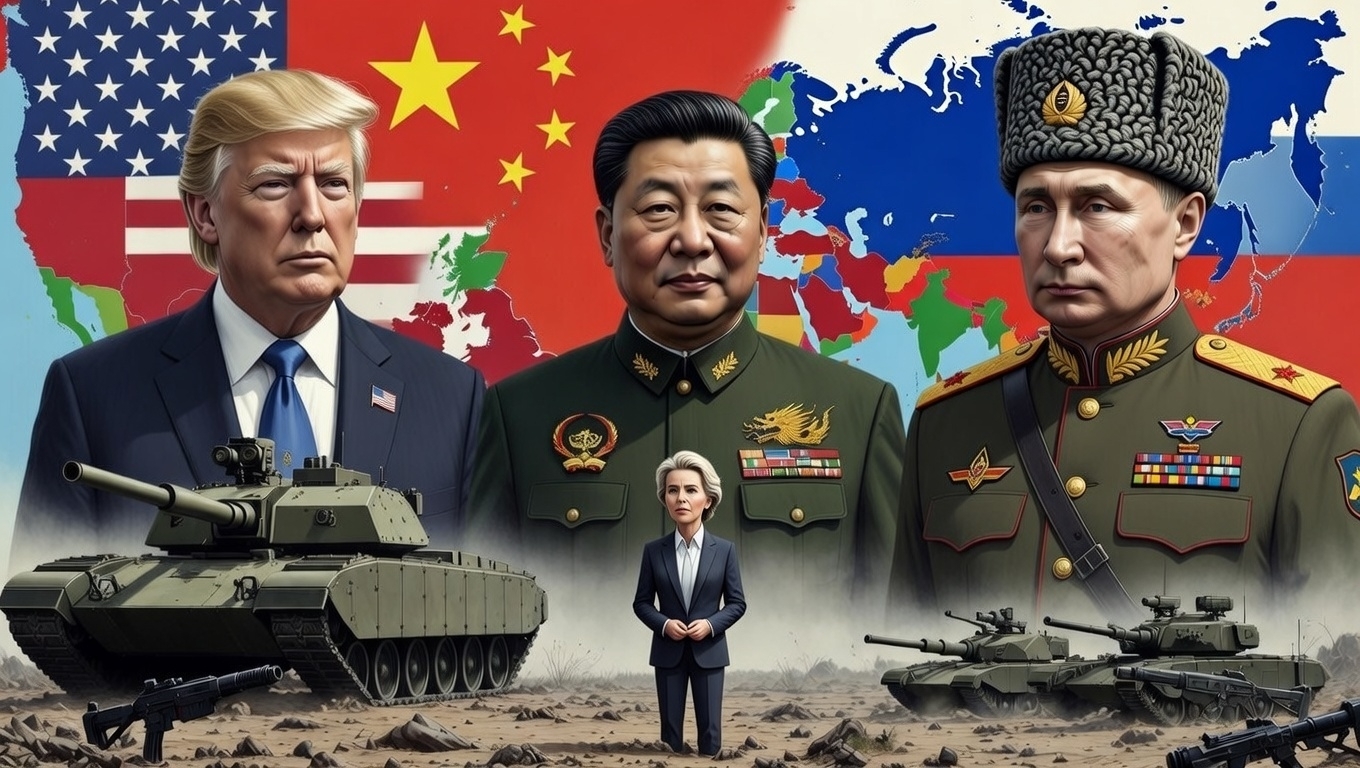
The United States is redefining its role. China is expanding its influence. Russia is exploiting the cracks. Europe is searching for its place without having resolved its internal contradictions.
The old equilibrium is fading. The question is whether it will be replaced by a new stable framework—or by a prolonged era of competition without clear arbiters.