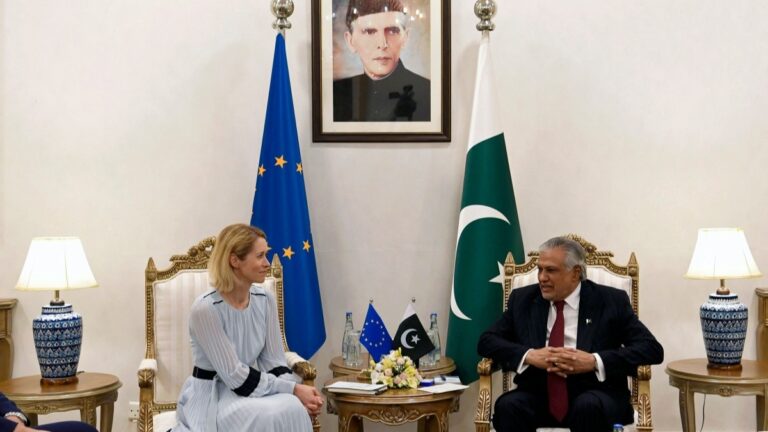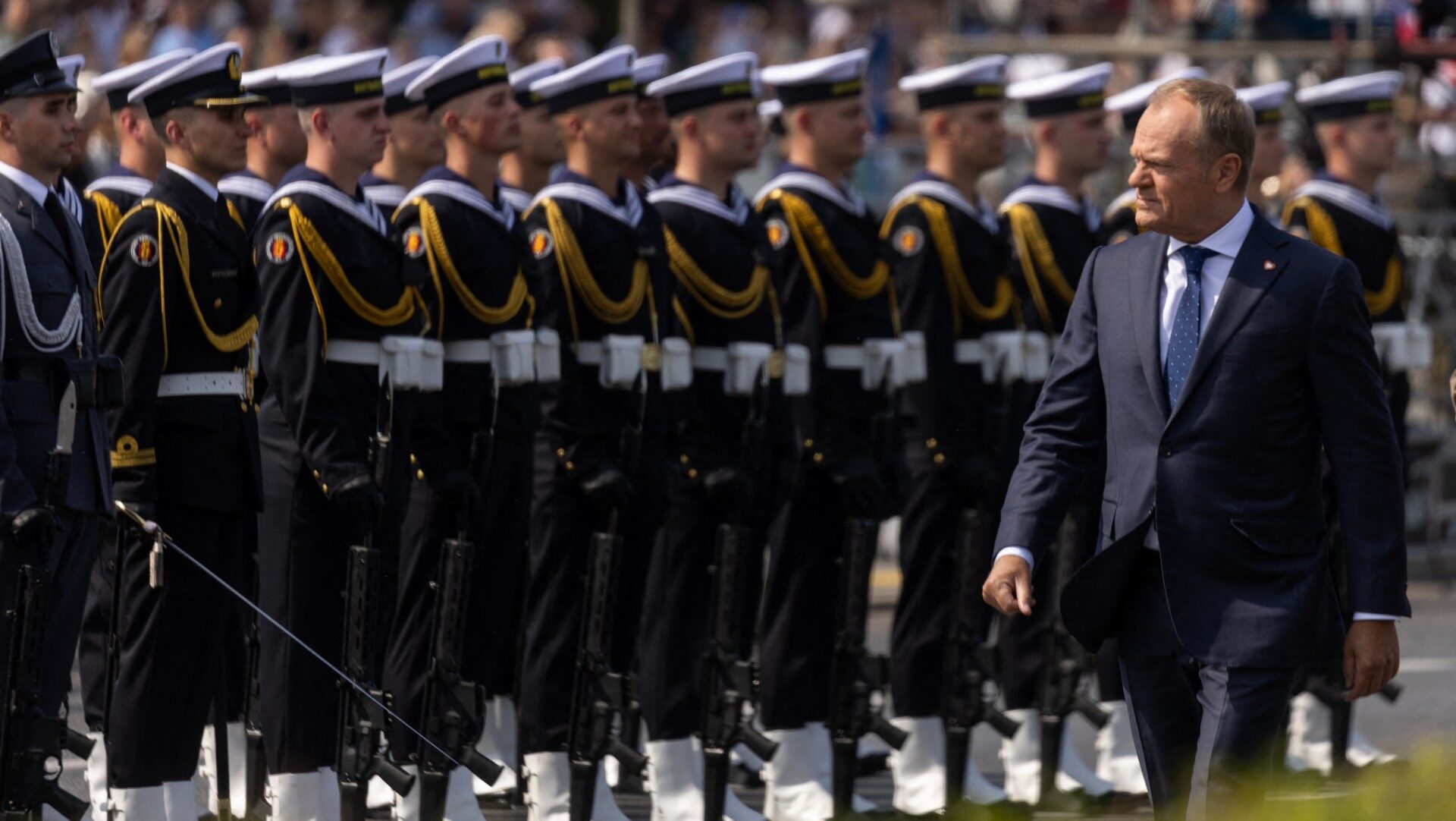
Brussels is preparing to hand Poland up to €44 billion in loans to fund a military build-up—while quietly giving Warsaw a way to sidestep its own elected president.
Warsaw is set to become the first country to tap the EU’s €150 billion SAFE defence fund, a scheme designed to speed up rearmament across Europe. The scale is huge—but so are the political implications.
This is not just about tanks and missiles. It is about how power is shifting inside Europe.
The fund was set up to support NATO by helping countries plug gaps in air defence, ammunition, and land forces before the end of the decade, as concerns grow over Russia. Poland, on NATO’s eastern flank, is leading that push.
But at home, the move is deeply political.
Prime Minister Donald Tusk has used the EU scheme to get around a veto from President Karol Nawrocki, who had warned that the deal risked undermining national sovereignty and lacked transparency.
Instead of backing down, the government shifted the process to the state development bank, BGK, and pushed the deal through by executive decision.
In plain terms: when domestic opposition blocked the plan, the government turned to Brussels to get it done.
That matters beyond Poland. It shows how EU-level money can be used to tilt internal political battles—bringing in the European Commission as an outside force in what should be a national decision. Similar tactics have already been seen in Spain and Romania.
There is also a bigger question: who really benefits from all this spending?
Poland is already one of Europe’s top defence spenders, putting more than 4% of its GDP into the military, with major purchases from the United States and South Korea. The EU loan will speed that up—but also wrap it in Brussels’ approval.
At the same time, around 90% of the money is expected to be spent inside Poland, boosting its own defence industry. That means jobs and production stay at home—something many Western European countries can no longer guarantee.
The message from Warsaw is clear: it does not want to be a dependent frontline state. It wants to become a major military power in Europe.
That has consequences for the balance of power—especially with Germany.
Berlin is also rearming, with plans that could reshape Europe’s military strength in the 2030s. For decades, Europe has relied on Germany’s economic weight and France’s military role. Poland now wants a seat at that top table—or even to rewrite it.
By becoming the biggest user of SAFE and one of Europe’s largest defence investors, Warsaw is positioning itself to deal with Germany as an equal—not as a junior partner.
And this is where it comes back to the EU.
SAFE is the first time Brussels has created a major, direct tool to fund military build-up across member states. It does not replace NATO—but it does give the EU a much bigger role in defence.
For voters across Europe, the question is simple: if Brussels is funding the guns, how long before it starts calling the shots?