German federal border police on Thursday detained right-wing Generation Identity activist Maximilian Märkl at Munich Airport to prevent him from traveling to the Remigration Summit 2026, scheduled to take place Saturday in Porto, Portugal.
According to Märkl, officers intercepted him as he was preparing to board his flight.
“I was just arrested at Munich Airport and prevented from leaving the country. My fundamental right to freedom of movement has been violated,” he said on X.
The EU No Longer Holds Back 🇪🇺🚨
— Maximilian Märkl (@max_maerkl) May 28, 2026
I was just arrested at Munich Airport and prevented from leaving the country.
My fundamental right to freedom of movement has been violated because I allegedly threaten the reputation of the Federal Republic of Germany.
Right before the… pic.twitter.com/YZAGORsYHC
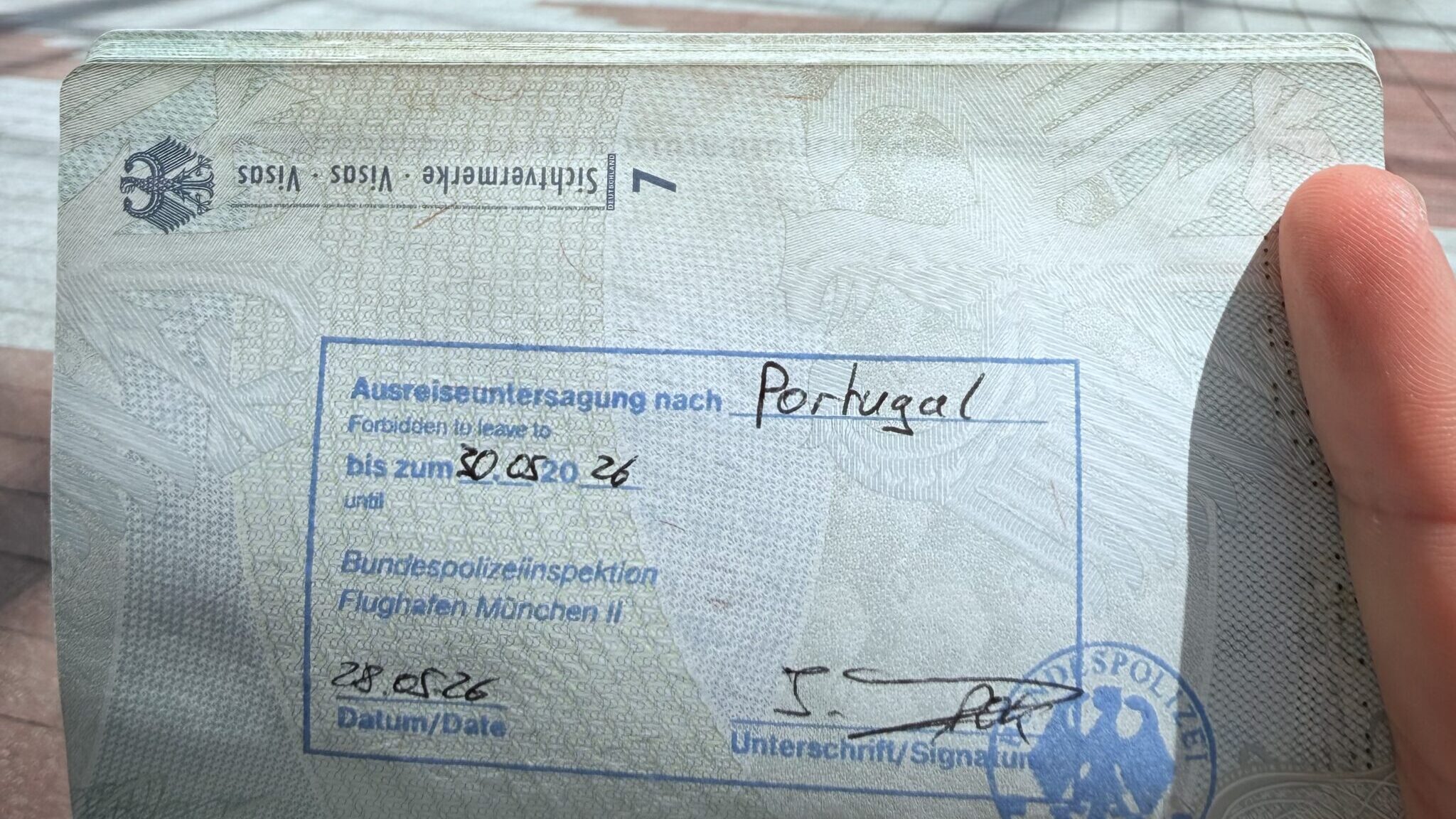
The official explanation for his travel ban was that his participation in the event “threatens the reputation of the Federal Republic of Germany.” The Federal Police citation, according to reports, justified the travel ban by arguing that the concept of “remigration” violates the German constitution.
Märkl was taken into custody at the airport and issued a ban on traveling to Portugal until the end of the event. He is required to report to his local police station twice a day until midnight Saturday, on a penalty of €500 for each failure to do so.
Märkl is one of the national spokesmen for Identitäre Bewegung Deutschland, a right-wing youth movement founded in France in 2014 which seeks to preserve the cultural identity of European countries. He had been scheduled to speak at the Remigration Summit, an event bringing together activists, influencers, and politicians associated with anti-migration and remigration campaigns.
The official X page for the event posted after news broke about the travel ban: “The German government is preventing its citizens from exercising their free speech. We will NOT be intimidated. Show your solidarity with Max!”
One of the other scheduled speakers of the event, Belgian former MP Dries Van Langenhove—who was recently convicted of “hate speech” for pointing out links between mass migration and crime—wrote on X that while Märkl is banned from traveling by police, another speaker will be late from the event because of an ongoing Islamist attack in his hometown. “Doesn’t this just perfectly encapsulate the dire state Europe is in?” Langenhove asked.
Almost exactly a year ago, on May 20th, 2025, German police arrested a group of identitarians who had defied a travel ban, similarly aimed at preventing them from attending that year’s Remigration Summit, held in Milan, Italy.
The group received the same threat from authorities, who claimed it would be “damaging [to] the reputation” of Germany if they attended the summit. The group decided to defy the order and drove to Italy but were arrested upon returning.
Martin Sellner, one of the main speakers and organizers at the Remigration Summit, wrote on X, “Freedom of speech, freedom of commerce, and freedom of travel is gone … The EU is an open air prison.”
Lena Kotré, MP and deputy chair of the AfD parliamentary group in the Brandenburg State Parliament, who is also scheduled to speak at the event in Portugal, posted an image on X with her passport and a form titled “Antrag und Ausreise aus der DDR” (Application and departure from East Germany), along with the text:
I just filled out my exit application and will submit it right away to the authorities here at Berlin-Brandenburg Airport. They’re sure to have no problem with me flying to the Remigration Conference in Porto. See you there!
Ich habe soeben meinen Ausreiseantrag ausgefüllt und reiche ihn gleich bei den Behörden hier am Flughafen Berlin-Brandenburg ein. Die werden bestimmt nichts dagegen haben, dass ich zur Remigrationskonferenz nach Porto fliege.
— Lena Kotré (@KotreLena) May 29, 2026
Wir sehen uns dort! pic.twitter.com/ACEDSTLi9w
Franz Schmid, an AfD MP from the Bavarian state parliament, on Thursday filed a written inquiry regarding the incident, asking what the Bavarian government and law enforcement agencies knew about it and on what legal basis Märkl was prevented from traveling.
Schmid also asked how the actions of authorities are compatible with civil liberties and “what measures [the government] is taking to ensure that Bavarian residents or citizens residing in Bavaria are not prevented from leaving the country solely because of oppositional political activity, participation in non-banned events, or the use of political expressions that are not criminal offenses.”