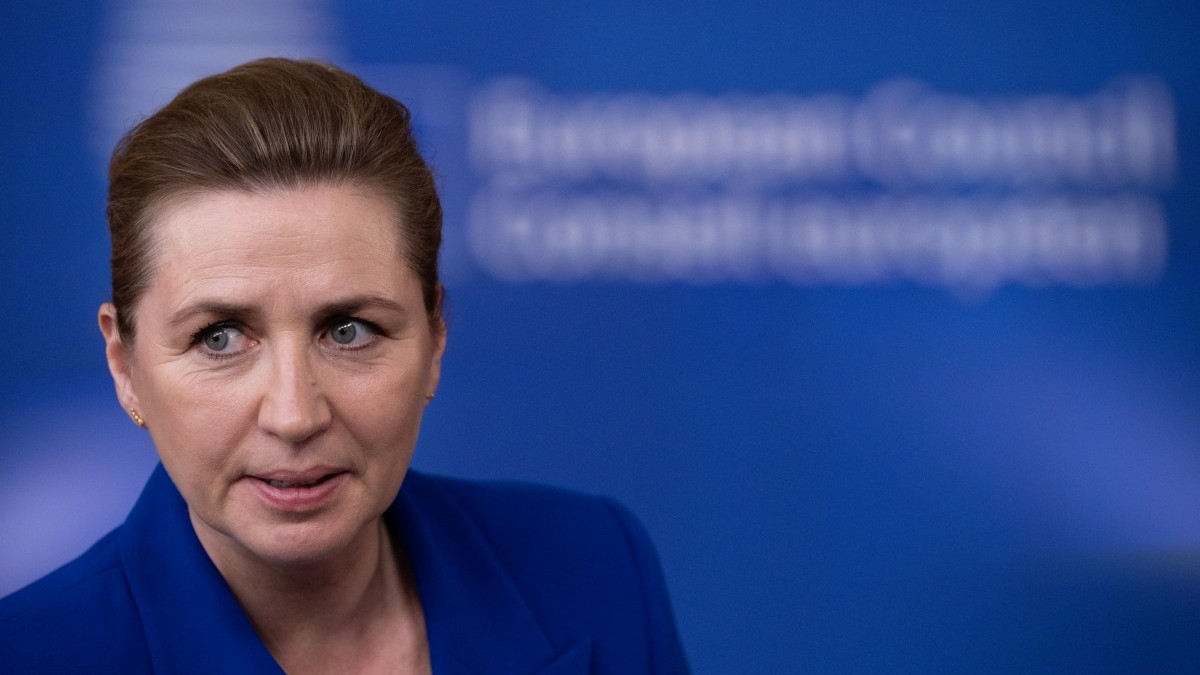
Denmark’s prime minister Mette Frederiksen has secured a third consecutive term in office after reaching an agreement to form a new centre-left coalition government following more than two months of negotiations.
Frederiksen announced on Monday, June 1st, that her Social Democrats had agreed to govern alongside the Socialist People’s Party, the Danish Social Liberal Party, and the centrist Moderates. She informed King Frederik X of the agreement on Monday evening, formally paving the way for the new administration.
“We have succeeded after long negotiations in forming a government,” Frederiksen told reporters after meeting the king.
The coalition brings together four parties holding 82 seats in Denmark’s 179-seat parliament, short of the 90 needed for a majority. Minority governments are common in Denmark, however, and the new administration is expected to rely primarily on support from the left-wing Red-Green Alliance to pass legislation.
The agreement ends more than ten weeks of political uncertainty following Denmark’s March 24 parliamentary election, which produced no clear majority. Although Frederiksen’s Social Democrats remained the largest party, winning 38 seats, the result was the party’s worst performance in more than 120 years.
Coalition talks repeatedly stalled as both Frederiksen and the centre-right Liberals attempted to assemble a governing majority. At one stage, Liberal leader Troels Lund Poulsen was tasked with forming a government but failed to secure sufficient backing.
A key figure throughout the negotiations was former prime minister and outgoing foreign minister Lars Løkke Rasmussen, whose Moderates party held talks with both political blocs and reportedly helped bring previous rounds of negotiations to an end.
The new government represents a shift to the left from Frederiksen’s previous administration, which included both the Moderates and the centre-right Liberals in a rare coalition spanning the political divide.
The coalition faces a number of immediate challenges, including ongoing tensions with the United States over Greenland after repeated remarks by Donald Trump about acquiring the Arctic territory. Denmark is also under pressure to increase defence spending as European governments respond to security concerns linked to Russia’s war against Ukraine.
Frederiksen said the coalition’s governing programme would be presented on Tuesday, with the new cabinet expected to be unveiled on Wednesday.
“It is a government platform for the people who are in Denmark, for the generations to come, and also for the animals,” she said, referring to one of the issues that featured prominently during the election campaign.