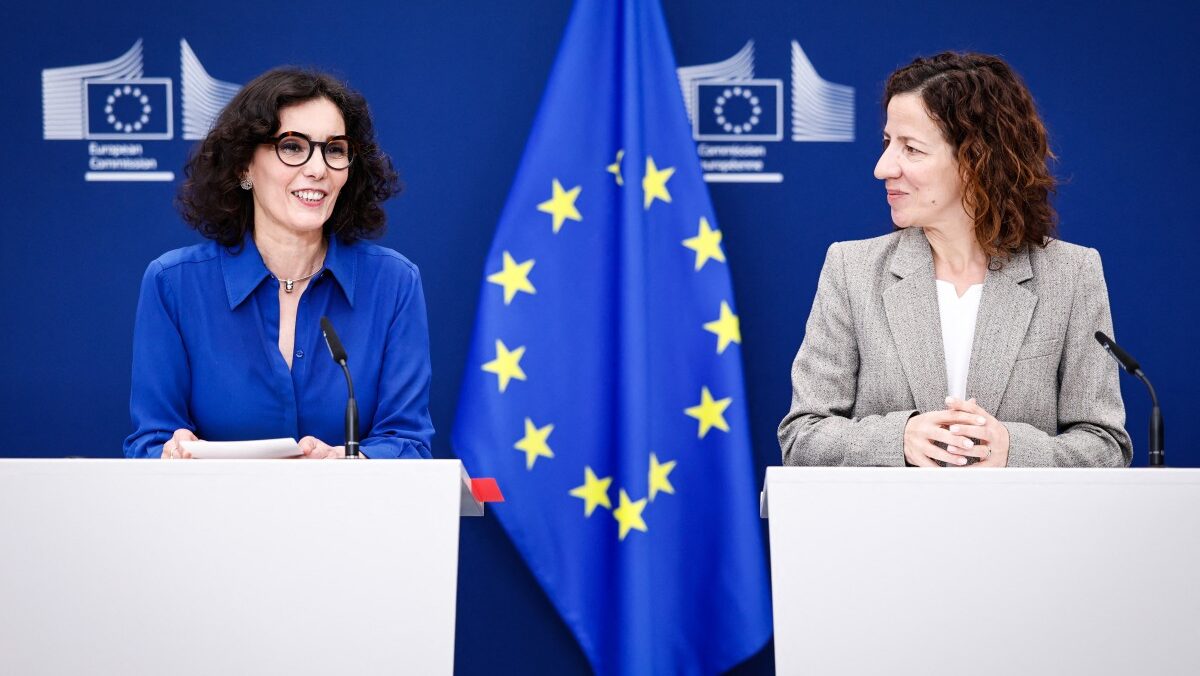
European Commissioner Hadja Lahbib (L) and EU executive vice president Roxana Mînzatu (R).
Simon Wohlfahrt / AFP
Brussels is planning to monitor online communities where young men discuss masculinity and gender politics, citing concerns about the rise of ‘anti-gender narratives.’
The initiative forms part of the European Commission’s Gender Equality Strategy for 2026-2030, presented on Thursday. The plan aims to strengthen EU policies on gender equality and includes examining how online communities critical of these policies are formed, particularly among young men.
According to the Commission, the goal is to better understand why some young men are becoming increasingly sceptical of equality policies promoted by Brussels.
One element of the strategy is a study examining the ‘networks, spheres and narratives’ on the internet that influence young men and boys. In practice, this means looking at digital communities, forums, and discussion spaces where issues such as masculinity, the role of men in society, and gender policies are debated.
For the EU executive, these spaces can become sources of ‘political radicalisation’ or places where discourse considered hostile to women spreads.
Critics warn that the line between tackling harmful content and monitoring legitimate opinion can easily become blurred, particularly when the focus is on young people questioning official equality policies.
The strategy document also warns that ‘anti-gender narratives’ pose a risk to Europe’s democratic environment. According to Brussels, such ideas often spread through social media and may be amplified or financed by international actors pursuing their own political agendas. The document suggests that criticism of EU gender policies can sometimes be encouraged from outside Europe.
In response, the Commission wants to deepen cooperation with major digital platforms to limit the spread of content linked to gender-based violence or material considered hostile to equality policies. This approach connects with the broader debate over online content moderation, an area where the European Union has steadily expanded its regulatory powers through legislation such as the Digital Services Act (DSA).
Brussels also presents the strategy as an economic measure. European Commissioner for Equality Hadja Lahbib said the gender pay gap costs the European economy around €390 billion each year.
Gender quality is not just a concept. It’s lived every day. In care, work, science, at home, in public & online.
— Hadja Lahbib (@hadjalahbib) March 5, 2026
True equality unites. It does not divide. And yes, men and boys are co-authors of this story. The new Gender Equality Strategy goes further: https://t.co/NlZzndaBT6 pic.twitter.com/JiZyjbY7s5
According to estimates from the European Institute for Gender Equality, greater equality could increase EU GDP per capita by 9.6% and generate more than ten million jobs by 2050. On that basis, the Commission plans to strengthen existing policies and support member states in implementing them.
The strategy arrives at a moment when many Europeans see the continent facing other urgent challenges, including security risks, energy instability, economic pressure, and growing migration flows.
Even so, Brussels continues to expand its agenda in the social sphere. The new strategy is likely to intensify debate over how far the European Union should go in shaping social policy across member states with very different political traditions and cultural views.