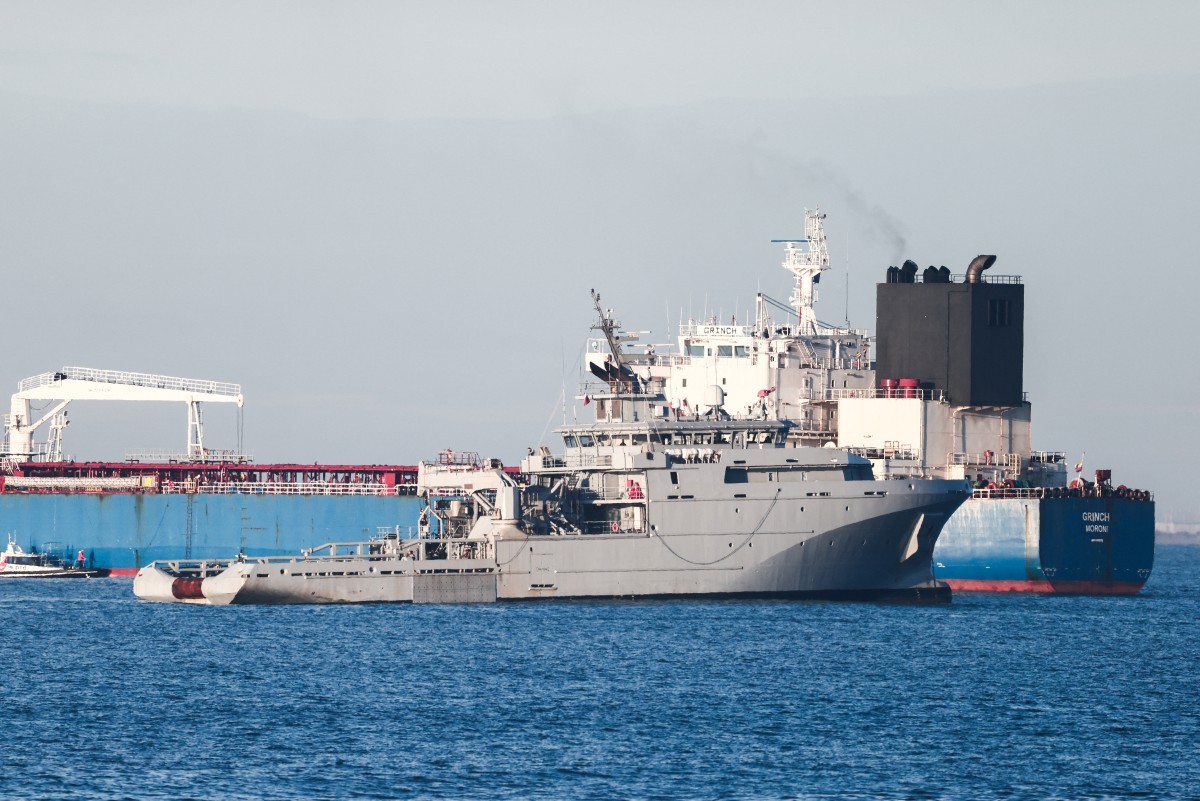
The European Union approved its twenty-first package of sanctions against Russia this Thursday with a change that radically alters the position held until now: member states will be able to confiscate and sell the oil and other goods carried by the ‘shadow fleet’ once a vessel has been boarded in a naval operation.
Until now, intercepting a tanker meant immobilising it. The crude stayed on board, with no clear destination. “The problem was what to do with the cargo,” a European official admitted in Brussels. “It’s very valuable, as you can imagine.”
The numbers speak for themselves. In March, Belgium seized a vessel in the North Sea with a capacity of 330,000 barrels—some 26 million dollars at current prices. France did the same last month with another tanker loaded in Murmansk: 600,000 barrels, around 48 million. Multiply that by a fleet that, according to the EU itself, has become the Kremlin’s main shortcut for dodging the G7 cap.
The same set of measures freezes the cap on the price of Russian crude at 44 dollars per barrel for twelve months; without an agreement, it would have risen to 58. Brussels estimates the measure will strip Moscow of 3.5 billion dollars of oil revenues over a year, a figure based on Urals at 60 dollars (a benchmark grade like Brent). The big problem here is that Urals was trading at 50 in early July and now hovers around 80, following the re-escalation of the U.S. offensive against Iran.
As was reported in the analysis of the gas cap, the logic is the same for both forms of energy: to move from the gestures to a real dent in the cash flow. Confiscating the crude takes that objective a step further. It is no longer about making Russian sales more expensive or restricting them, but about seizing the product and reselling it, with the proceeds directed, depending on each country’s legislation, to national treasuries or to support for Ukraine.
This blows apart what remained of international legality, since, officially, the European Union is not at war with Russia.
Guided by that reality, Moscow has called it “piracy” and threatens to respond “by all necessary means.” High Representative Kaja Kallas defended the boarding of the freighter MV South Star in the Mediterranean on July 20th by saying “Every illicit voyage helps sustain Russia’s war machine. We are matching our sanctions with action at sea.”
Beyond the act itself, the problem for Brussels remains a legal one. The boarding takes place on the high seas, but confiscation is settled in national courts, and maritime law requires a solid jurisdictional basis to seize and dispose of the cargo. A German court has already blocked the sale of crude from a Russian tanker; Belgium imposed a 10-million-euro bond on another. Russia is weighing its legal options.
Three things remain to watch: whether any state issues implementing guidance; whether there will be a first cargo actually sold; and whether the EU will extend the formula beyond oil. If the move survives the courts, it will be the most consequential enforcement tool of the year. If not, another Brussels attempt that comes to nothing.