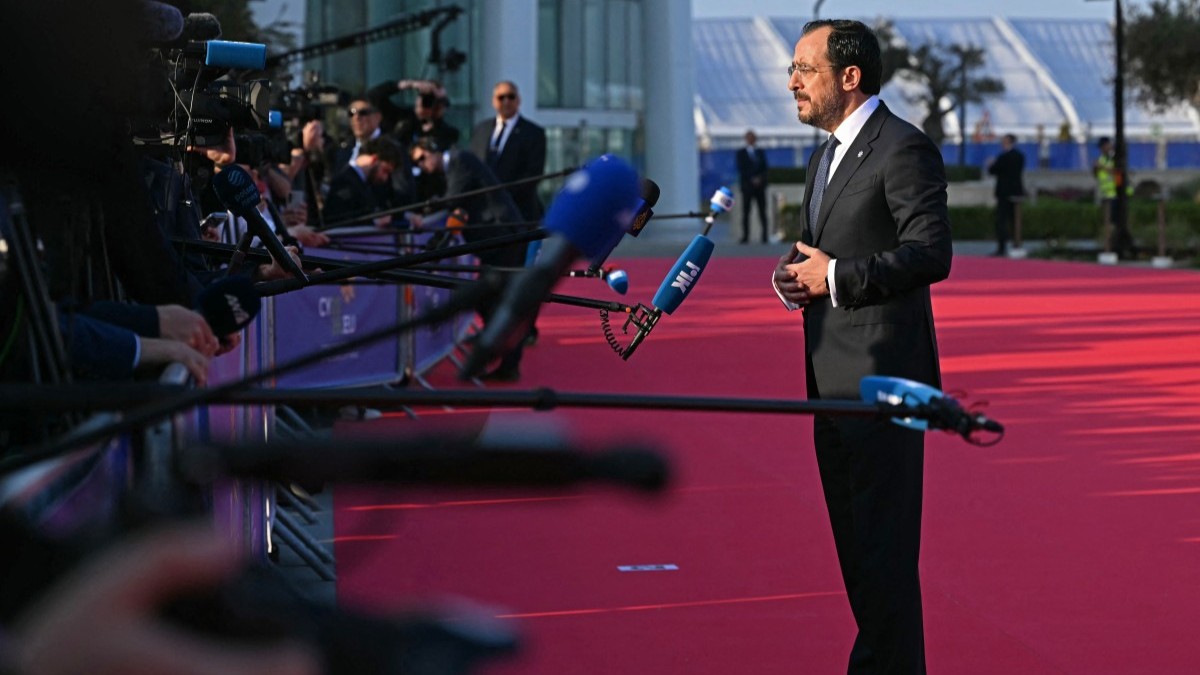
Cyprus’ President Nikos Christodoulides speaks to the media upon his arrival ahead of an informal meeting of the European Council, in Ayia Napa on April 23, 2026.
NICOLAS TUCAT / AFP
The EU Council on Thursday announced the implementation of the long-frozen €90 billion loan to Ukraine, taking the last step in delivering the financial support agreed by the European Council back in December 2025. The decision enables the European Commission to begin payout as early as the second quarter of 2026.
“Today the Council approved the final element needed to allow for the disbursement of the €90 billion loan for Ukraine. The Cyprus Presidency has worked tirelessly to ensure all elements needed for the loan were in place,” said Makis Keravnos, Minister of Finance of the Republic of Cyprus, the EU country that currently holds the rotating presidency of the bloc.
European Council President António Costa applauded the decision on X.
Promised, delivered, implemented.
— António Costa (@eucopresident) April 23, 2026
The EU’s strategy to achieve a just and lasting peace in Ukraine rests on two pillars: strengthening Ukraine; increasing pressure on Russia. Today we moved forward on both:
▪️ Unlocking the €90 billion loan to Ukraine, securing financial and…
According to the adopted amendments to the EU’s multiannual financial framework, the loan will be financed through EU borrowing on capital markets and backed by the EU budget’s available headroom. Repayment of the loan is expected to come from reparations owed by Russia to Ukraine–which many say are unlikely to ever materialize.
The loan has been at the centre of the Hungary-EU feud, with Prime Minister Viktor Orbán opposing the loan, citing concerns the money would only deepen the war and not push the conflict towards peace. However, Hungary did not veto the loan, rather, along with Czechia and Slovakia did not sign up for the loan, choosing an ‘opt-out’ road.
Later, as Ukraine stopped the flow of oil from Russia to Hungary through the Druzhba oil pipeline, Orbán effectively vetoed the loan, stating Budapest would lift the veto once Kyiv opened the pipeline.
In what increasingly appears to have been election interference, Ukraine kept the pipeline closed until after the Hungarian elections. In fact, shortly after the electoral defeat of the ruling conservative parties, Ukraine announced Druzhba had been “repaired” and oil supply would resume shortly.
At today’s Council meeting in Cyprus, the Hungarian delegation also voted in favor of the implementation of the loan, in accordance with Budapest’s declared stance.