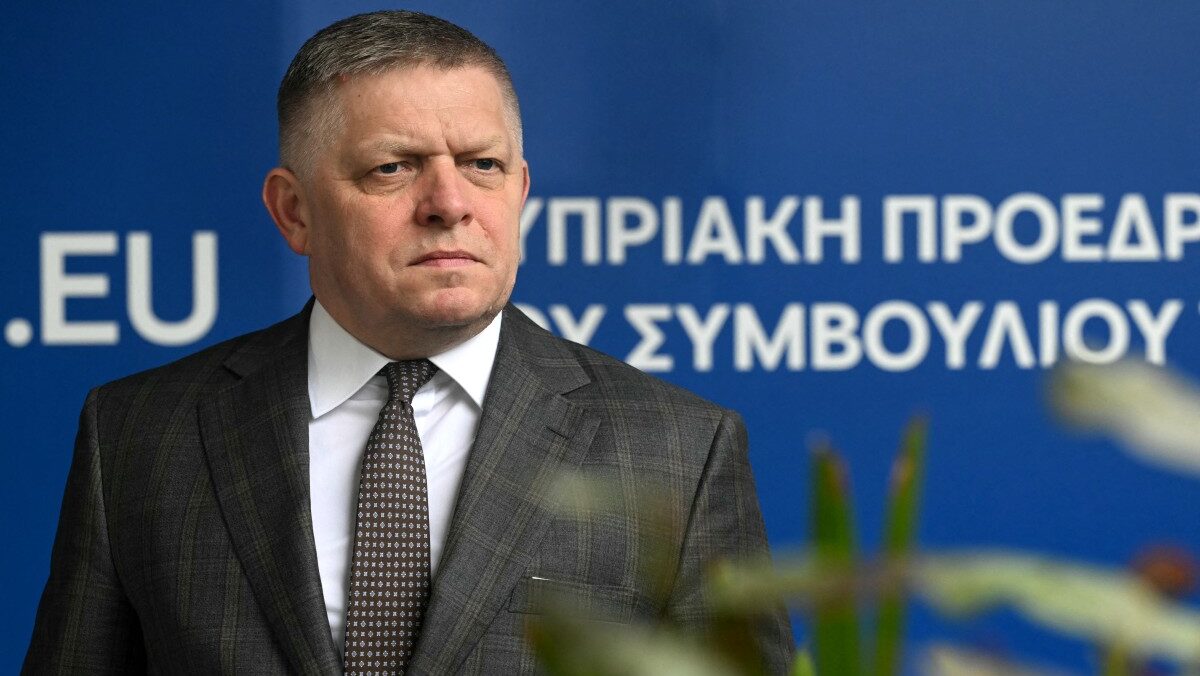
Robert Fico has accused Brussels of pushing Europe into an energy policy that will leave the continent paying more for Russian fuel while becoming increasingly dependent on the United States. Speaking in Bratislava this weekend, Fico mocked the EU’s plan to phase out Russian energy imports before 2027, asking: “Are we such idiots already?” as several member states continue importing large volumes of Russian LNG.
According to Fico, the result will not be European energy independence but a new dependency: the United States buying Russian energy cheaply and then reselling it to Europe with far higher margins.
While the European Commission continues to argue that Europe is cutting itself off from Russian energy, several member states continue importing large quantities of Russian liquefied natural gas. France, Belgium, and Spain remain among the largest importers of Russian LNG into the EU. Brussels tolerates it because, quite simply, the European energy system still needs it.
Fico says that exposes a double standard inside the EU.
“So we can’t, but France can buy Russian liquefied gas,” the Slovak leader said, highlighting what he sees as a double standard inside the bloc, with Brussels and the media demanding faster cuts from smaller Eastern member states while largely overlooking continued Russian LNG imports in Western Europe.
Smaller countries in Central and Eastern Europe face immediate demands to cut their energy ties with Russia, while larger Western economies continue absorbing Russian resources through alternative channels.
The problem is even bigger in countries such as Slovakia, Hungary, and the Czech Republic, which were built to rely on Russian energy during the Soviet era and where any rapid replacement carries far higher industrial and social costs than in other parts of Europe.
The row is also becoming a fight over who controls Europe’s future energy supply.
The European Commission insists that European security requires reducing any dependency on Moscow, even if energy costs increase. At the same time, however, American companies are pouring billions into energy infrastructure across Central and Eastern Europe. Pipelines, terminals, and gas routes financed or backed by American capital are advancing precisely while Brussels pushes for the definitive closure of Russian energy flows.
If this ultimately becomes reality, Europe would be witnessing one of the most contradictory moves against its self-proclaimed “strategic independence” in decades.