europeanconservative.com
Every year in Paris at the beginning of June, the Nuit Blanche (white night) takes place, a sort of night-time festival that unfolds across the city and its main landmarks. This year, the headline act is Barbara Butch, an icon of the queer movement who caused a stir by parodying the Last Supper during the 2024 Olympic Games opening ceremony. Her selection reflects the deliberately progressive, provocative, and anti-Christian stance of the new mayor, Emmanuel Grégoire, a worthy successor to Anne Hidalgo in this regard. Devout Catholics are concerned about the diocese’s lack of response to the scale of the provocation.
During the opening ceremony of the Paris 2024 Olympic Games, the French DJ and queer activist Barbara Butch took part in the tableau entitled “Festivité”—a sequence featuring several artists, dancers, and drag queens in a celebration supposedly inspired by Greek mythology. Positioned at the centre of the stage, she quickly became one of the most publicised figures in this sequence. It sparked fierce controversy, both in France and around the world, with some commentators and politicians seeing it as an evocation of Leonardo da Vinci’s “The Last Supper” and a mockery of Christianity.
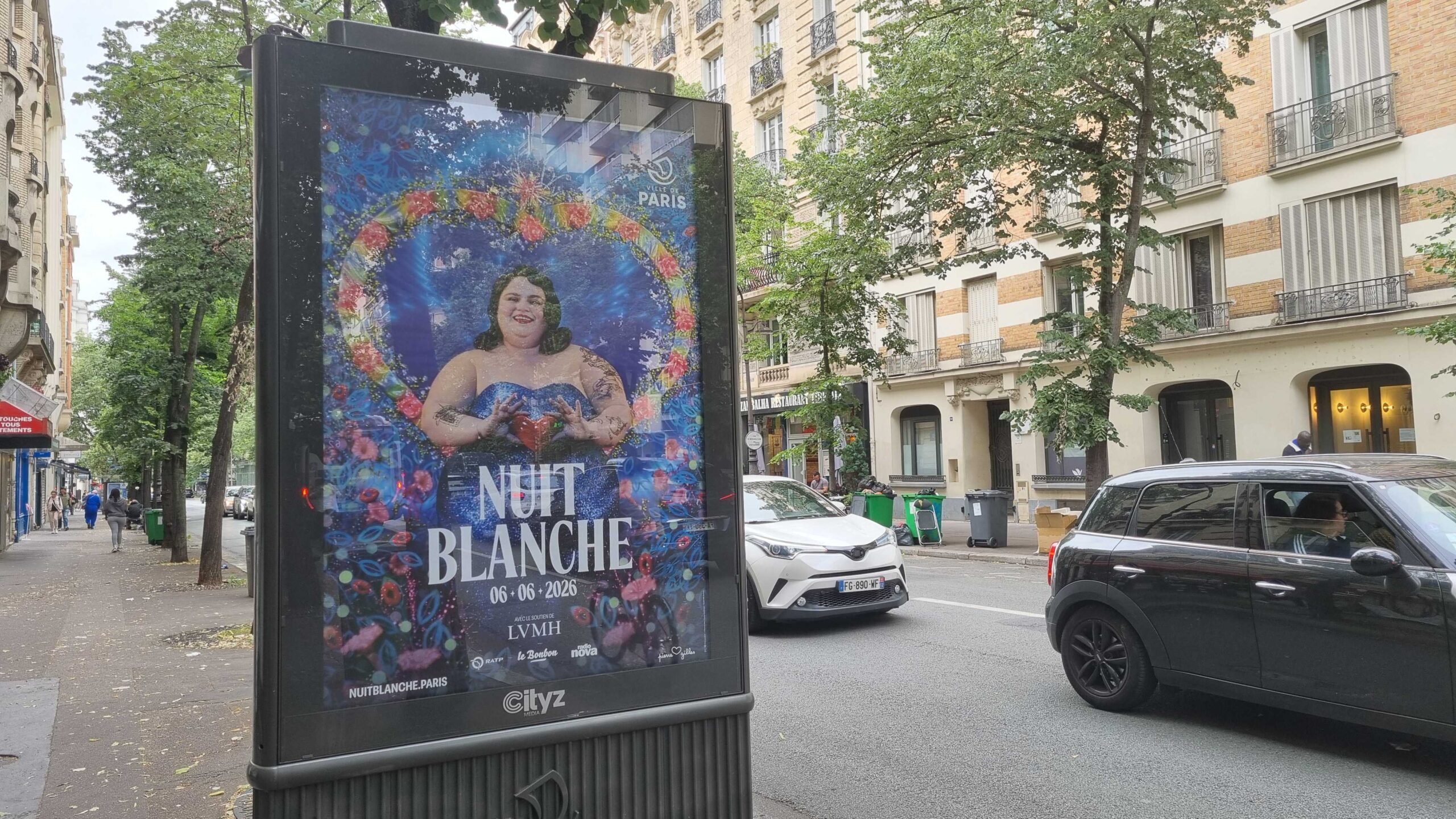
For several weeks now, Parisians have seen posters springing up in the streets of the capital announcing the return of Barbara Butch as the star of the Nuit Blanche. She has been chosen by the City of Paris to curate the 25th edition of this event, scheduled for June 6th, 2026, and to define its artistic direction around the themes of love, celebration and community. The programme is to be structured around various performances, installations, and DJ sets, with a strong focus on music and ‘participatory’ experiences, set up at the Hôtel de Ville as well as at various iconic venues across the capital.
The budget allocated to the event by the city council amounts to €1.3 million—including €42,000 to pay Butch. In addition to the public expenditure, it is the use of places of worship in the programme that is causing outrage. Several Parisian churches and chapels are among the venues selected to host “immersive installations, sound performances and artistic experiments,” naturally, all unrelated to their religious purpose.
The Tribune chrétienne website provides details on the ‘installations’ in question. In the Church of Saint-Laurent, the announced experience is entitled “Sous la peau du ciel” (Under the skin of the sky). Visitors will be invited to record their ‘wishes’ on their phones, which will then be blended with ambient sounds and various digital effects to produce an immersive experience presented as an “invisible membrane stretched between human hearts and the atmosphere”—a New Age-style spirituality that bears only a very distant resemblance to Catholic worship. In the Church of Saint-Eustache, one of the most famous in Paris, visitors will discover a monumental work composed of keys from second-hand computer keyboards salvaged from rubbish tips, presented as an artistic endeavour to rewrite cultural heritage and critique consumer society.
The list of churches involved is particularly impressive: Saint-Germain-l’Auxerrois, Saint-Eustache, Notre-Dame-des-Blancs-Manteaux, Saint-Denys-du-Saint-Sacrement, Notre-Dame-de-l’Espérance, the Saint-Louis Chapel at the Salpêtrière, the chapel at Tenon Hospital, and even the Expiatory Chapel built in memory of King Louis XVI.
Such extensive use of Parisian churches for an evening of secular festivities, to say the least, is bound to raise questions. Most Parisian churches have legally belonged to the city of Paris since the 1905 law on the separation of church and state. But they remain designated for Catholic worship, and this designation confers real rights over their use upon the ecclesiastical authority and the parish priests assigned to them. This means that the diocese has all the legal means to oppose events it deems incompatible with the religious purpose of the premises. Abbé Raffray, a well-known figure in French conservative Catholic circles on social media, spoke to Valeurs Actuelles about his concerns. He believes that the decision to entrust the artistic direction of the Nuit Blanche to Barbara Butch is in itself a provocation. Using Parisian churches as a backdrop for socio-political ramblings exacerbates the situation. “A church can only be used for a performance if it does not conflict with its sacred purpose. Any misuse constitutes a form of desecration,” he points out.
For the time being, Archbishop Ulrich has not deigned to comment on these ‘immersive experiences.’ On the ground, resistance is mounting among outraged believers—who will undoubtedly be branded as fundamentalists should they dare to point out that churches are first and foremost intended for divine worship.