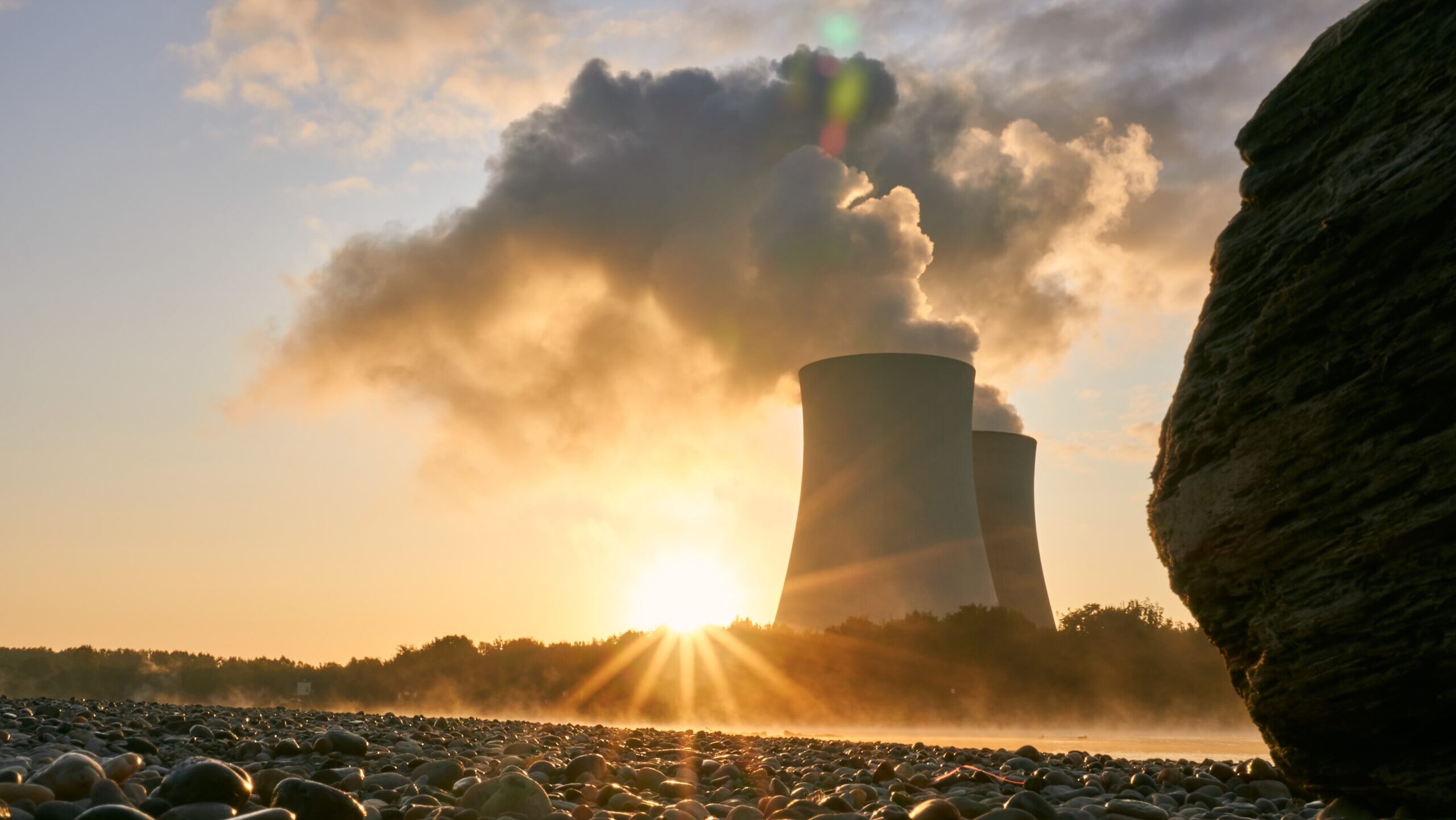
Nuclear power plant
For nearly forty years, Italy has been one of the most emblematic examples of Europe’s move away from civil nuclear power. Today, under the impetus of Giorgia Meloni’s government, Rome is set to radically change its strategy. The Italian parliament is initiating a reform aimed at re-establishing the legal framework to enable the development of a new nuclear sector. By taking this path, Italy intends to secure its energy security and industrial competitiveness on a new footing.
Italy has not always been hostile to nuclear energy. As early as the 1950s, it was among the European pioneers of civil nuclear power and gradually brought four reactors into service. On the eve of the Chernobyl disaster, the country had a well-established nuclear industry and was even considering expanding its fleet.
However, the accident in Soviet Ukraine on April 26, 1986, had a lasting impact on Italian public opinion. Radioactive fallout affected part of the country and fuelled a deep-seated movement of mistrust. In November 1987, a referendum led voters to approve the phasing out of civil nuclear power. Legally, the referendum did not explicitly ban this energy source, but it deprived the government of the necessary tools to continue its development. Italy’s four nuclear power stations were gradually shut down, with the last one ceasing operations for good in 1990.
An initial attempt to revive the programme took place under Silvio Berlusconi’s government. In 2008, Rome announced a partnership with EDF and Enel to build several EPR reactors. However, the Fukushima accident in March 2011 sent shockwaves through the country once again. A few months later, a second referendum saw more than 90% of voters reject the revival of nuclear power, putting a definitive end to the project.
Fifteen years on, the situation is very different. The war in Ukraine has profoundly altered Europe’s energy priorities. Like many of its neighbours, Italy has long relied on Russian gas imports to generate its electricity and power its industry. Whilst the government has managed to diversify part of its supply to Algeria, Azerbaijan, and Libya, the 2022 energy crisis has highlighted the vulnerability of a country heavily dependent on imports.
This geopolitical concern is now compounded by an industrial constraint. The decarbonisation of the economy, the electrification of transport, and the development of data centres and artificial intelligence technologies are driving a continuous rise in electricity demand. For the Meloni government, renewable energy sources alone will not, in the short term, be able to guarantee abundant, stable, and controllable generation. Nuclear power is therefore presented not as an alternative to renewables, but as their indispensable complement.
This development is part of a broader trend observed within the European Union. Long dominated by a divide between supporters of nuclear power and advocates of renewables, the energy debate is now tending to incorporate a new dimension: that of sovereignty. The issue is no longer merely about producing carbon-free electricity, but also about reducing strategic dependence on foreign suppliers and preserving European industrial competitiveness.
The principle was approved by MPs in June and has just been endorsed by senators.
Italy’s strategy is not to replicate the large-scale nuclear programmes of the 20th century. The government wishes to prioritise small modular reactors (SMRs) and advanced modular reactors (AMRs), whose proponents highlight faster construction, lower initial investment and better adaptation to modern electricity grids. Rome also intends to participate in the development of fourth-generation reactors as well as in European research programmes on nuclear fusion.
The law passed in 2026 does not yet authorise the construction of power stations, but it empowers the government to rebuild the entire regulatory framework that was dismantled following the 1987 referendum. This involves, in particular, defining authorisation procedures, safety regulations, the role of regulatory authorities, arrangements for the management of radioactive waste and the responsibilities of future operators. Only once this legal framework is in place will the first industrial projects be authorised. The Italian authorities estimate that the first plants will not come online before the middle of the next decade.
Nevertheless, the task ahead remains considerable. After nearly forty years of inactivity, Italy no longer has a fully fledged nuclear industry. It will need to rebuild industrial expertise, train a new generation of engineers, re-establish a supply chain, and resolve the ever-sensitive issue of the final disposal of radioactive waste. Added to this is political uncertainty: whilst support for nuclear power is growing in opinion polls, the issue remains capable of reigniting deeply entrenched divisions within Italian society.
Italy is not alone in this. In France, after several years during which the stated aim was to reduce the share of nuclear power in the electricity mix, Emmanuel Macron made a major U-turn by announcing in 2022 the construction of at least six EPR2 reactors, with the possibility of building a further eight. Paris now regards nuclear power as an essential pillar of its strategy for energy sovereignty and carbon neutrality.
Conversely, Germany has seen through to its conclusion the nuclear phase-out policy initiated after Fukushima. Germany’s last three reactors were shut down in April 2023. However, this decision continues to fuel debate across the Rhine, as rising electricity prices, the industry’s difficulties and the increased reliance on electricity imports—notably from French nuclear sources—are leading some politicians to question the consequences of this decision.
Italy’s announced return to nuclear power illustrates a radical shift in energy policy. Forty years after making nuclear power the symbol of a risk to be avoided, Rome is now making it one of the instruments of its sovereignty.