Jean-Luc Mélenchon is gaining ground as France’s 2027 presidential race takes shape, exploiting a divided Left and sluggish centrist campaigns. Still deeply unpopular, the chameleon-like Insoumis leader may yet prove far more dangerous than his current ceiling suggests.
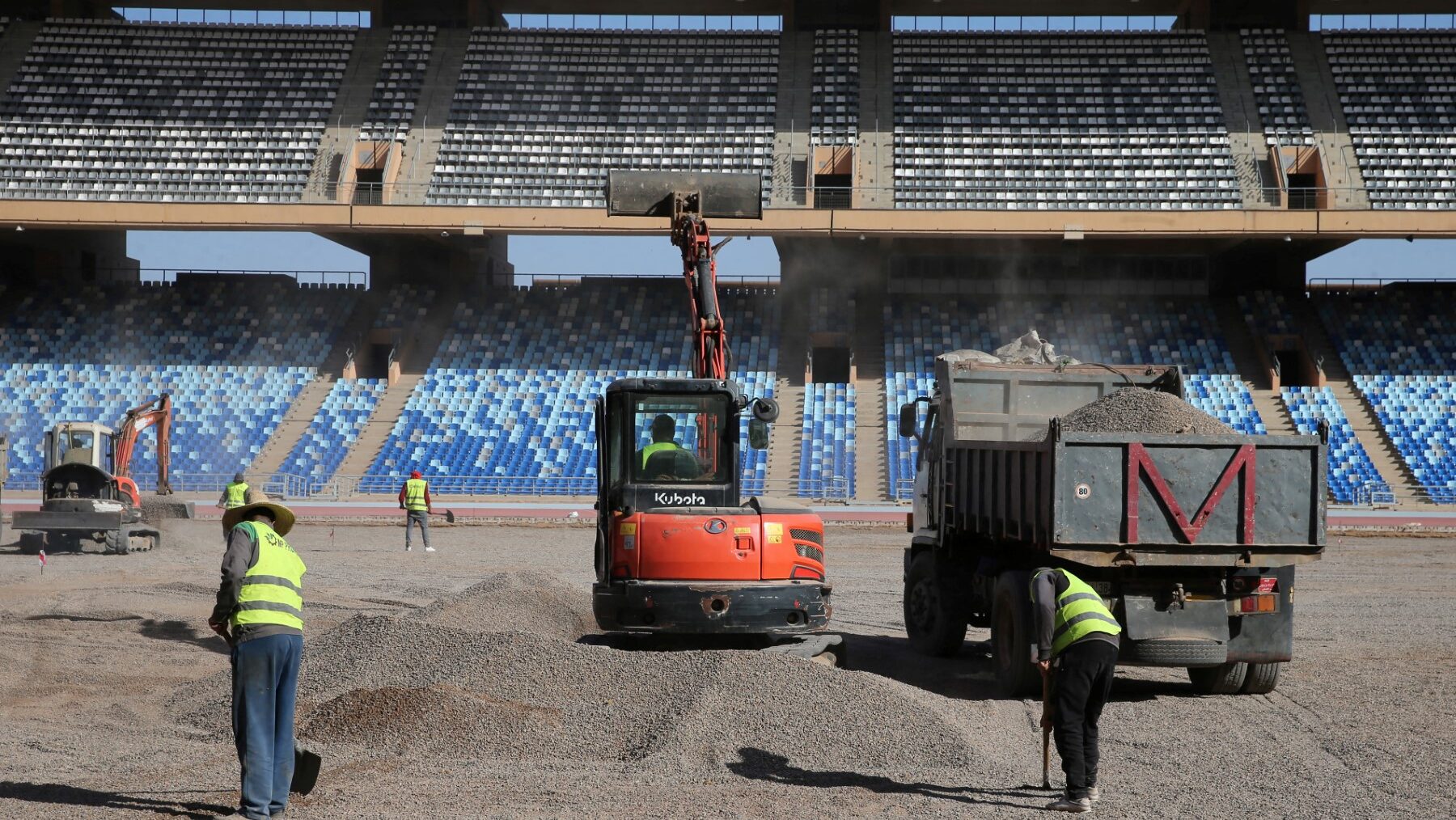
Construction workers at the Marrakesh stadium in 2024
Photo by AFP
Spain’s right-wing VOX party has called for Morocco’s co-hosting of the 2030 FIFA World Cup to be reconsidered following last week’s mass migration invasion of Ceuta.
The party has submitted a non-binding motion to the Spanish parliament urging the government to ask FIFA to review Morocco’s role in the competition.
VOX argued that the events of July 30-31, when around 72,000 people crossed from Morocco into the Spanish enclave of Ceuta, had destroyed the trust necessary for a joint World Cup bid.
In its proposal, the party accused Morocco of using migration as a means of political coercion against Spain, claiming the kingdom had demonstrated that it was “not a loyal partner” either for hosting a sporting event of such significance or for broader bilateral cooperation.
VOX described the mass crossing as an “act of war against Spain” and insisted it could not go unanswered.
The party also argued that the rapid movement of tens of thousands of people exposed Morocco’s structural weaknesses and raised serious doubts about its ability to provide the security and organisational guarantees required for a tournament expected to attract millions of supporters.
It warned that allowing Morocco to host the World Cup final under such circumstances would be viewed as “a deliberate humiliation” of Spain.
VOX is the second Spanish party in recent days to question Morocco’s role in the tournament.
On Wednesday, far-left Sumar, the junior partner in Prime Minister Pedro Sánchez’s coalition government, tabled its own parliamentary motion calling for Spain’s sporting authorities to reconsider the joint hosting arrangement with Morocco and Portugal on human rights grounds.
Although both motions are non-binding and neither party has sufficient parliamentary support to force a policy change, the interventions highlight growing political unease following the Ceuta crisis, in which more than 80 people reportedly died attempting to reach Spanish territory.
The debate comes as Sánchez faces mounting scrutiny over his government’s response to the crisis amid claims that Spain’s intelligence services warned the government days in advance of the mass crossing.