Jean-Luc Mélenchon is gaining ground as France’s 2027 presidential race takes shape, exploiting a divided Left and sluggish centrist campaigns. Still deeply unpopular, the chameleon-like Insoumis leader may yet prove far more dangerous than his current ceiling suggests.
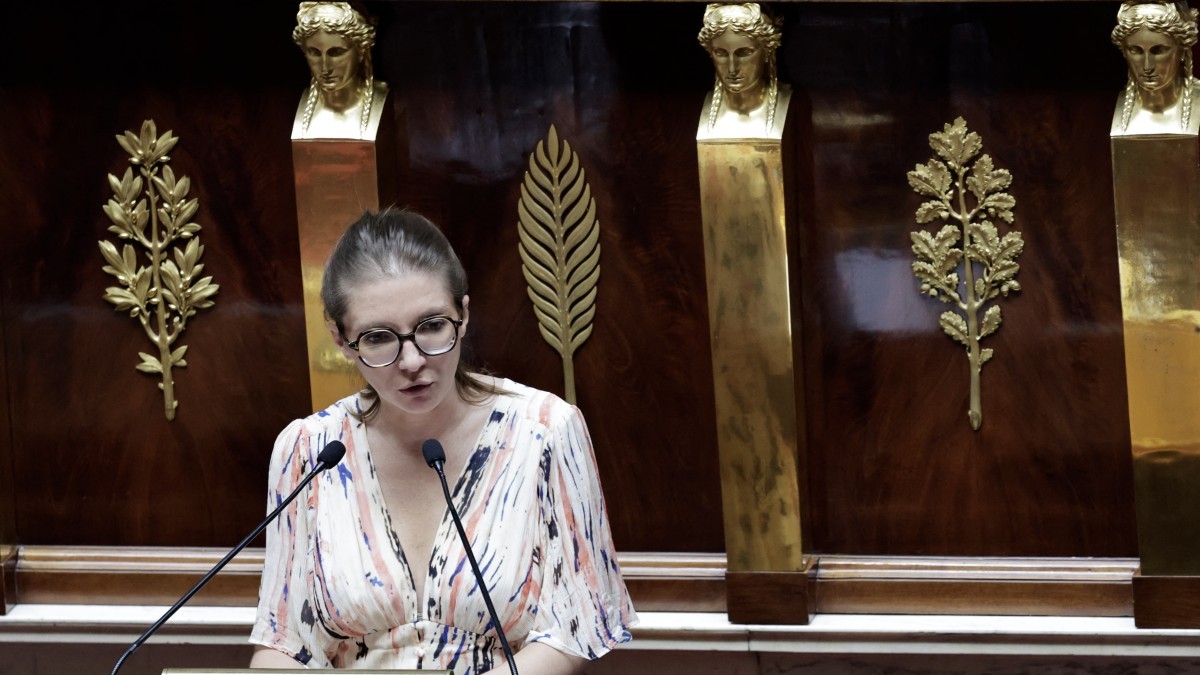
France’s minister in charge of combating discrimination Aurore Bergé speaks during the examination of the draft bill on the protection of minors at The National Assembly in Paris on July 15, 2026.
STÉPHANE DE SAKUTIN / AFP
On July 21st, Parliament gave final approval to the bill introducing a minimum age for accessing social media in France. The legislation establishes the principle of a ban on social media for those under the age of 15. Platforms will now be required to verify the age of their users before they open or maintain an account, using a ‘double anonymity’ verification system. Users will have to prove their age to a trusted third party, which will issue a cryptographic token certifying only that they are of legal age in relation to the set threshold, without disclosing their identity to the platform. The implementation schedule is phased: from September 2026 for new accounts, then from January 2027 for existing accounts.
However, many observers doubt that this law will actually come into force under the announced conditions. The Act of July 7, 2023 on the digital age of majority already provided for mandatory age verification of users and penalties for non-compliant platforms, before being blocked due to a lack of implementing decrees and because of its incompatibility with the European Digital Services Act.
The Senate’s rapporteur for the bill explained that its future implementation would depend “almost exclusively on the European Commission.” Once again, it is Brussels that will have the final say on the legal and technical details of online identity verification. On an issue as sensitive as the identification of internet users, France is thus effectively accepting a further curtailment of its sovereignty.
The chosen timetable is also fuelling debate. Retrospective verification of existing accounts will begin in January 2027, which is precisely when the presidential campaign will get under way. As early as last February, Aurore Bergé, Minister for Combating Discrimination, announced that “the issue of ending anonymity on social media will arise during the 2027 presidential campaign.” For opponents of the bill, this coincidence cannot be entirely ignored.
Beyond the political dimension, some also fear the consequences for freedom of expression. The editor-in-chief of the conservative magazine Frontières, Erik Tegnér, who is regularly subjected to censorship campaigns or legal proceedings, believes that the systematic identification of internet users will considerably facilitate the work of organisations specialising in combating online hate speech. Whereas identifying an author previously involved procedures that were sometimes lengthy and complex, the widespread introduction of identity verification could make prosecutions much simpler.
On the Right, criticism is also focused on the attitude of the parties represented in the National Assembly. Opponents of the bill point out that very few MPs voted against this reform. The Rassemblement National largely abstained–a culpable abstention, which exploits the fact that child protection is a sufficiently consensual argument to make acceptable a mechanism whose long-term consequences for civil liberties remain largely underestimated, and for which Marine Le Pen’s party will surely be one of the first to bear the brunt.
The protection of minors deserved more targeted measures that were less intrusive on civil liberties. Restricting access to smartphones for under-15s, strengthening parental control tools, or even imposing restrictions on platforms regarding the addictive mechanisms of their algorithms would have achieved results in terms of protecting minors without introducing a blanket identity verification system.
Ultimately, the Act of July 21st is still merely a general framework, with many of its details yet to be defined. However, it sets a precedent for an unprecedented level of control over digital identity, which is likely to be gradually extended far beyond its original purpose. Aurore Bergé stated after the vote:
What happens inside people’s homes is the state’s business.
The course is clearly set.