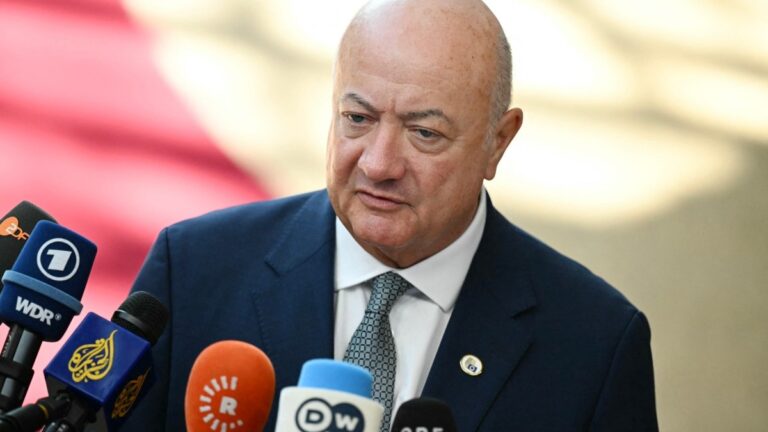
The European Commission has declined to comment on the recently leaked Spanish police report pointing to Rabat’s involvement in the Ceuta mass incursion, declaring the investigation “a matter for the national authorities.”
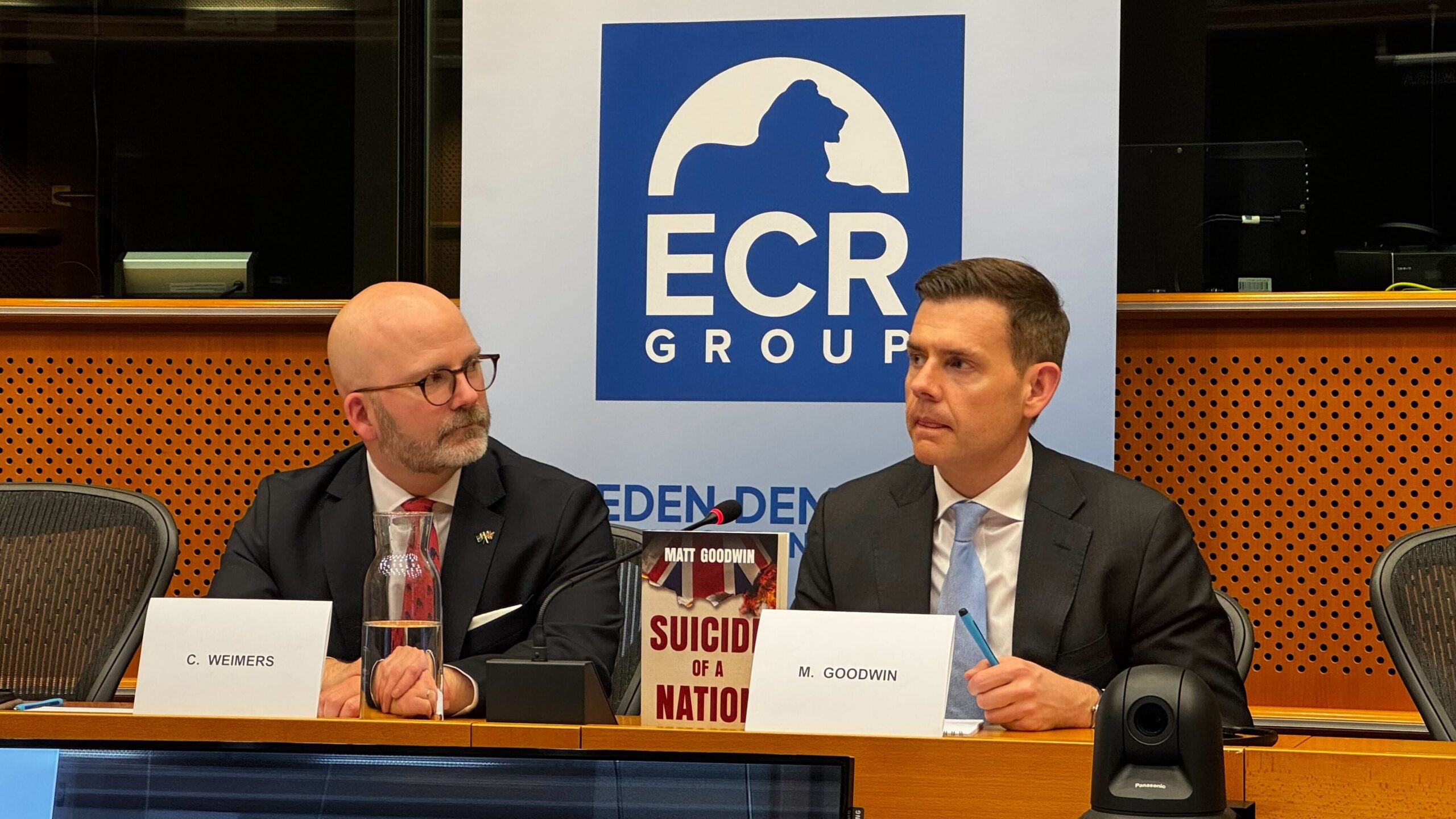
As immigration surges back to the top of Europe’s political agenda, the European Conservatives and Reformists (ECR) group hosted a high-stakes event in the European Parliament on Tuesday, featuring British political scientist Matt Goodwin presenting his new book, Suicide of a Nation. Immigration, Islam, Identity.
The event, organised by Swedish MEP Charlie Weimers, brought together several conservative and sovereigntist MEPs from different countries and revolved around the conviction that Europe is undergoing an accelerated demographic and cultural transformation while European institutions continue to avoid discussing its consequences.
Weimers opened the event by arguing that Goodwin’s book “says out loud what millions of people already feel.” According to the Swedish MEP, Britain, Sweden, and other European countries are experiencing “profound, rapid and irreversible” changes linked to mass immigration and the loss of national cohesion. “A healthy democracy does not silence difficult questions. It confronts them,” he said.
Goodwin arrived in Brussels with a simple and deliberately provocative argument. “There is a feeling shared by millions of people in Europe: we are losing our country,” he said. According to Goodwin, that feeling lies behind the success of a book that has become the number one bestseller in Britain despite not having been published by a mainstream publishing house. For Goodwin, this demonstrates that there is a growing demand for arguments outside those offered by political and media elites.
The core of his remarks focused on demographics. If current trends continue, he said, the white British population will fall from 74% to 33% by the end of the century, while Britons of foreign origin and their children will account for more than 60% of the population. He added that Islam could become the country’s main religion and noted that, in 2023, Mohammed replaced Noah as the most popular name for newborn boys in the United Kingdom.
Goodwin linked those changes to a broader crisis of national identity. He cited figures showing the collapse of Christianity in Britain—from 72% to 46% in barely two decades—and the growth of Muslim communities which, he argued, live in parallel structures with limited integration. “There is no nation without a common language, a common memory, and a visible cultural majority,” he said. According to his figures, there are already one million people in England who do not speak English, while more than five million people have a first language other than English.
Croatian MEP Stephen Nikola Bartulica asked whether the real problem was not the disappearance of family and religion in the West. Goodwin replied that “what we are witnessing is not only a political or cultural crisis but a spiritual crisis.” He criticised the fact that no major British party is willing to discuss the collapse in birth rates and rejected the idea of compensating for that decline through mass immigration. “That creates a kind of demographic Ponzi scheme,” he said. “Migrants also grow old, and then you need even more migrants.”
Instead, he called for family support policies, tax incentives, and a cultural shift that would once again place motherhood and the family at the centre of social life. He cited Hungary and Poland as partial examples, although he acknowledged that economic incentives alone are not enough.
Asked by europeanconservative.com how the growth of organised Muslim voting blocs in countries such as the United Kingdom could be curbed without altering the democratic system itself, Goodwin argued for restricting postal voting, removing voting rights from Commonwealth citizens who do not hold British nationality, and combating what he described as “family” or “sectarian” voting in certain communities. “We will not save Britain unless we first fix our democracy,” he said.
Later, he went even further. He proposed leaving the European Convention on Human Rights, banning the Muslim Brotherhood, outlawing Sharia courts, and restoring the principle of “national preference”—that is, giving priority to British citizens in housing, welfare and employment. “Citizenship is not the same thing as belonging,” he argued. “Belonging requires an emotional bond with the nation, not just a passport.”
Only a few years ago, an event like this would have been unthinkable inside the European Parliament. Today, it takes place openly, organised by one of the chamber’s political groups and with MEPs from several countries speaking freely. The question is no longer whether these ideas are entering the European debate. The question is how far they will end up shaping Brussels’ political agenda—and when the tipping point will come.