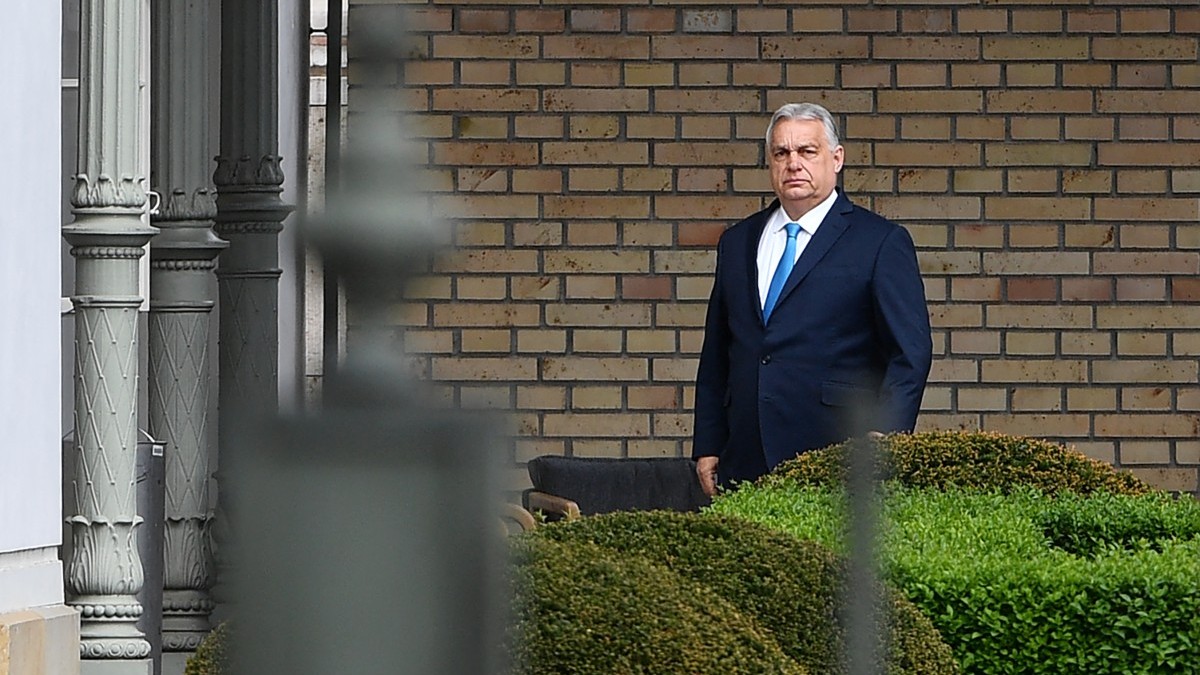
Outgoing Hungarian Prime Minister Viktor Orbán arrives at the Presidential Sándor Palace in Budapest on April 15, 2026 to meet with Hungary’s President three days after general elections in Hungary.
FERENC ISZA / AFP
Hungary’s new government has moved swiftly to dismantle several flagship policies introduced during Viktor Orbán’s sixteen years in power, raising concerns that Budapest is aligning itself more closely with Brussels at the expense of national sovereignty.
On Wednesday, May 20th, lawmakers from the ruling centrist Tisza Party submitted a constitutional amendment that would limit any Hungarian prime minister to a maximum of eight years in office.
If adopted, the measure would effectively prevent former five-time conservative prime minister Viktor Orbán from ever returning to power.
Prime Minister Péter Magyar had repeatedly promised during the election campaign that he would impose a two-term limit on the premiership and apply it retroactively.
The move seems less like democratic reform and more like political revenge, with the parliamentary group leader of the opposition Christian Democratic People’s Party (KDNP), Bence Rétvári, arguing that a government confident in its own performance would not need constitutional manoeuvres to sideline a political rival.
The proposed amendment would also abolish the constitutional foundation of the Sovereignty Protection Office, an institution established under Orbán to investigate foreign influence and defend Hungary’s constitutional identity and Christian culture.
Removing these provisions could weaken Hungary’s ability to resist EU migration policies and illegal immigration.
The parliamentary group leader of Orbán’s Fidesz party, Gergely Gulyás, said the amendment amounted to “the dismantling of Hungary’s strict migration policy.”
He warned that scrapping the relevant constitutional clauses could pave the way for acceptance of the EU migration pact, despite Tisza previously insisting there would be no change to Hungary’s hard-line stance on migration.
Gulyás also attacked the government over its decision to allow restrictions on Ukrainian agricultural imports to lapse. He accused Tisza of “governing through Facebook” instead of taking meaningful action, arguing that the failure to renew the import ban exposed Hungarian farmers and consumers to cheap, low-quality Ukrainian produce.
The reopening of the Hungarian market to Ukrainian grain, poultry, eggs, and other products has already sparked anger among farmers’ organisations, which warn that low-cost imports could devastate domestic producers already struggling with rising costs and strict EU regulations.
The measures introduced by the new government may reflect a broader effort to appease the European Commission in the hope of unlocking EU funds frozen during Orbán’s tenure, when Budapest repeatedly clashed with Brussels over sovereignty, migration, Ukraine, and LGBT issues.