A recent incident at a council meeting in Ivry-sur-Seine, on the outskirts of Paris, provided a striking snapshot of the tensions surrounding secularism and the place of Islam in French society. In protest against the ubiquity of the Islamic veil, a Rassemblement National (RN) councillor brandished a cross and recited a Hail Mary—provoking a hysterical reaction from a Communist mayor who has made Islamist communitarianism his electoral stock-in-trade.
The town of Ivry, on the outskirts of Paris, is one of the last towns still run by Communists, emblematic of what was once known as the ‘red suburbs’ surrounding the capital.
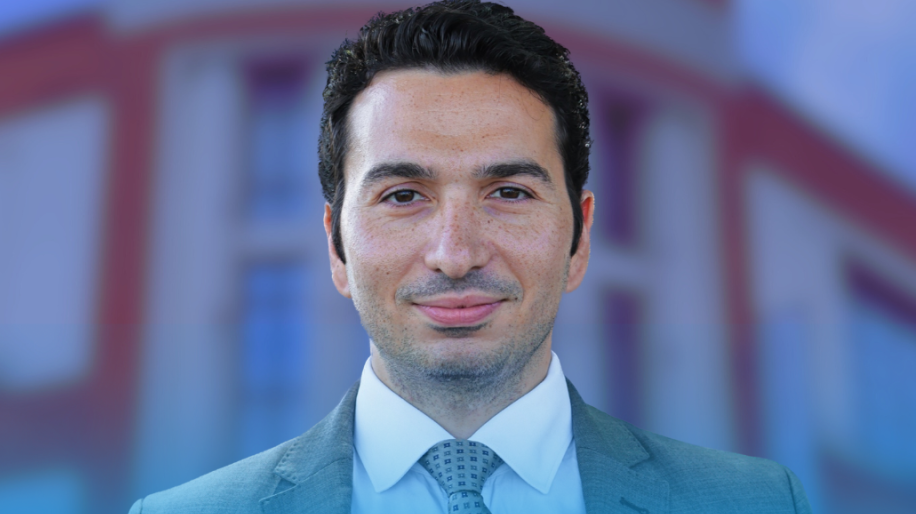
During one of the town council meetings, an opposition councillor, RN councillor Kevin Nader, found himself brandishing a cross and reciting a Hail Mary. The press was quick to make a big deal of the event, condemning the right-wing councillor’s “blatant attack on secularism.” This is how the AFP dispatch reported the incident: “An RN councillor interrupted the council meeting by producing a crucifix before reciting the Hail Mary prayer.”
This biased presentation of the facts deliberately ignored the circumstances surrounding Nader’s gesture. Several women wearing the full veil were attending the council meeting. The vice-chair herself was sitting veiled.
Nader therefore put an amendment to the vote: to ban the wearing of conspicuous religious symbols whilst performing duties representing the local authority, in accordance with the 1905 law establishing the separation of church and state.
A recording of the incident shows Fenda Diarra, the deputy mayor, saying she was “proud to be elected here, wearing her veil,” supported by the mayor, who explained that he “did not see why the laws of secularism should apply in his town” and that he was “proud of the diversity” of his local council.
The amendment was rejected. It was then, and only after this revealing vote, that Kevin Nader took out his small wooden cross—and not a crucifix—and recited his prayer.
The scene, brief but highly symbolic, quickly went viral on social media before being picked up by several national and local media outlets. Nader chose, with humour, to employ reductio ad absurdum: if secularism does not apply, we might as well place the municipal council under the sign of the cross. But his gesture provoked a downright hysterical reaction from the Communist mayor of Ivry, Philippe Bouyssou, who flew into a rage. A little later, the mayor described the councillor’s intervention as a “political crime.”
🚨🇫🇷 𝗔𝗟𝗘𝗥𝗧𝗘 𝗜𝗡𝗙𝗢 — Résumé vidéo de ce qu’il s’est passé hier lors du conseil municipal à Ivry-sur-Seine entre le maire PCF Philippe Bouyssou, son adjointe Fenda Diarra et le conseiller RN d’opposition Kevin Nader. https://t.co/Z535LCHFFt pic.twitter.com/FauQsRp0Sj
— L'Écho Chrétien (@lechochretien) June 12, 2026
In the press, criticism of the councillor mounted on the grounds that a council chamber is not a venue for religious expression, in whatever form, and that reciting a Catholic prayer constitutes a breach of the neutrality expected in a republican forum.
At the local level, some elected representatives also condemned a gesture perceived as an implicit ‘stigmatisation’ of Muslim religious practices in a context that is already particularly sensitive in Ivry-sur-Seine, where the Muslim and immigrant population is large and forms the electoral base of the current administration.
The dominant narrative has omitted a key element of the context: Kevin Nader’s gesture was a direct reaction to the presence of an Islamic headscarf worn by an elected representative during the session. This omission profoundly alters the interpretation of the incident. Whereas some media outlets have presented it as an isolated, even gratuitous, gesture, it should be seen as a symbolic response to a deliberate breach of the principle of secularism that favours the Muslim religion.
When questioned about the incident, which had gone viral, Marine Le Pen criticised what she deemed an unbalanced interpretation of the incident and a tendency to downplay the context whilst emphasising the symbolic significance of the councillor’s action, accusing reports of the incident of seeking to “distort reality.”
The mayor’s reaction, described as particularly virulent, also fuelled the controversy. The use of the term “political crime” to describe an act that was essentially a symbolic protest was clearly disproportionate. Videos circulating online show a man visibly losing his composure in a situation he cannot control.
Since the incident, internet users have been digging into the Communist mayor of Ivry’s illustrious past. His hatred of religion has been evident for years, manifesting itself in the form of dubious jokes about Catholics or Jews. Islam, on the other hand, is always spared. The mayor was seen inaugurating a Muslim cultural centre in Ivry with great pomp and circumstance, wearing a broad smile and declaring “Ramadan Mubarak” in public, or loudly proclaiming “Inshallah” whilst wearing a tricolour sash as he signed the planning permission for a mosque.
Being of Lebanese origin, according to several public biographical sources, Kevin Nader certainly knows better than most what it means to manage Islam’s place in the public sphere and the need to set limits on proselytising.
On forums and social media, comments are multiplying in support of a man who has had the courage, on the one hand, to denounce the double standards applied to secularism when it comes to Islam, and, on the other, to stand by his attachment to the Catholic faith. The councillor’s gesture is all the more interesting given that, in recent years, the RN has been very careful not to display any particular links with Catholicism—a move which has, incidentally, caused unease among the traditional Catholic electorate, who feel they are no longer recognised, whereas Catholicism was one of the party’s essential pillars in the days of Jean-Marie Le Pen, its founder.
In this context, with many French people finding it increasingly difficult to tolerate the official, sanitised discourse on multiculturalism, a local elected representative’s open defence of Catholic identity has worked in Bardella’s party’s favour.