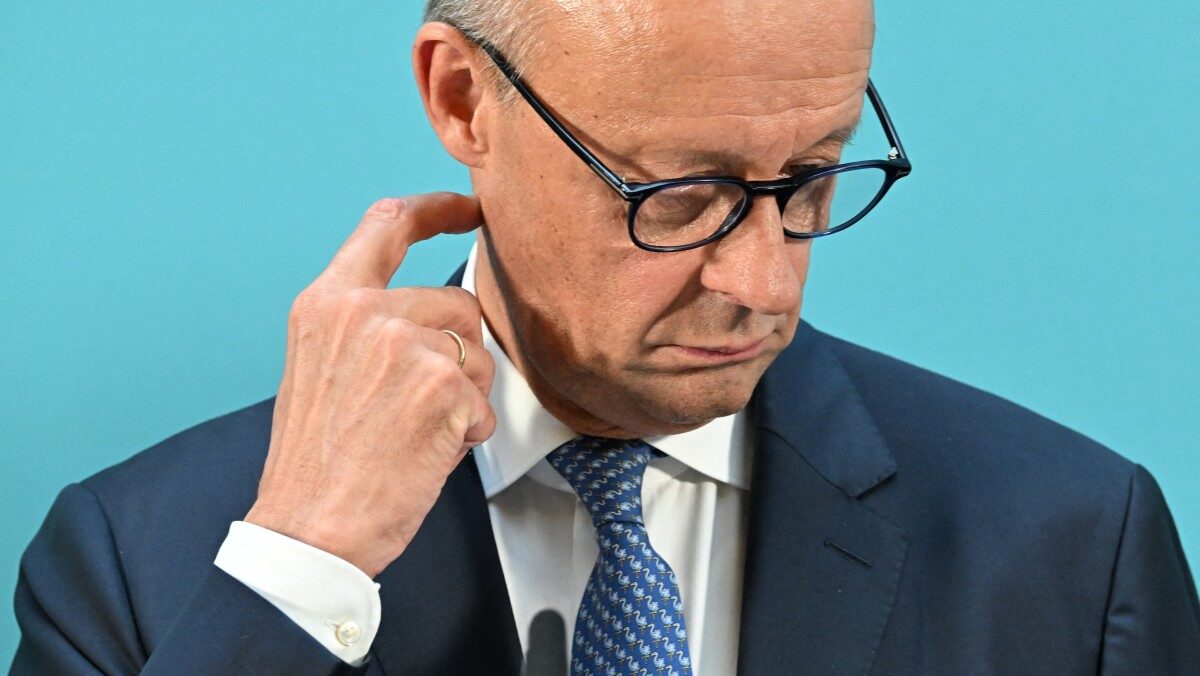
Friedrich Merz
RALF HIRSCHBERGER / AFP
German chancellor Friedrich Merz is facing growing pressure from within his own Christian Democratic Union (CDU) after a government reshuffle triggered fresh criticism of his leadership, while new polling suggests the right-wing Alternative für Deutschland (AfD) has widened its national lead.
According to a report by Der Spiegel, Merz has suffered a dramatic loss of authority within his party following the chaotic overhaul of his government.
The outlet described the mood inside the CDU as a “palace revolt.” Virtually none of the senior figures consulted by the magazine believe Merz has a future as chancellor. Party figures are already discussing his possible removal after September’s state elections in Saxony-Anhalt, Berlin, and Mecklenburg-Western Pomerania.
Even members of the CDU’s highest leadership bodies reportedly doubt Merz will remain in office until Christmas. One prominent Christian Democrat told the magazine that Merz would have to resign or be forced out by September 21, following elections in Berlin and Mecklenburg-Western Pomerania. Party members have also circulated a Loriot sketch captioned “The Chancellor at Work” in WhatsApp groups to mock Merz’s leadership.
North Rhine-Westphalia’s minister-president Hendrik Wüst is reportedly regarded by many within the party as the only credible candidate to replace Merz. Der Spiegel said CSU leader Markus Söder would be unacceptable to the CDU and described the prospect of Interior Minister Alexander Dobrindt becoming chancellor as “absurd.” NIUS has separately reported that Hesse minister-president Boris Rhein has also been discussed.
The reports follow days of internal criticism over Merz’s cabinet reshuffle, which was prompted by the resignation of former parliamentary group leader Jens Spahn. The subsequent reorganisation, including the dismissal of Transport Minister Patrick Schnieder, sparked anger among CDU politicians.
Earlier this week, however, the party’s lawmakers overwhelmingly elected Merz ally Thorsten Frei as the new CDU/CSU parliamentary group leader with 91.9% of the vote, providing a temporary boost for the chancellor. However, Der Spiegel reported that MPs made clear their support for Frei should not be interpreted as support for the chancellor.
Merz insisted the controversy would fade once parliament returns in September, saying he expected “tempers will have cooled somewhat.” Reuters also reported that senior CDU figures acknowledged the reshuffle had significantly damaged Merz’s standing within the party.
The political crisis comes as the latest ZDF survey showed the AfD increasing its support by one percentage point to 28%, while the CDU/CSU remained on 23%. It marks the AfD’s largest-ever lead over the centre-right alliance in the broadcaster’s polling.
The survey also highlighted growing dissatisfaction with the government’s performance. Fifty-seven per cent of respondents said Merz had handled the cabinet reshuffle badly, compared with 21% who viewed it positively.
Overall, 70% of those surveyed rated Merz’s performance as chancellor negatively, while 68% said the federal government was doing a poor job. The current CDU/CSU-SPD coalition would also lose its parliamentary majority if the poll results were reflected in a federal election.
Merz has faced mounting pressure during his first year in office as weak economic growth and compromises with his SPD coalition partners have made it harder for him to deliver his promised reforms.