The European Commission has declined to comment on the recently leaked Spanish police report pointing to Rabat’s involvement in the Ceuta mass incursion, declaring the investigation “a matter for the national authorities.”
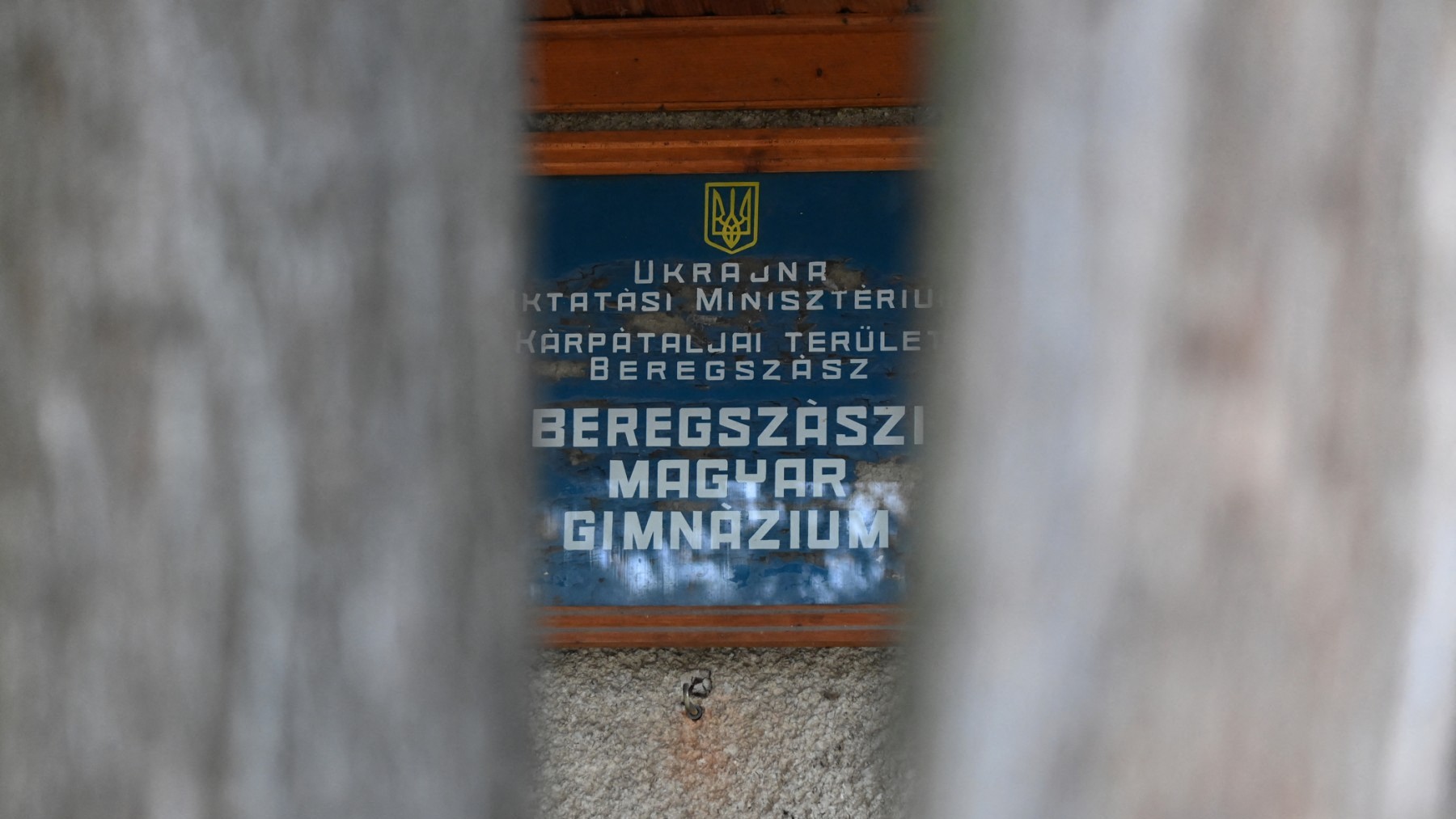
This photograph taken in Berehove (Beregszász) in Transcarpathia, western Ukraine, on March 7, 2022, shows the sign ‘Hungarian high school of Beregszász’.
ATTILA KISBENEDEK / AFP
The European Union’s member states have agreed to move Ukraine and Moldova to the next stage of their membership bids after Hungary signalled it would no longer block Kyiv’s accession process, following what Budapest described as a breakthrough agreement on the rights of Ukraine’s Hungarian minority.
EU ambassadors meeting in Brussels on Wednesday, June 3rd launched the procedure to open the first negotiating cluster in accession talks with both countries.
The move came hours after Hungarian Prime Minister Péter Magyar announced a “historic agreement” with Ukraine on the rights of the approximately 100,000 ethnic Hungarians living in the western Transcarpathia region.
He said the agreement is a major breakthrough on the language, education, cultural, and political rights of the Hungarian community.
The dispute has centred on a series of Ukrainian laws introduced since 2015 that expanded the use of Ukrainian in education and public life while restricting the role of minority languages.
Under former prime minister Viktor Orbán, Hungary repeatedly used its veto power to block progress in Ukraine’s EU and NATO aspirations, arguing that Kyiv had failed to protect the rights of ethnic Hungarians.
According to Magyar, Ukraine has agreed to incorporate a package of measures into its legal system “in the near future.”
The provisions include restoring the system of minority-language schools, allowing Hungarian to be used throughout school life and administration, and permitting students to take examinations in Hungarian.
The deal would also allow the use of Hungarian in local administration, healthcare, political campaigning, and public life in settlements where Hungarians make up more than 10% of the population.
Magyar said ethnic Hungarians would be able to use national symbols freely, celebrate cultural and religious traditions in their own language, and establish educational and cultural institutions.
The Hungarian leader said Budapest would support opening the first accession cluster once the agreed commitments are reflected in Ukraine’s minority action plan with the European Union.
EU Enlargement Commissioner Marta Kos welcomed the development, saying it “opens the way for progress on the EU accession path of Ukraine” and would allow member states to advance work on the first negotiating cluster for both Ukraine and Moldova.
The Cypriot presidency of the Council of the EU described Wednesday’s hailed the decision as a “significant milestone” in the two countries’ European integration efforts.
The EU formally opened accession negotiations with Ukraine in June 2024, but progress had remained largely symbolic because opening negotiating clusters requires unanimous approval from all 27 member states.
Despite lifting the immediate obstacle, Magyar sought to temper expectations of rapid Ukrainian membership.
He stressed that Hungary does not support a fast-track accession process—something the European Commission has been advocating—and said that if Ukraine succeeds in closing all 33 negotiating chapters within the next decade or decade and a half, Hungary would hold a binding referendum on the country’s eventual entry into the bloc.
If formally approved by EU governments next week, the first negotiating cluster could be opened at intergovernmental conferences with Ukraine and Moldova scheduled for 15 June in Luxembourg.