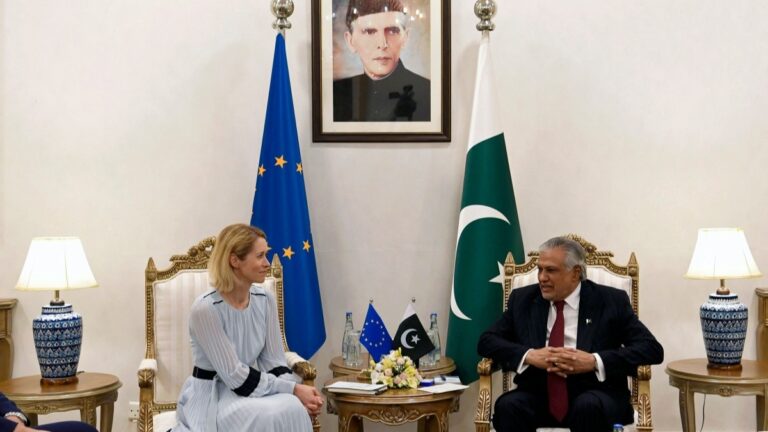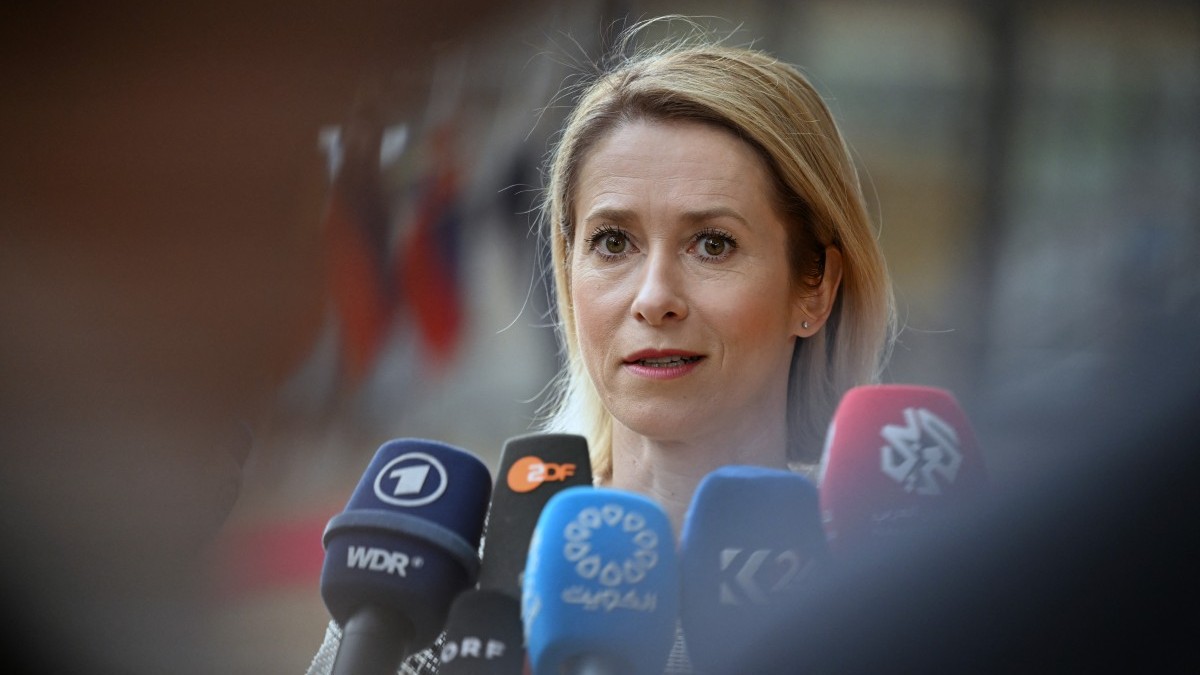
The European Union’s inability to formulate a coherent Middle East strategy is increasingly exposing the bloc’s institutional weakness and lack of geopolitical direction. The EU’s High Representative for Foreign Affairs Kaja Kallas has openly admitted that the EU’s strategy for the Middle East remains unfinished because the situation is “too uncertain.”
“The EU’s Middle East strategy is in the working plans but there’s no point in drafting it right now when there is so much uncertainty. You know it depends very much how this war ends,” Kallas said in a Q&A session at the EU Parliament in Strasbourg earlier this week.
The statement is remarkable not only for what it says, but for what it reveals about the EU’s approach to global politics. Rather than preparing for multiple scenarios or outlining long-term strategic interests, Brussels appears to be waiting passively for events to unfold before deciding what its position should be. For an entity that frequently presents itself as a major global power, this approach projects hesitation and political immaturity.
Major powers traditionally formulate strategies precisely because the international environment is uncertain. The purpose of strategy is not to predict the future perfectly, but to establish priorities, interests, and contingency plans under changing circumstances. By arguing that uncertainty makes strategic planning pointless, the EU leadership effectively signals that it lacks the confidence or unity necessary to act decisively on the world stage.
The Middle East remains one of the most geopolitically sensitive regions in the world, with conflicts that directly affect European security, migration, energy stability, and international trade. Yet according to Kallas’ remarks, the bloc still does not have a finalized framework for dealing with these developments. What Kallas did say two days ago was that the EU rejects Trump’s Board of Peace. She did not say, however, what a better (and realistic) way of achieving peace in the region would be.
Critical comments highlight the broader perception that the EU often reacts to global events instead of shaping them. The EU’s foreign policy under Kaja Kallas has been under fire because of the peace process in Ukraine as well, with Slovakia’s prime minister Robert Fico calling for her resignation in January.
Brussels has effectively been hindering American efforts to end the conflict, endorsing Ukraine’s unrealistic demands and contributing to the escalation of the war through funding and rhetoric.