Mbzt, CC BY 3.0, via Wikimedia Commons
The status of low-emission zones (LEZs), designed to keep cars out of French city centres, is at the heart of a political battle that has been raging for months. Having been scrapped a few weeks ago by MPs, these exclusion zones have just been reinstated, following a ruling by the Constitutional Council. This is not the first time that this major state body has overruled the National Assembly to impose its own agenda.
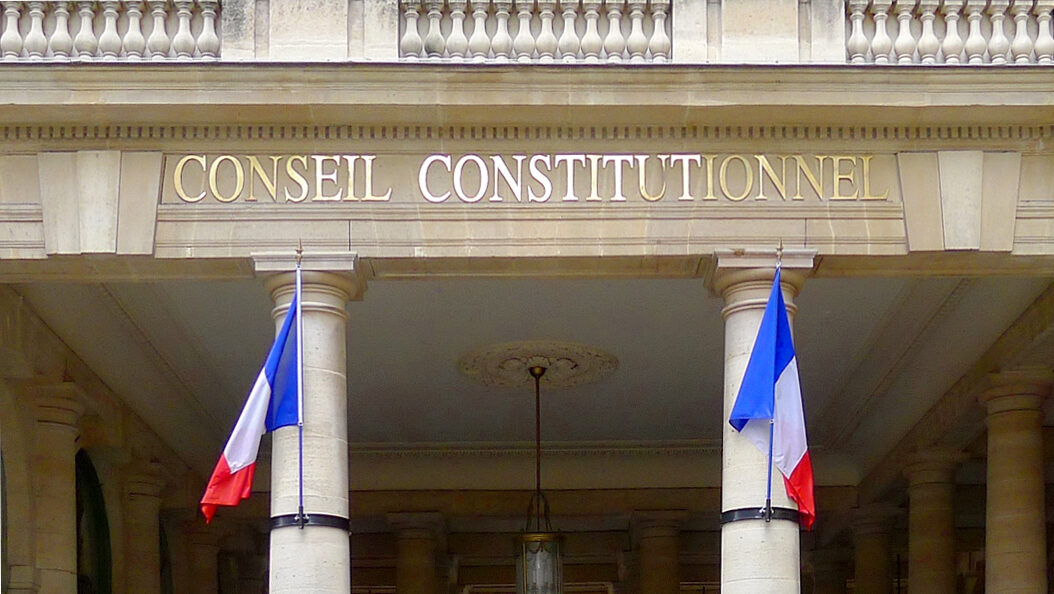
The long-running saga of low-emission zones (LEZs) has taken a major new turn with the Constitutional Council’s decision to overturn their abolition, despite it having been voted through by Parliament as part of the law to simplify economic life. The members of this major state body, responsible for ensuring that laws comply with the constitution, deemed that this abolition constituted a ‘legislative rider,’ that is to say, a provision lacking sufficient connection to the text’s original purpose. Consequently, the LEZs remain in force, despite MPs and senators voting to abolish them.
This decision comes after several months of political turmoil surrounding a measure that has become one of the symbols of France’s social and regional divisions. Initially designed to combat air pollution in major urban areas, the LEZs are gradually banning the oldest and most polluting vehicles in certain cities.
On paper, the health objective seems attractive: supporters of the scheme argue that air pollution causes tens of thousands of premature deaths each year in France. But in practice, LEZs have faced growing opposition. Many local councillors have criticised the scheme as impossible to implement, socially explosive, and perceived as a form of marginalisation for low-income households, particularly in urban outskirts and rural areas. For many motorists, the obligation to replace an old vehicle with a newer model represents an unaffordable financial burden, despite existing public subsidies. As inflation and the crisis in purchasing power have worsened, LEZs have become politically toxic.
It was against this backdrop that a cross-party majority eventually voted to scrap them in the spring. The episode had already revealed the government’s ambiguities, torn between defending its environmental commitments and the fear of renewed social unrest comparable to that of the ‘Yellow Vests’—a grassroots protest movement triggered by high fuel prices, leading to hundreds of thousands of demonstrators blocking roads across the country off and on for over a year. But the parliamentary victory of the opponents of LEZs was ultimately short-lived: the Constitutional Council overturned this repeal on procedural grounds, without even ruling on the substance of the case.
This legal justification reignites a much broader debate on the role of the Constitutional Council in French democracy. For the political issue now extends far beyond the question of LEZs alone. How far can an unelected institution go to correct or prevent the will expressed by parliamentarians elected by universal suffrage?
The precedent of the immigration law is fresh in everyone’s minds. In January 2024, the Constitutional Council struck down 35 of the 86 articles in the bill passed by Parliament, most of which were measures secured by the Right and the Rassemblement National (RN). Here too, a large proportion of the strikes were based on the notion of a ‘legislative rider.’
At the time, the right wing denounced a bill “stripped of its substance” by those known as “the Wise men.” Provisions on the tightening of social benefits, family reunification, and certain restrictions on birthright citizenship had disappeared following the constitutional review. The Council pointed out that it did not necessarily consider these measures to be contrary to the Constitution on their merits but claimed they had been introduced through a procedure deemed irregular. Yet this legal nuance had all the hallmarks of a pretext, poorly concealing a hijacking of the democratic decision-making process.
The LEZ case follows exactly the same pattern. A parliamentary majority votes for a highly publicised measure; the Constitutional Council then strikes it down on procedural grounds. On the one hand, staunch defenders of the so-called rule of law point out that the Council’s role is precisely to ensure compliance with the Constitution and to prevent ‘catch-all’ laws. They defend themselves by highlighting the fact that the rules on legislative riders have existed for decades and are intended to ensure the clarity of parliamentary debate. On the other hand, critics believe that a gap is widening between legal legitimacy and democratic legitimacy. Clearly, the Constitutional Council is gradually becoming a sort of third chamber capable of overturning political compromises that have nevertheless been approved by the nation’s elected representatives. Unsurprisingly, the rulings concern highly sensitive issues such as immigration, security or, now, punitive environmentalism.
Political reactions were swift following the decision. Marine Le Pen denounced a Constitutional Council that “constrains democracy” and called on the president of the National Assembly, Yaël Braun-Pivet, to swiftly put the issue of the LEZ back on Parliament’s agenda for a specific debate. For the RN, but also for other parts of the Right, this episode illustrates the need to regain political control over decisions deemed out of touch with social realities.
The paradox is that this new battle could ultimately further reinforce the symbolic significance of the LEZs. Originally a simple environmental policy tool, they have become an explosive political issue at the crossroads of debates on ecology, regional divisions, and the power of institutions. The Constitutional Council’s decision therefore does not close the case; on the contrary, it opens up a new confrontation, this time over the hierarchy between parliamentary sovereignty and constitutional review.