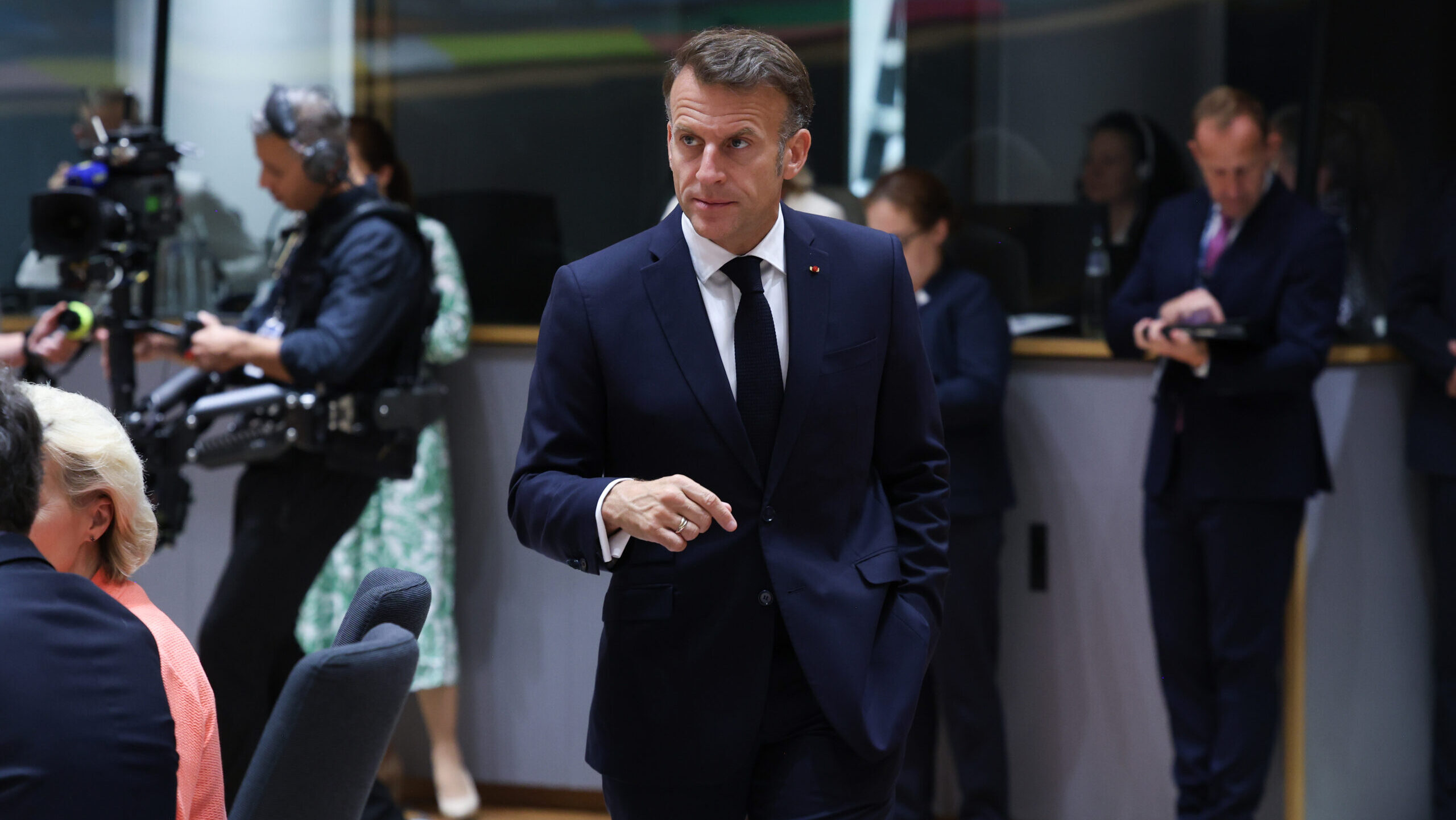
French President Emmanuel Macron has reportedly instructed his government to draw up proposals for new EU-wide taxes to help finance the bloc’s next seven-year budget, expected to reach a record €2 trillion.
Macron’s push comes after EU governments failed to reach a consensus on the Commission’s proposed “own resources”—direct EU taxes on tobacco, carbon imports, corporate profit, and electronic waste.
Since then, the European Parliament has proposed additional revenue sources, including levies on crypto firms, “very large online platforms” (VLOPs), and gambling operators, with France and Spain among the leading supporters.
French officials argue these measures would still leave a funding gap of around €400 billion between what member states are ready to pitch in and what would be needed to finance Europe’s defence ambitions and maintain long-term support for Ukraine.
Paris has already begun floating additional ideas, including climate-related levies on foreign airlines, and is expected to present further proposals in the coming days.
“France supports expanding the debate, and we’ll have proposals on this subject in the coming days,” said French Europe Minister Benjamin Haddad, adding that agreement on new EU “own resources” was a key French condition for approving the next budget.
Without new EU revenue streams, member states would have to increase their national contributions significantly, a politically toxic prospect for Macron’s camp ahead of next April’s presidential election.
The size of France’s contribution to the EU budget is already emerging as a major issue in next year’s presidential campaign. National Rally frontrunner Jordan Bardella—who is polling over 36%—already vowed to cut France’s contributions in half if elected, adding further pressure on Brussels to conclude negotiations on the 2028–2034 budget before the election.
The so-called “frugal” countries—including Germany, the Netherlands, and several Nordic states—argue for a much more modest budget than the proposed €2 trillion, even at the cost of reducing cohesion and agricultural funds that primarily benefit poorer member states.
France, meanwhile, has strong incentives to preserve generous agricultural spending. As one of the EU’s most indebted economies and home to one of Europe’s largest farming sectors, Paris has little appetite for cuts to the Common Agricultural Policy.
At the same time, Macron remains committed to his vision of Europe as a major defense power matching the output of Russia while sustaining long-term support for Ukraine. Under the Commission’s proposal, around €100 billion would be allocated directly to Ukraine as financial and military aid, and a similar amount would be invested in Ukraine’s defense industrial sector as well.
Ireland, which is set to take over the EU Council’s rotating presidency on July 1, has already been tasked by EUCO President António Costa to table compromise proposals aimed at raising around €400 billion in new EU revenue by October.