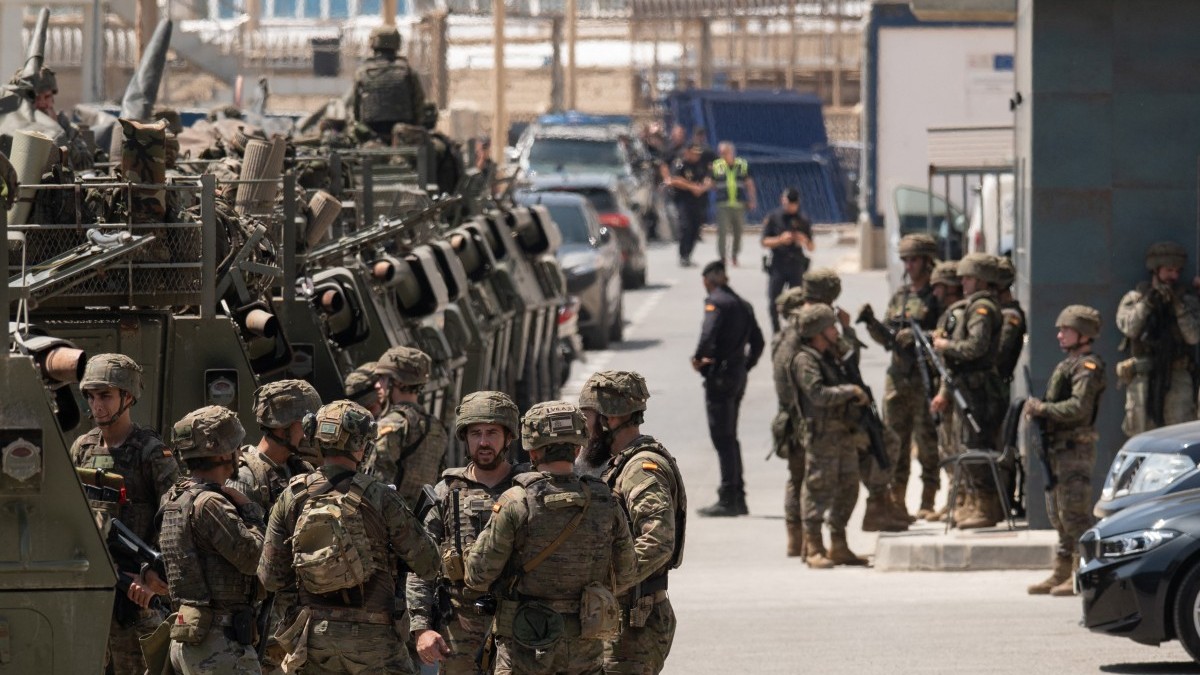
Morocco has demonstrated this weekend that it can close the Ceuta border whenever it wants.
Hundreds of migrants once again tried to approach the Spanish autonomous city on August 15th, encouraged by messages circulating on social media, but this time they encountered security forces prepared on both sides of the border.
Moroccan forces intercepted hundreds of people around Castillejos and made almost 300 arrests, according to figures released by Moroccan state media.
Rabat had deployed riot police, roadblocks and surveillance along the routes used to reach the north of the country. Spain, meanwhile, is maintaining more than 1,600 personnel in Ceuta after sending more than 500 additional officers and reinforcing maritime surveillance.
The contrast with what happened on July 30th is too obvious to ignore. On that day, more than 72,000 people managed to enter Ceuta within a matter of hours. Two weeks later, between 5,000 and 8,000 are still in a city whose population barely exceeds 80,000. Many are sleeping on beaches or in makeshift facilities while the authorities process identifications, protection claims, and returns.
Chaos continues to dominate the city, and residents interviewed by the media have described the fear in which they are living. According to reports, Ceuta has recorded an average of one rape per day.
Así esta Ceuta despues de 18 dias de invasión: pic.twitter.com/EW1oOiE8oY
— Wall Street Wolverine (@wallstwolverine) August 16, 2026
The pressure has also spread to the healthcare system. Health Minister Mónica García acknowledged on Sunday that services are “under strain,” although she denied that there was a collapse, despite evidence to the contrary.
The Ministry says 5,800 migrants have received medical treatment since the mass entry. Emergency doctors consulted by the media, however, say the published statistics count only foreign patients and exclude ordinary treatment provided to Ceuta residents, meaning the real daily workload would be significantly higher than the official figures suggest.
The Spanish government also activated Level 1 of the External Disaster Response Plan 17 days after the crisis began. Reuters has likewise reported the severe pressure on healthcare services and the exhaustion described by local medical officials.
Beyond the competing figures, the central point is that a border that was effectively overwhelmed two weeks ago has now been sealed through a forceful intervention by the Moroccan authorities.
This is not the first time something similar has happened. In May 2021, around 8,000 migrants entered Ceuta after Morocco relaxed border controls during the diplomatic crisis triggered by the hospitalisation in Spain of Brahim Ghali, leader of the Polisario Front. Once the political message had been delivered, Rabat resumed cooperation in closing the border and carrying out returns. The Spanish Government itself accused Morocco at the time of “blackmail.”
Several analysts interpret the current crisis through the same logic: allow migratory pressure to increase when tensions emerge with Madrid, and then restore control in order to reaffirm Morocco’s position as an indispensable partner. Rabat denies having caused the July influx and attributes it instead to rumours on social media, trafficking networks and economic factors.
Brussels, meanwhile, has declared its “full solidarity” with Spain. But its response also reveals the extent to which European migration policy depends on Morocco. Following the crisis, Ursula von der Leyen proposed increasing EU technical and financial support for Rabat and described the kingdom as a strategic partner in controlling irregular migration.
The result is a deeply asymmetric relationship: Spain and the EU need Morocco to protect a border that is Spanish and, by extension, European. Rabat knows this, and takes advantage of it.