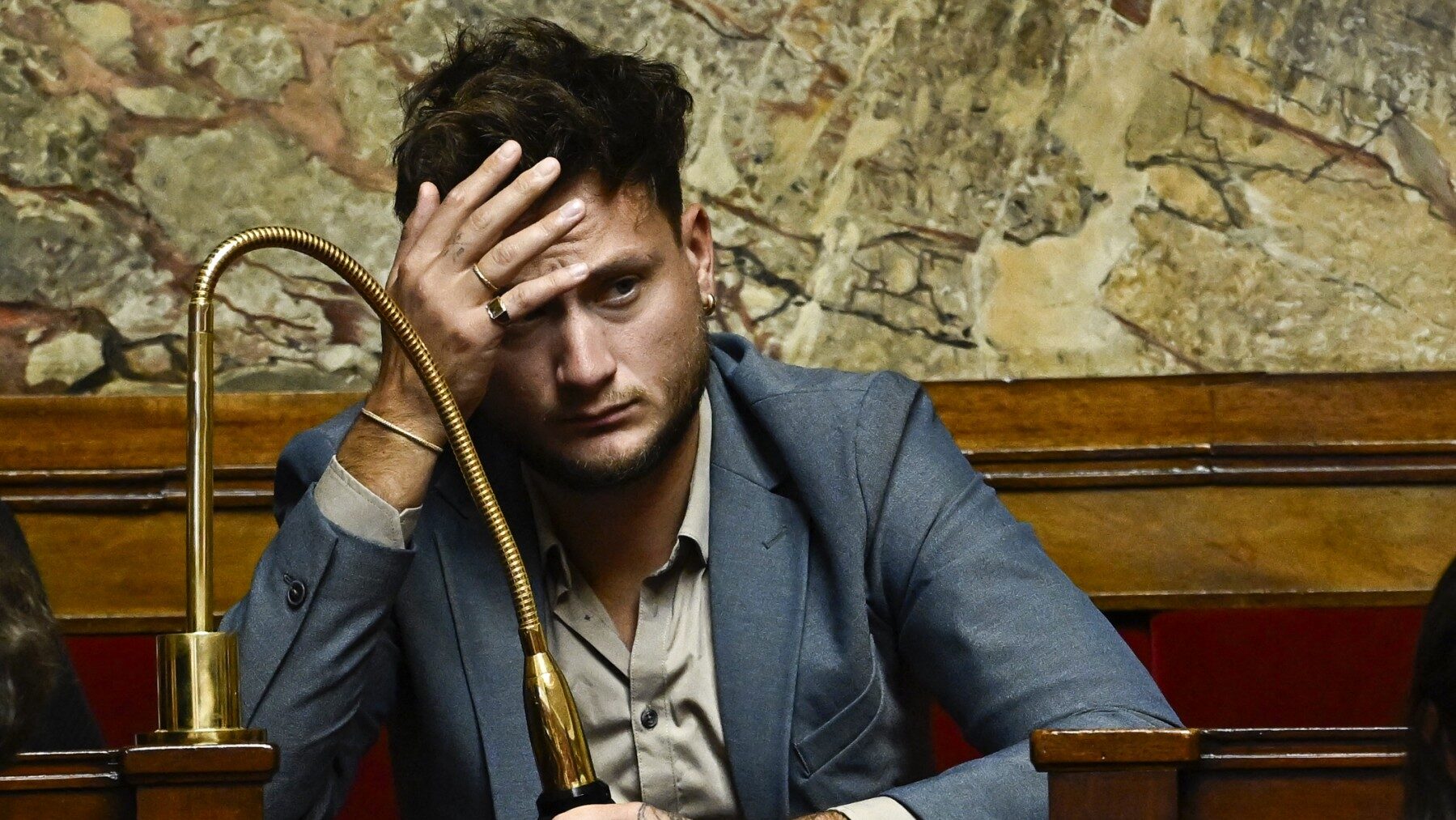
French leftist party La France Insoumise (LFI) MP Raphaël Arnault
JULIEN DE ROSA / AFP
As the investigation deepens into the killing of Quentin Deranque, questions are no longer confined to the suspects in custody—but to the political networks around them.
Seven suspects are currently being questioned, and initial reports in the press appear to confirm their explicit intention to kill the young man. Despite this, there is growing evidence of leniency towards them on the part of the authorities, while the Collectif Némésis, which young Quentin defended, is now facing the prospect of being banned by the government.
The suspects, aged between 20 and 26, are currently being questioned by investigators from the Lyon territorial crime division. They all have proven links to the La Jeune Garde movement, which was officially dissolved by decree in June 2025, yet appears to have continued its activities openly.
At the centre of attention is Jacques-Elie Favrot, parliamentary assistant to Raphaël Arnault. Confronted with amateur videos, he had no choice but to admit his presence at the scene of the killing. According to the minutes consulted by JDNews, he admits to having played a role in inciting his comrades to murder, with slogans such as: “Come on, Lyon antifa, hang in there!” He allegedly incited his comrades to lynch Quentin to death, shouting “Finish him off, kill him!” at the time of the attack. Within La Jeune Garde, he allegedly participated in training activists in physical confrontation. He is also registered on France’s ‘S-file’ watchlist—a security classification used for individuals deemed a potential threat to the state.
The other suspects were formally identified by the police as having inflicted the most violent blows on Quentin. According to JDNews, they chose to remain silent during the early stages of the hearing, before denying the facts and finally changing their story.
MP Raphaël Arnault, founder of La Jeune Garde and member of the far-left La France Insoumise (LFI), also listed as an S-file suspect, is currently at the centre of the investigation: even though he was not present in Lyon at the time of the crime, he was the one who coordinated the activists and reportedly encouraged them to resort to violence as the preferred means of their political struggle.
People are starting to speak out about his responsibilities and those of his comrades. A former La Jeune Garde activist spoke exclusively to the conservative media outlet Frontières and revealed the extent of the cult of violence within the organisation. His testimony is chilling: “I remember one evening when there were three of us. Raphaël was on his scooter, and me and another colleague were in a car,” he recalls. He explains that they “followed” an individual they believed to be a ‘fascist’: “We checked on Facebook to see if he had liked a post or a page. And we beat him up. I threw the first punch. The person fell down. And Raphaël knocked him to the ground and kicked him in the head,” says the former activist.
Marianne magazine has just published an investigation into the murky links between Arnault, MP for Avignon, and his assistant Favrot, and Salafist networks and drug traffickers in the Provençal city.
Despite this disturbing pedigree, Arnault is still in office and seems to benefit from undue protection and striking judicial leniency. The MP was given a four-month suspended prison sentence by the Lyon Criminal Court in February 2022. But he immediately appealed and was therefore presumed innocent—before finally withdrawing his appeal, discreetly, several months ago. The final conviction, dating from March 1st, 2025, for voluntary violence in a group, for an assault by six people on an isolated 18-year-old, was not entered in his criminal record.
In Paris, at the National Assembly, the LFI group continues to protect criminals: Mathilde Panot, leader of the LFI parliamentary group, said she was “proud” to have Raphaël Arnault in her group.
As for the minister of the interior, attention is now turning to the Collectif Némésis, a women’s collective that campaigns on immigration, security, and what it describes as the defence of French civilisational identity. The Collectif was behind the counter-demonstration organised on Thursday, February 12th, against the conference given by pro-Palestinian MEP Rima Hassan at Sciences Po. It was to defend young women, his friends, that Quentin Deranque was there when he was attacked by La Jeune Garde activists who lynched him to death. Today, the Collectif Némésis is accused by the Left of having provoked an “ambush.” At the invitation of Jean-Luc Mélenchon, Interior Minister Laurent Nuñez declared in the National Assembly that he wanted to study the question of dissolving the collective. The “accusatory reversal” strongly denounced by the Right is in full swing.