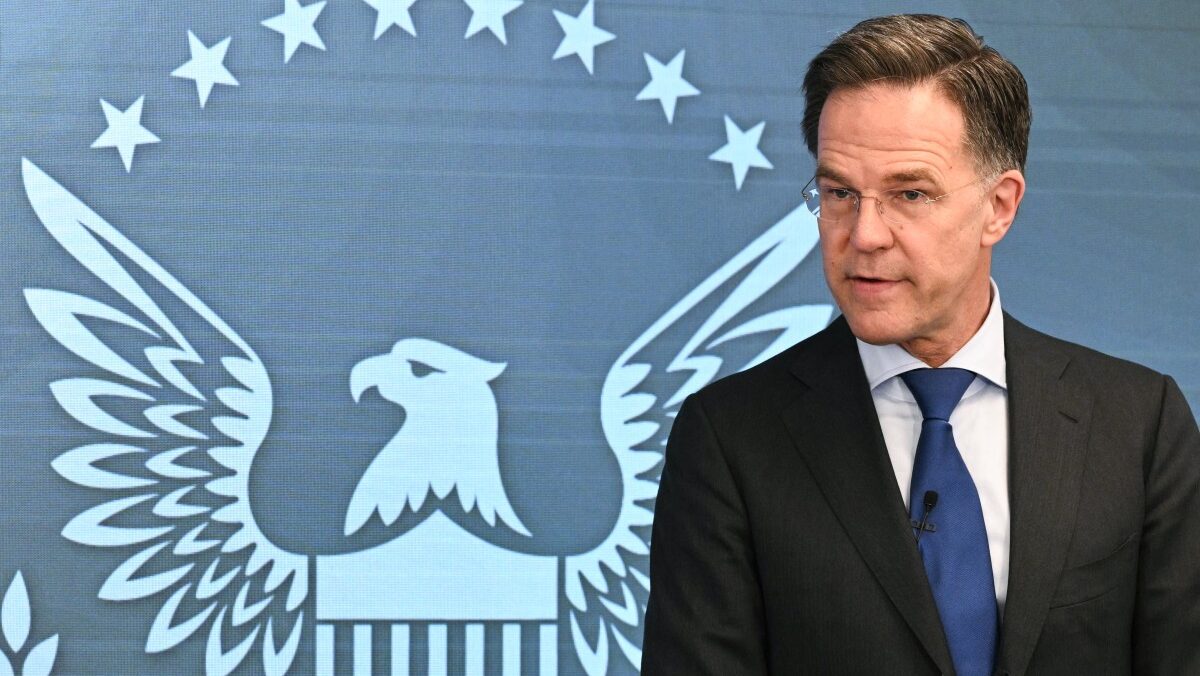
Mark Rutte
Mandel NGAN / AFP
Germany, Spain, Italy, Poland, and Greece have all ruled out sending naval forces to support the U.S. blockade of the Strait of Hormuz, exposing a growing rift inside NATO at the very moment global energy routes are under threat. Within hours of Washington’s request, European governments had distanced themselves from the operation and insisted that NATO has neither the mandate nor the interest to enter a war with Iran.
The refusal has triggered another dispute inside the Atlantic alliance. President Donald Trump has linked European participation in Hormuz to the future of NATO, warning that the United States cannot continue guaranteeing Europe’s security if Europeans refuse to support American operations abroad.
Several capitals reacted with irritation. Spain’s foreign minister even suggested that Europe may need to reduce its dependence on NATO and revive the idea of a European army. But the real problem is that Europe was caught off guard again.
The discussion in Brussels ended in paralysis. Kaja Kallas admitted there was “no appetite” among member states to expand the mission because nobody wanted to become “actively involved in this war.”
The problem is structural: modern crises move much faster than European decision-making. The EU still depends on agreement between 27 governments with different priorities. Southern Europe fears another Middle Eastern war. Eastern Europe remains focused on Russia. Germany fears an energy shock. France wants a European role, but only later and under a separate mandate.
By the time Brussels agrees on a common line, the battlefield has usually changed already. The EU still approaches war as if it were negotiating a directive.
Meanwhile, the economic consequences are arriving immediately. The closure of Hormuz and the U.S. blockade have already pushed oil and gas prices higher, raising the prospect of billions of euros in extra import costs and another increase in household energy bills.
That exposes another European contradiction. Since 2022, the EU has replaced much of its Russian gas with LNG from the United States and Qatar. Much of that energy still depends on Gulf shipping routes.
Europe therefore rejects the American strategy in Hormuz while becoming more dependent than ever on routes and supplies that only the United States can realistically protect.
The dispute is also strengthening Russia. Higher oil prices increase Moscow’s revenues and weaken the sanctions policy Brussels has defended since 2022. Europe is trying to have it both ways—and events are exposing the cost of that contradiction.
For now, Europe has chosen distance, diplomacy, and delay. But delay is also a decision. And every new crisis confirms that the European Union still wants strategic autonomy, but when events accelerate, Brussels is always one step behind.