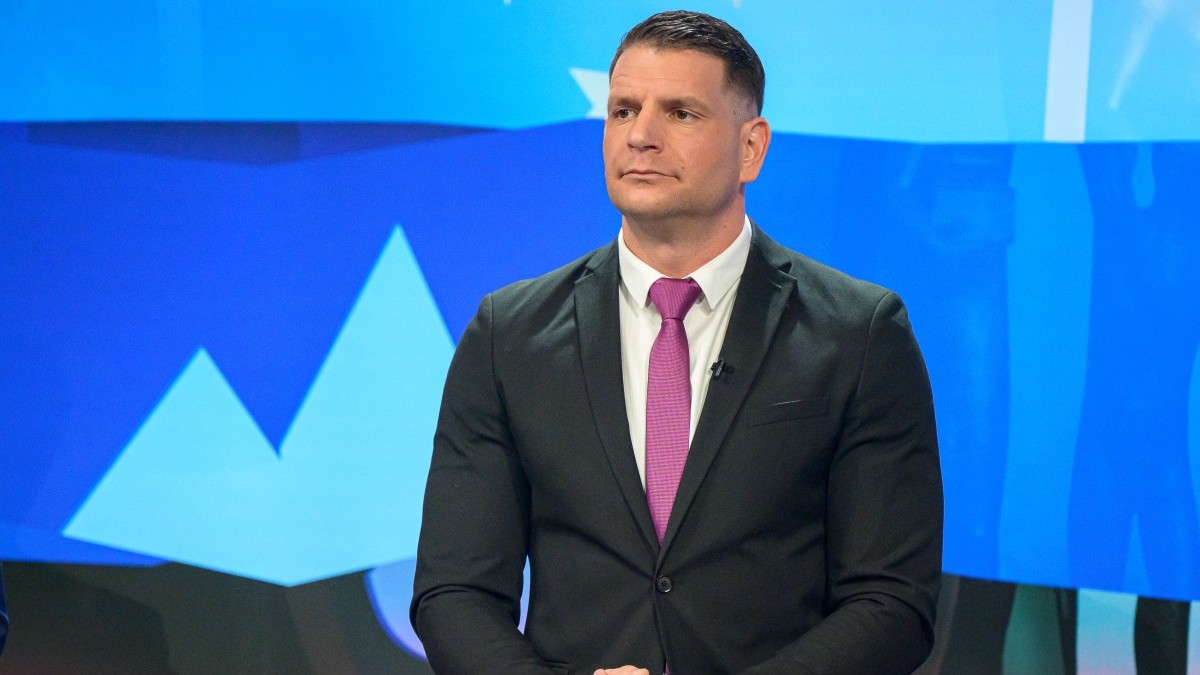
Zoran Stevanović, leader of the Resni.ca party, prepares for the last televised political debate in Ljubljana on March 20, 2026, ahead of the parliamentary elections.
JURE MAKOVEC / AFP
President of the Slovenian National Assembly Zoran Stevanović has announced plans to pursue a referendum on Slovenia’s potential withdrawal from NATO.
Stevanović, leader of Resnica.ca (Party of Truth), confirmed the initiative in remarks reported by the Slovenian press, stating that the proposal is part of a broader commitment to a more independent and sovereign foreign policy approach.
“I promised the citizens a referendum on exiting NATO, and we will organize this referendum,” Stevanović said. He added that Slovenia should regain control over its strategic decisions, arguing that “Ljubljana must become the center of decisions for Slovenia, not Brussels.”
His comments come shortly after his appointment as parliamentary speaker following recent elections in which liberal parties failed to secure a clear majority.
Stevanović also indicated that his party supports a broader reorientation of Slovenia’s international engagement. He suggested reducing dependence on multilateral institutions, such as the World Health Organisation (WHO), and avoiding involvement in external military or diplomatic conflicts that he described as contrary to national interests.
In addition to the NATO referendum proposal, he signalled openness to adjusting Slovenia’s foreign relations, including potential engagement with countries outside traditional Western alliances. He stated that he intended to pursue dialogue with a wide range of partners, emphasising cooperation “regardless of the wall that has been raised between East and West.” Recent comments from President Donald Trump have also added to the debate over NATO, as he suggested in recent weeks that the United States could reconsider its role in the Western alliance. Trump recently described NATO as a “paper tiger” and said U.S. membership is “beyond reconsideration,” following disagreements with allies over the war with Iran and efforts to secure shipping routes in the Strait of Hormuz.
Last year, Robert Golob, the liberal Slovenian prime minister, announced that he would call a consultative referendum on the country’s NATO membership. Later, Slovenia’s parliament overturned the government’s decision, which was supported by the ruling Freedom Movement (39 votes), the Democrats (3 votes), and representatives of ethnic minorities, securing the required simple majority. However, the Social Democrats (SD), who are part of the governing coalition, opposed the decision. Their parliamentary group leader said the party continues to support holding the referendum.