

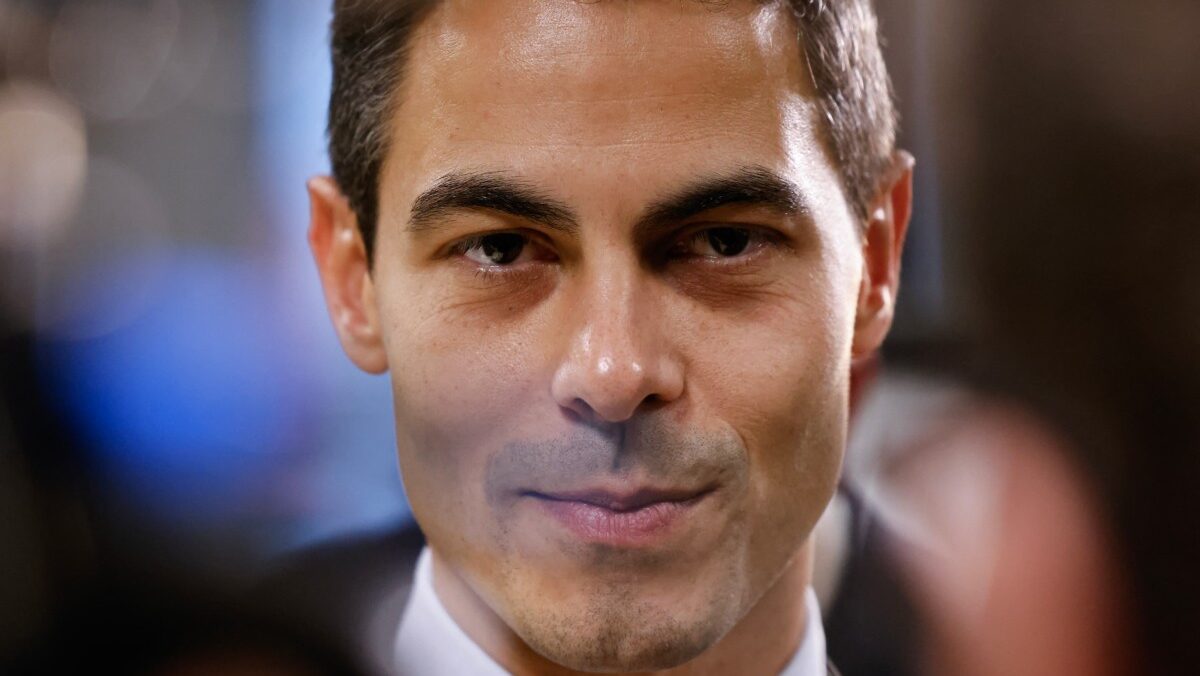
On Friday, January 30th, the liberal VVD, Christian Democrat CDA, and progressive D66 presented their coalition plans under the title ‘building a better Netherlands.’ With this announcement, the so-called centrist minority coalition moves one step closer to becoming a reality. The coalition parties stated that only the formal appointment of cabinet members remains, after which D66 leader Rob Jetten will lead the new cabinet into the future.
At first glance, the more left-leaning coalition appears to offer some cautiously positive ideas, with its stated focus on ‘making things easier instead of more difficult’ for Dutch citizens. Growing concerns about safety and security are addressed by expanding the powers of the Dutch police to act under a zero-tolerance policy. In addition, the coalition plans to increase the prison budget by €100 million.
This last measure is particularly significant, as recent cabinets have struggled with a shortage of prison cells, forcing authorities to release inmates early instead of letting them serve their full sentences.
The elephant in the room: mass migration
At the same time, the coalition avoids confronting the major factor contributing to increased safety concerns: mass migration. In its rhetoric, the minority coalition speaks of ‘keeping control’ over migration. The VVD states on its website, in response to the coalition agreement,
We are going to process applications from disadvantaged asylum seekers at Europe’s borders. This will result in far fewer disadvantaged and disruptive asylum seekers coming to the Netherlands.
In short, the coalition hopes the Dutch population will trust the new EU Migration Pact to solve these problems and significantly reduce asylum migration. Yet, as Dutch migration expert Steije Hofhuis stated a few days ago, the EU Migration Pact will not solve mass migration.
According to Hofhuis, the situation may even worsen. He warns that migration flows could increase rather than decrease. As he put it, “I was shocked when I read the party programmes and the plans for a new coalition.”
This is because the key underlying drivers of mass migration, such as profitable illegal migration routes, remain untouched. “They are perpetuating the influx via human traffickers by supporting the upcoming EU migration pact: according to that agreement, asylum seekers who arrive by boat in Italy or Greece will be distributed across Europe.”
In addition, the controversial ‘distribution law,’ which forces Dutch municipalities to accept a fixed number of asylum seekers, will be continued under this coalition.
‘Freedom contribution’ and defence spending
In other policy areas, similar patterns emerge. Core issues are left largely unaddressed. One of the most far-reaching measures is the so-called ‘freedom contribution,’ a policy previously promoted by CDA leader Henri Bontenbal during the election campaign. This contribution, more accurately described as a military tax, introduces a new form of taxation to fund defence spending.
The tax will gradually raise €3 billion per year, allowing the coalition to spend 3.5% of GDP on military capabilities. Combined with cost-cutting in health care and social security, billions of euros will be redirected to the armed forces and intelligence services. The Dutch military is expected to grow to 122,000 personnel. A clear geopolitical and diplomatic vision in which increased military power would benefit the Netherlands is absent.
Climate policy and housing
Climate policy follows a predictable path. Given D66’s strong support for the European Green Deal, it comes as no surprise that existing policies are largely continued. One of the most striking measures is further investment in offshore wind energy. The current VVD Minister for Climate and Green Growth Sophie Hermans recently admitted that offshore wind projects are not profitable and cannot survive without additional government subsidies.
Other measures include CO2 storage in the North Sea and, on a more positive note, investments in nuclear energy, including small modular reactors.
The housing crisis, another major concern for Dutch society, inspires little confidence as well. Under the expected leadership of Hans Vijlbrief, the former D66 state secretary who ordered concrete to be poured into the Groningen gas fields to permanently shut them down, the government plans to spend €1 billion annually from 2029 onwards to expand affordable housing.
However, deregulation that would enable more construction and naturally reduce housing prices by increasing the supply does not appear to be a priority. Instead, additional regulation is expected, further complicating the housing market rather than relieving it.


One Response
I hate to see the leadership in Holland and the rest of Europe not taking this migration of muslims seriously. Islam is a problem and their motivation for immigrating to Europe is NOT assimilation. Actually quite the opposite, they are staging a Jihad. Islam is a barbaric pre historic inferior cult. They live in the 11th Century