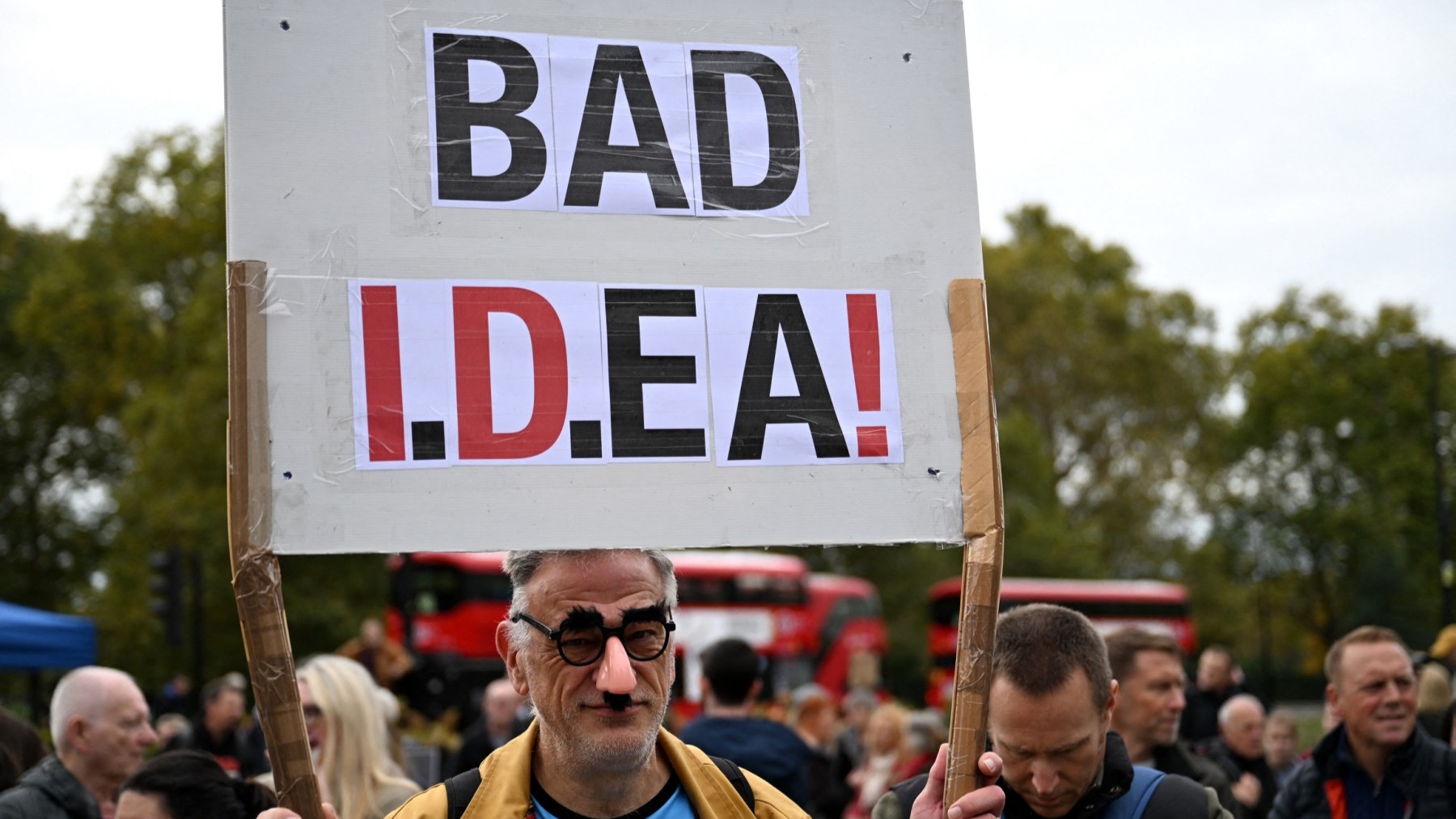
A demonstrator holds a placard during a march against the implementation of digital ID cards, in central London on October 18, 2025.
CHRIS J RATCLIFFE / AFP
Campaigners feared that the government’s scrapping of its plans for digital identity cards in January was not the end of the story. And they were right to do so.
Despite immense backlash, Wednesday’s King’s Speech—a ceremonial address in which the monarch reads a speech written by the government, setting out its main objectives over the next parliamentary term—confirmed that ministers will, in fact, “proceed with the introduction of digital ID that will modernise how citizens interact with public services.”
NOW – King Charles: "My ministers will also proceed with the introduction of Digital ID." pic.twitter.com/hH328WC9g3
— Disclose.tv (@disclosetv) May 13, 2026
Labour’s most recent (phoney) ‘justification’ for the scheme was to help tackle illegal migration, although many of the party’s own MPs recognised that this was just a cover for far broader intentions.
Reform UK leader Nigel Farage stressed after the King’s Speech that digital ID “won’t work to stop illegal migration,” just as it has made “no difference at all” in other countries, such as Germany.
All that digital ID will be is a means of controlling the population, of telling us what we can and can’t do, [and] of fining the innocent.
I said NO to Digital ID then, and I am saying NO to Digital ID now! pic.twitter.com/q9qzVPeARx
— Nigel Farage MP (@Nigel_Farage) May 13, 2026
Britain’s Big Brother Watch campaign group has also bashed “committing to a national digital ID system … when the polls show the public don’t want one” as “utterly tone deaf.”
The renewed scheme has also prompted criticism from abroad.
In the U.S., Florida Governor Ron DeSantis jibed that he was “glad our Founding Fathers declared independence 250 years ago,” adding: “Say no to digital ID!”
Australian Senator Alex Antic also said the bill should be “repealed.”
Back in the UK, broadcaster Adam Brooks highlighted that officials “have NO mandate for this,” and told the embattled Labour government to “expect protests. Big protests.”