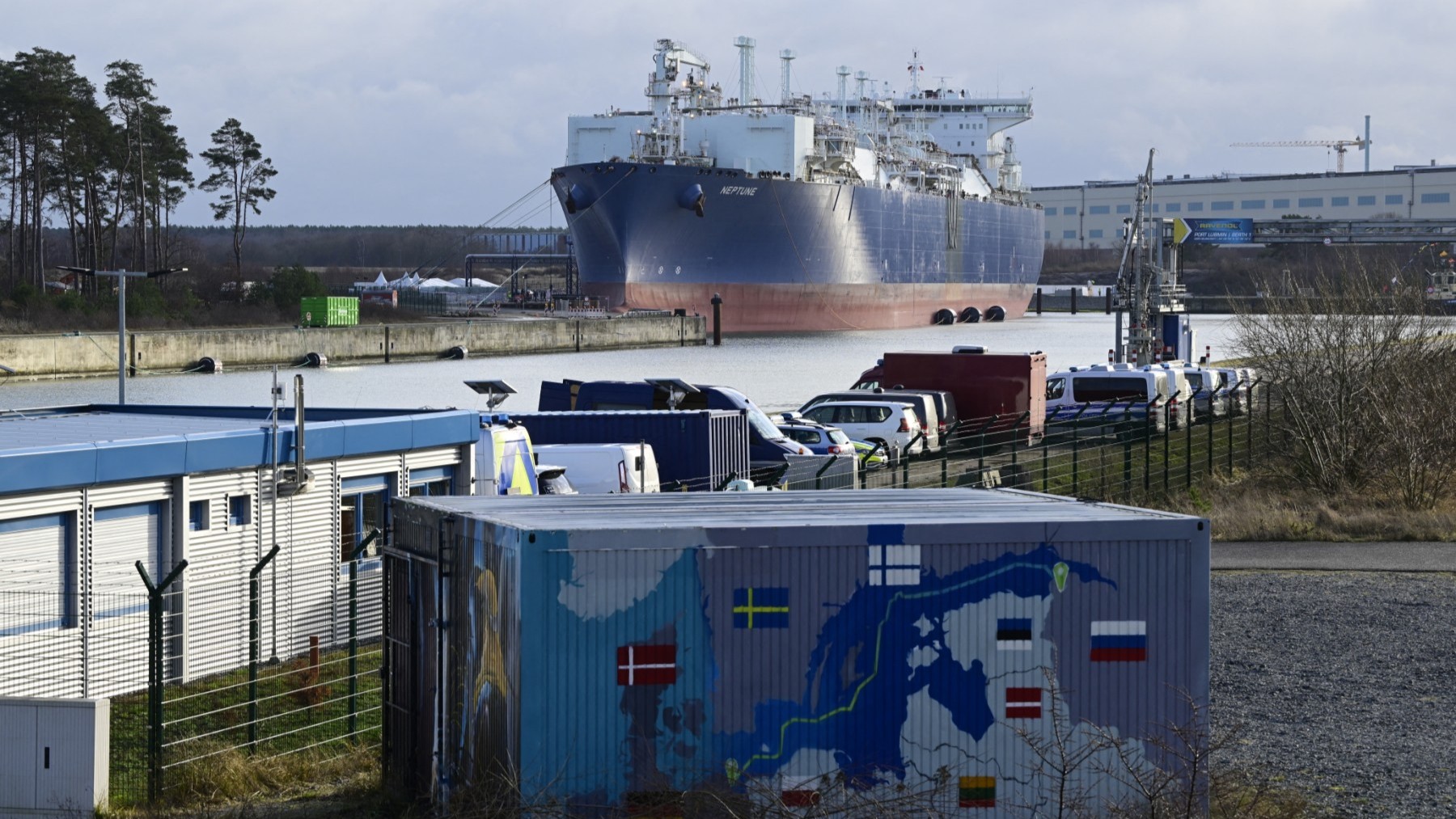
Floating Storage and Regasification Unit (FSRU) ‘Neptune’ is pictured behind a container painted with a map showing the Nord Stream 2 gas pipeline in Lubmin’s industrial park, Germany, on January 14, 2023.
JOHN MACDOUGALL / AFP
Reporting on the Nord Stream gas pipeline attack has picked up again over recent weeks, long after it first hit the headlines in September 2022—especially following revelations about Kyiv’s involvement in the blast.
According to Bojan Pancevski, an investigative journalist for The Wall Street Journal, Ukrainian President Volodymyr Zelensky knew in advance about—and, indeed, authorised—the operation, from “early on,” and only told military officials not to go ahead due to resistance from the U.S., which was also in the know. Pancevski this week explained that “the command went ahead with the operation anyway.”
Officials from Germany’s opposition AfD party have responded furiously to these claims, saying they make a mockery of the German taxpayer’s continued funding of Zelensky’s administration.
Co-leader Alice Weidel on Friday complained that Chancellor Friedrich Merz “continues to transfer billions to Kyiv despite the state terrorism against German interests.”
Consequences from this and a stop to all payments—when?
Marcel Luthe, president of the Good Governance Union, agreed that Berlin should have responded with “criminal prosecution and compensation for damages” rather than with “fawning and monetary gifts.”
And Fabio De Masi, an MEP for Germany’s left-wing populist Bündnis Sahra Wagenknecht (BSW), said it was “absolute madness” to continue “transferring billions to [Zelensky’s] corrupt network in Ukraine.”
Es ist der absolute Wahnsinn. Der ukrainische Präsident genehmigte zunächst den Angriff auf die deutsche Energieinfrastruktur und wir überweisen Milliarden an sein korruptes Netzwerk in der Ukraine! @BSWbund pic.twitter.com/vdiZDBGswJ
— Fabio De Masi 🦩 (@FabioDeMasi) April 20, 2026
German heating costs have risen dramatically since the Nord Stream attack. In November last year, a Ukrainian man suspected of involvement in the sabotage arrived in Germany after having been extradited from Italy.
Pancevski stresses that with his comments, he can “confirm nothing—I merely report.”