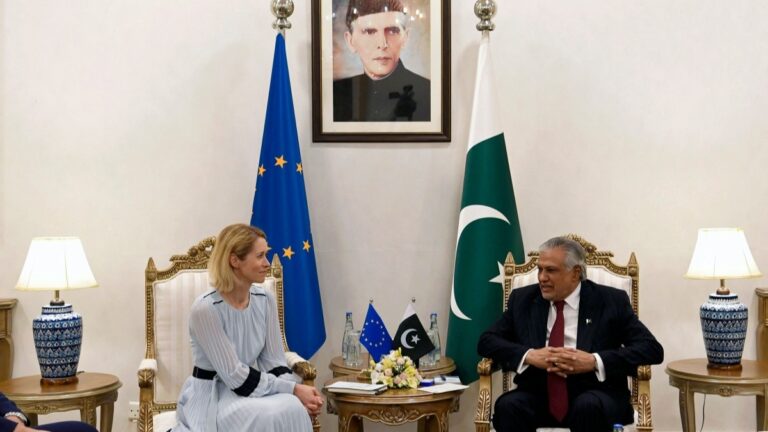
The eighth summit of the European Political Community (EPC) that begins today is the largest international event organized by Armenia since its independence.
In a region in reconfiguration, the summit reaffirms that Armenia is progressively moving away from Russia and seeking alignment within the European orbit.
While Armenia’s pivot is of significance, the format of the event that this year brings together some 50 leaders remains unchanged and uninspiring. The EPC does not produce binding agreements, does not generate executive decisions, and does not establish implementation mechanisms. It is, by design, an informal forum. And in Yerevan this is confirmed once again: a broad agenda —security, energy, connectivity, Ukraine, tensions with Iran— and results predictably limited to political statements and diffuse coordination.
Brussels knows this and uses it. The Commission and the Council have turned the EPC into a tool of strategic signalling: support for Ukraine, backing for Armenia, and a narrative of European unity beyond the EU. A projected unity, not necessarily operational, as is also being tested with the so-called “second-tier” European accessions.
The very fact of holding the summit in Yerevan functions as a political message in the South Caucasus, just as previous editions did in Prague, Chisinau, or Granada.
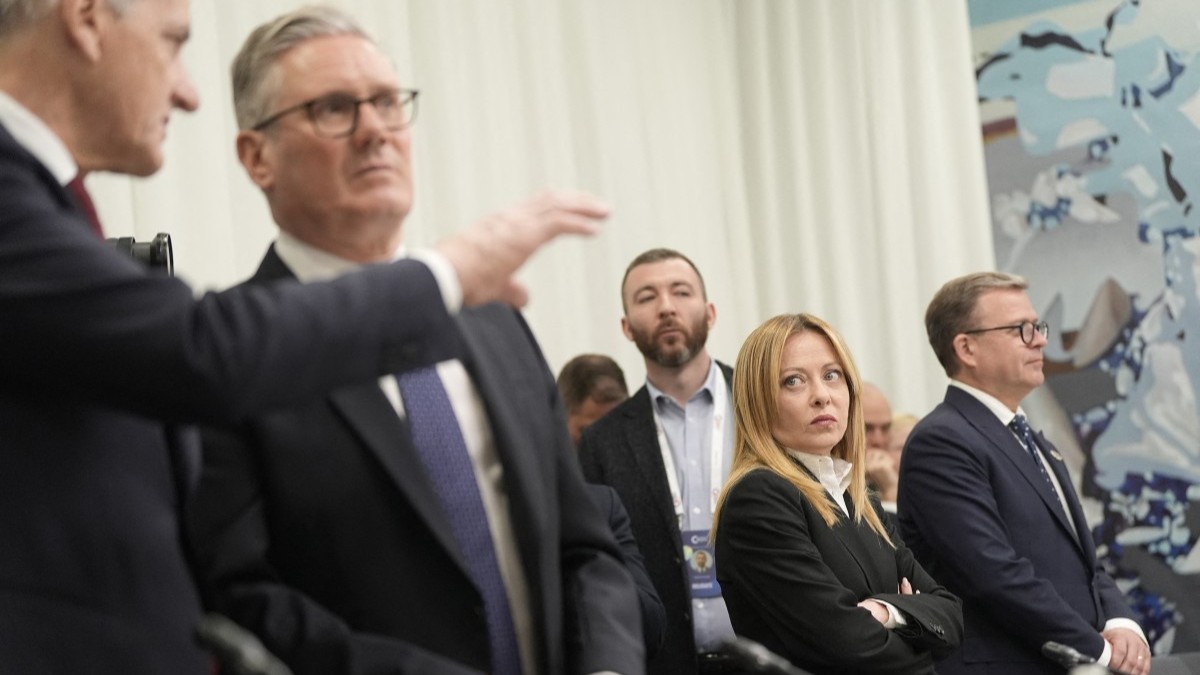
The problem is structural. The accumulation of issues—what is referred to as “polycrisis”—dilutes the capacity for prioritisation. Moreover, the script is already known in advance. At that point, the most coherent intervention has not come from the EU institutions, but from the Italian Prime Minister, Giorgia Meloni.
Meloni introduced an element that other speeches avoided: the real interconnection between crises. “The problem is all those crises are related to one another and feed one another,” she said in the main panel. It is not just a diagnosis. It is an implicit critique of the fragmentation of the European response. In other words, the problem is 360 degrees, yet many still try to treat the disease as if each issue were isolated from the others.
Her argument is structured around a specific axis: migration as a transversal vector. “Uncontrolled migration flows put citizens’ security under pressure … it also affects the economy … it weakens competitiveness … it has energy links,” Meloni stressed.That is, security, economy, and energy are on the same operational plane—not separate political compartments.
The contrast with the dominant discourse in Brussels is evident. While the Commission insists on sectoral responses—Green Deal for energy, resilience mechanisms for the economy, migration pacts for borders—Meloni proposes a systemic logic. And above all, she addresses what many prefer to avoid: the erosion of democratic trust.
“When citizens feel that challenges are not being addressed, they lose trust in institutions,” she noted. That sentence defines better than any official document the underlying problem of the EU at this moment.
In operational terms, the EPC once again shows its limits. There are no formal agreements on Ukraine, no new energy packages, and no verifiable commitments on connectivity. Real activity shifts to bilateral and mini-lateral meetings on the margins, where concrete issues are actually negotiated. The central format remains a stage.
This is not accidental. The EPC emerged as a political response to the war in Ukraine, but without institutional ambition. It is, in essence, a flexible coordination space. The problem is that, over time, it has become a partial substitute for decisions that should be taken in formal frameworks.
Meloni also pointed to this gap when she called for a shift “from our capacity to react to our capacity to anticipate.” It is a direct critique of the EU’s reactive logic in recent crises: pandemic, war, and energy. Europe responds, but does not anticipate.
The closing of her intervention introduced another strategic line that Brussels barely explores: its southern neighbourhood. “We should focus much more on our geographic neighbourhood … particularly the Mediterranean.” Here lies a clear divergence with the institutional priority, which is more focused on eastern enlargement than on southern stabilisation.