Constance Avenel
Álvaro Peñass
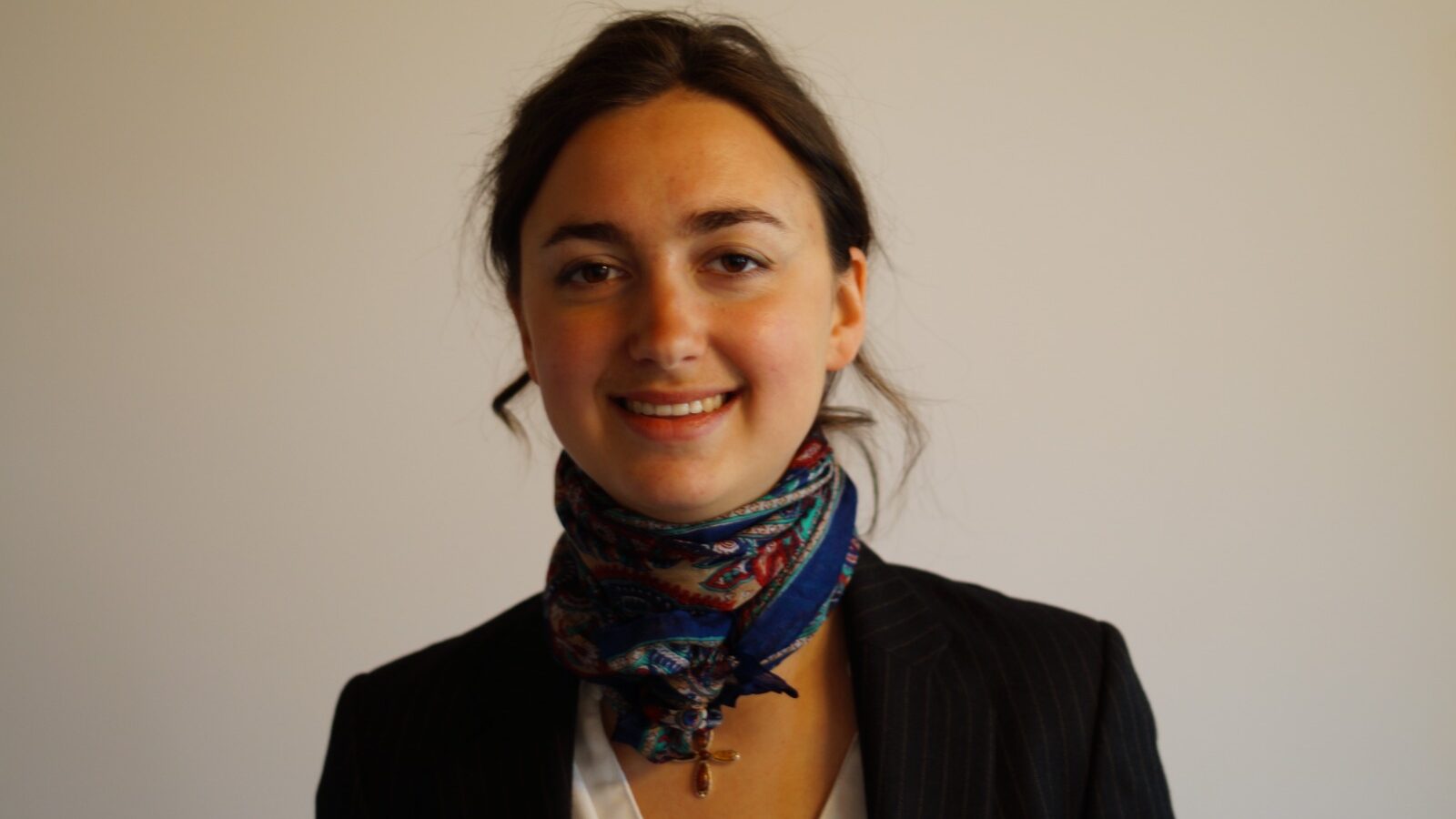
Constance Avenel is a French legal and human rights expert who is advocacy officer for religious at the European Center for Law and Justice (ECLJ).
We discussed Pope Leo XIV’s recent visit to Algeria, the situation of Christians in the Maghreb, and the persecution and discrimination faced by Christians in many parts of the world.
Absolutely I do. The pope is a head of state, but above all, he is a shepherd, the guardian of his flock, and in that capacity, he has come to visit the small but very alive Catholic community in Algeria. In a place where religious freedom is increasingly restricted, the pope brought joy to people’s hearts and renewed hope to his flock. According to several observers on the ground, the Catholics were “delighted” and it was a “complete success”. It must be said that the authorities have invested heavily in this visit: President Tebboune personally oversaw the preparations for it, and nothing was left to chance.
By visiting Algeria, and in particular the ancient site of Hippo, where Saint Augustine served as bishop at the end of the 4th century, the pope has revived the country’s Christian heritage. Indeed, Algeria was once a deeply Christian land, the birthplace of thinkers from the Latin Church. In this context, the Ministry of Culture and the Arts even dedicated the first edition of the African-American Thought Symposium to the legacy of Saint Augustine, a figure who serves as a bridge between Africa and the Mediterranean world. This event took place shortly after the pope’s visit, on April 29–30 in Algiers.
Let us hope that this trend will continue. While we can welcome this official revival of this Christian heritage, we must not overlook the fact that, through this lavish welcome for the Pope, the regime sought to restore its legitimacy, with the aim of making people forget its authoritarian excesses of recent years.
Unfortunately, in a context of increasing restrictions on public freedoms in Algeria since 2019, it is unlikely that the visit of the pope alone will lead to a significant shift in government policy or immediate reforms in favor of greater recognition of Christians.
Beyond symbolic gestures and a warm reception, no concrete institutional changes appear to have followed the visit so far. Churches have not reopened, the Protestant Church of Algeria is still not officially recognized as a religious association, and issues such as restrictions under the Family Code or the closure of Caritas have not been addressed.
That said, this visit served to draw attention to Christians in Algeria and their diversity. Archbishop Vesco of Algiers emphasized the presence of Protestant churches, and a young Pentecostal woman shared her testimony at Notre Dame d’Afrique. And the pope contributed to bringing greater visibility to the situation. Although no reforms were implemented immediately following the pope’s visit, the prospect of long-term reform is a real prospect. At the end of his visit, the pope said that “during our two days in Algeria, we have had a wonderful opportunity to continue building bridges and promoting dialogue.” The pope was aware of the situation facing Christians, and in particular Protestants. Despite the Algerian authorities’ efforts to keep the EPA [the Protestant Church of Algeria, ed. note] out of the game, they were still able to make their voices heard by the pope.
The pope helped to place the issue of religious minorities in Algeria on the international agenda. He paved the way and it is now up to the international community to take up the cause, and to President Tebboune to take the necessary steps to comply with his international obligations regarding freedom of religion.
The pope’s visit has helped bring attention to a situation that is still very little known and largely underreported. There are several reasons for this. First of all, the situation of Christians there is quite complex and often falls into what we could call a ‘grey zone.’ There is no large-scale, visible violence in Algeria; Christians there are not facing the death penalty, as it is the case in some Muslim countries, like Pakistan or Iran. They rather face a set of legal restrictions, administrative obstacles, and social pressures. And these kinds of issues are less ‘newsworthy’ than more dramatic situations. Also, I think Algeria is often seen as relatively stable compared to other countries in the region, so it doesn’t attract the same level of media attention.
Another important factor is that the voices of the Christians concerned are not always easy to hear. Many prefer to remain discreet for their own safety, which makes the situation less visible internationally. We encountered this situation at the ECLJ when we were drafting our report on the oppression of Christians in Algeria. We received testimonies from many Algerians, but the vast majority preferred to remain anonymous.
There is also a certain sensitivity around religious issues, especially when they involve Islam. Some media may be cautious about addressing topics like conversion or restrictions on religious freedom, because they are seen as delicate. In the French context as well, Algeria remains a sensitive subject, partly due to the historical relationship between the two countries, which must contribute to a more limited media focus on this issue.
That said, the pope’s visit has helped bring some attention to the situation. It has allowed more people to speak publicly, and we have seen several Algerian Christians beginning to share their experiences in the media.
In Algeria, in Morocco and Tunisia, across the Maghreb, a common pattern emerges: Christianity exists in societies that are overwhelmingly Muslim, where public expressions of the Christian faith can still be socially sensitive or difficult, especially for converts. Christians are generally a small minority, and in most cases, their situation depends very much on whether they are foreigners or local converts.
In Morocco, there is a relatively visible Christian presence, but it is mostly made up of foreigners, expatriates, migrants from sub-Saharan Africa, diplomats. They can usually practice their faith quite freely in recognized churches. For Moroccan citizens, however, it is more complicated. A Moroccan can only be Muslim, and exceptionally, Jewish. Converting from Islam to Christianity is not explicitly illegal, but it is strongly discouraged socially, and any form of evangelism is prohibited by law. Therefore, Christians in Morocco are forced to hide in order to practice their faith. It is actually rare to come across a convert in Morocco. Moroccan [Christians] cannot speak freely about their faith; they could be imprisoned for doing so. Social pressure is also very significant, particularly from the family.
In Tunisia, the situation is somewhat similar but slightly more open. Public expression of Christian faith is generally possible for foreigners, but more discreet for nationals, particularly those who have converted.
This pope seems to have made ‘peace’ the watchword of his papacy. Let us not forget that his first words as pope were: “Peace be with you all,” which echoes the words spoken by Saint Francis of Assisi, who had made it his mission to be an “instrument of peace.” Whenever he entered a house or met someone, he never failed to invoke this peace upon the household and the people. In this respect, Pope Leo is following in the footsteps of Pope Francis.
But in his advocacy for peace, Pope Leo takes a different approach to that of his predecessor. After a year in office, and a first apostolic tour in Africa, during which he was eagerly awaited—we can say that he is not afraid to speak out against the real issues, as part of a strongly social approach to the Church, in line with its doctrine. Over the course of eleven days, he delivered a powerful political message against corruption and in favor of justice and peace, a call for political freedoms in the face of authoritarian regimes. In Algeria, he called for greater “freedoms within civil society” and for the authorities “not to dominate, but to serve the people and their development”. This frankness in his speech contrasts with the Vatican’s traditional diplomatic caution and, in some respects, echoes the more assertive positions of Pope John Paul II, while extending them to broader social, economic, and political issues.
Even when it speaks of persecution, the Vatican generally avoids directly naming states in accusatory terms. And so, the pope did not address the issue of the oppression of Christians in Algeria directly, and he has not publicly condemned the violations of religious freedom, but we can say that this pope is not afraid to speak out, The pope isn’t afraid to speak his mind, even if his views don’t align with those of his home country’s administration.
Christians are indeed the most persecuted religious group in the world; according to the NGO Open Doors, 388 million Christians face severe persecution and discrimination because of their faith, which is one in seven Christians worldwide, a hierarchy that is not recognized by the UN or European institutions.
At the United Nations, several resolutions have been adopted which explicitly or implicitly refer to anti-Christian hatred: resolution 72/177 calls upon states to prevent acts motivated by Christianophobia, alongside antisemitism and Islamophobia. But, within Europe, we can observe a significant imbalance at the institutional level. The European Union and the Council of Europe have developed dedicated mechanisms to combat antisemitism and anti-Muslim hatred—such as coordinators, targeted strategies, funding instruments, and regular reporting—while no equivalent framework exists to address anti-Christian hatred, despite Christians being the largest religious community in Europe and increasingly exposed to hostility. The EU does not recognize Christianophobia as a distinct category of hate speech or hate crime.
A recent example of this unequal treatment is a resolution entitled “Countering discrimination based on religion and protecting freedom of religion or belief in Europe,” adopted by the Parliamentary Assembly of the Council of Europe on 21 April 2026. This text reflects an implicit hierarchy between forms of religious intolerance and reveals an ongoing reluctance to fully acknowledge anti-Christian acts. This imbalance is regularly highlighted by the ECLJ: contributions are being submitted to the UN Secretary-General and the High Commissioner for Human Rights to call for greater attention to be paid to the phenomenon of anti-Christian acts.
I think the first and most fundamental step is a clear acknowledgment of the facts by the international community, based on reliable data and documented reports.
Proper attention also needs to be given to this issue at the institutional level. Today, many incidents affecting Christians are underreported or not clearly identified as religious discrimination. Better data collection is essential. We need to correct the institutional asymmetry that currently characterizes the international response to religious discrimination. At the European level, dedicated coordinators already exist to combat antisemitism and Islamophobia, yet no comparable mechanism specifically addresses discrimination against Christians. Several MEPs have therefore called for the appointment of a dedicated coordinator on this issue. In this context, the European Parliament adopted a resolution on February 23, 2026, urging the Commission to create a position responsible for combating anti-Christian hatred within the European Union: this is already a significant step, which must be translated into concrete action.
Another important tool is diplomatic engagement. The European Union, for example, has agreements with many countries that already include commitments to human rights and religious freedom. These commitments need to be taken seriously and implemented in practice. To take the example of Algeria, the 2002 Association Agreement between the European Union and Algeria makes respect for human rights an essential condition for cooperation: it must be enforced.