Beatriz de León Cobo
Beatriz de León Cobo
Immigration has become one of the defining issues in European politics. What was once treated as a sectoral matter now shapes debates on security, labor markets, social cohesion, housing, demographics, and the sustainability of public services. From the Canary Islands to Lampedusa, and from Germany to France and the Netherlands, migration pressures occupy an increasingly prominent place on national political agendas.
At the same time, public debate has become more polarized. For years, the dominant approach focused on humanitarian management and integration. Now, a growing number of European governments are adopting more restrictive measures in response to rising public concern over border control and states’ capacity to absorb new arrivals. The new European Pact on Migration and Asylum aims to provide a common response, but questions remain about its effectiveness and the gaps that some political forces seek to address.
Against this backdrop, the Spanish Institute for Migration Analysis (IEAM) has been established as a new center dedicated to studying migration dynamics and their political, economic, and social implications. Its goal is to bring applied research into public policymaking and contribute to a debate that, according to its founders, needs more data and fewer slogans.
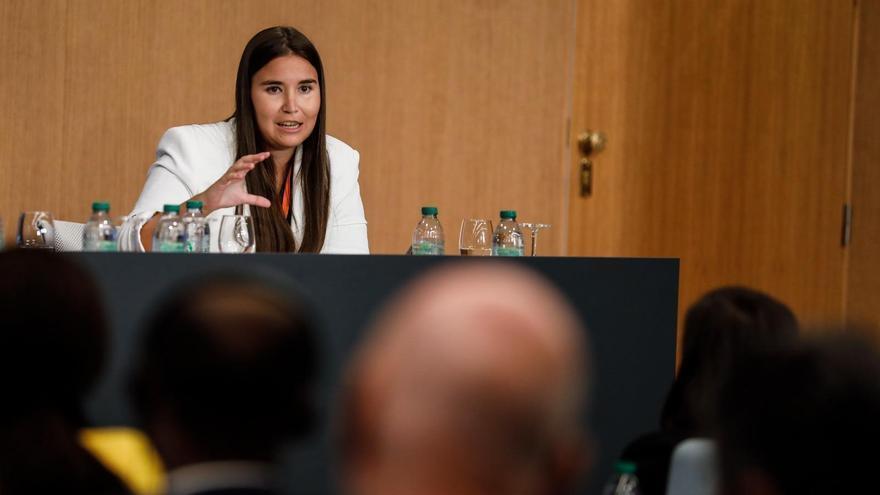
We spoke with its director, Beatriz de León Cobo, a specialist in the Sahel and migration movements between West Africa and Europe, about today’s migration challenges, the limitations of European policies, and what she considers the most realistic solutions.
The Institute was created with a very clear mission: to be an independent center for research and reflection while also helping to translate that knowledge into public policy. We do not want to remain solely within academia; we want to generate practical recommendations that can assist decision-makers.
We felt this was especially necessary because migration has become one of the most polarized issues in public debate. There is a great deal of emotion, many simplifications, and sometimes very little room for rigorous analysis. Yet we are dealing with an extraordinarily complex public policy issue.
Migration is not a single reality. Legal immigration is not the same as asylum, illegal immigration, unaccompanied minors, or second-generation communities. Very often, we use a single word to describe completely different phenomena. What we are trying to do is introduce nuance and produce analysis that reflects that complexity.
I believe it remains manageable. The question is how it is managed and over what time horizon.
When there is political will, results can be achieved. We have seen this through certain cooperation and security agreements with countries of origin and transit that have helped reduce some migration flows. The problem arises when temporary improvements are mistaken for structural solutions.
A significant part of the political debate focuses on responding to immediate emergencies. That is understandable because governments have to deal with concrete situations. But if the causes driving migration are not addressed, the phenomenon eventually reappears.
Too often, simple solutions are sought for extraordinarily complex problems. Reinforcing a border or deploying additional resources may work for a period of time, but the underlying issue remains. Migration dynamics are linked to economic, demographic, educational, political, and security factors that require much broader strategies.
It depends greatly on the country and the specific region being analyzed. The reality in the Canary Islands is very different from that of a depopulated area in inland Spain, for example. The same applies when comparing it to France or the United Kingdom. Likewise, the situation in major metropolitan areas differs from that of territories that lose population year after year.
There are sectors of the European economy that currently depend on foreign workers. At the same time, there are places where certain infrastructures and public services are under clear pressure. That is why it is difficult to provide a one-size-fits-all answer.
As for illegal immigration, there are specific challenges. Many of the people arriving through these routes have experienced exploitation, violence, or extreme hardship during their journey. This creates additional vulnerabilities and integration difficulties that require targeted responses.
The key is to analyze each situation individually. I do not believe there is a single solution that works for all migration realities.
Probably the tendency to oversimplify it.
What is happening in the Sahel today is an overlap of multiple crises. There is an established presence of groups linked to Al-Qaeda and ISIS, institutional fragility, population displacement, economic decline, and governance problems. These phenomena reinforce one another.
One of the most common simplifications is the assumption that every episode of violence automatically leads to more migration toward Europe. It does not work that way. When a community is affected by a lack of security, it usually moves first within its own country or to neighboring states. Most population movements continue to take place within Africa.
That said, lack of security does have very significant indirect consequences. It undermines economic activity, agriculture, trade, and employment opportunities. When this situation persists for years, migration pressure increases.
It is also important to remember that some migration patterns predate the current security crisis. Certain West African communities have been migrating to Europe for decades. That is why overly simplistic explanations should be avoided.
There is a security dimension that should not be ignored, but exaggerations should also be avoided.
In the Sahel, we see an overlap of networks involved in human trafficking, arms trafficking, and other illicit markets operating in environments where armed groups are also present. Clearly, this represents a risk and is one of the reasons why Europe continues to invest significant resources in stabilizing the region.
However, we should not automatically assume that those arriving in Europe are part of these structures.
It is a very broad reform, and it remains to be seen how it will function in practice.
It is often presented as if it were a single measure, when in reality it incorporates numerous regulations and mechanisms related to asylum procedures, border management, cooperation with third countries, returns, and visas.
From a technical perspective, what truly matters is implementation. Policies can appear solid on paper yet produce very different results once they are applied on the ground.
We are particularly interested in examining how the Pact will affect specific locations such as the Canary Islands and Europe’s relationship with African countries of origin and transit. That is where we will be able to determine whether it addresses structural problems or merely improves certain aspects of management.
It is a term that I consider politically charged and legally ambiguous.
If we are talking about the return of people who are in the country illegally or asylum seekers whose applications have been definitively rejected, then we are dealing with issues that are part of any migration system and that depend heavily on readmission agreements with countries of origin.
However, when the concept is expanded to include much broader categories of people, enormous legal, economic, and operational difficulties arise.
Migration realities are far too diverse to be addressed through a single formula. Different situations require different responses.
They should stop searching for simple solutions.
Migration is a structural reality that will remain part of Europe for decades to come. Precisely for that reason, we need policies that are more precise, more technical, and more focused on the long term.
That means working with countries of origin and transit, gaining a better understanding of different migration dynamics, and designing responses tailored to each context. Slogans may help win political debates, but they rarely solve complex problems.