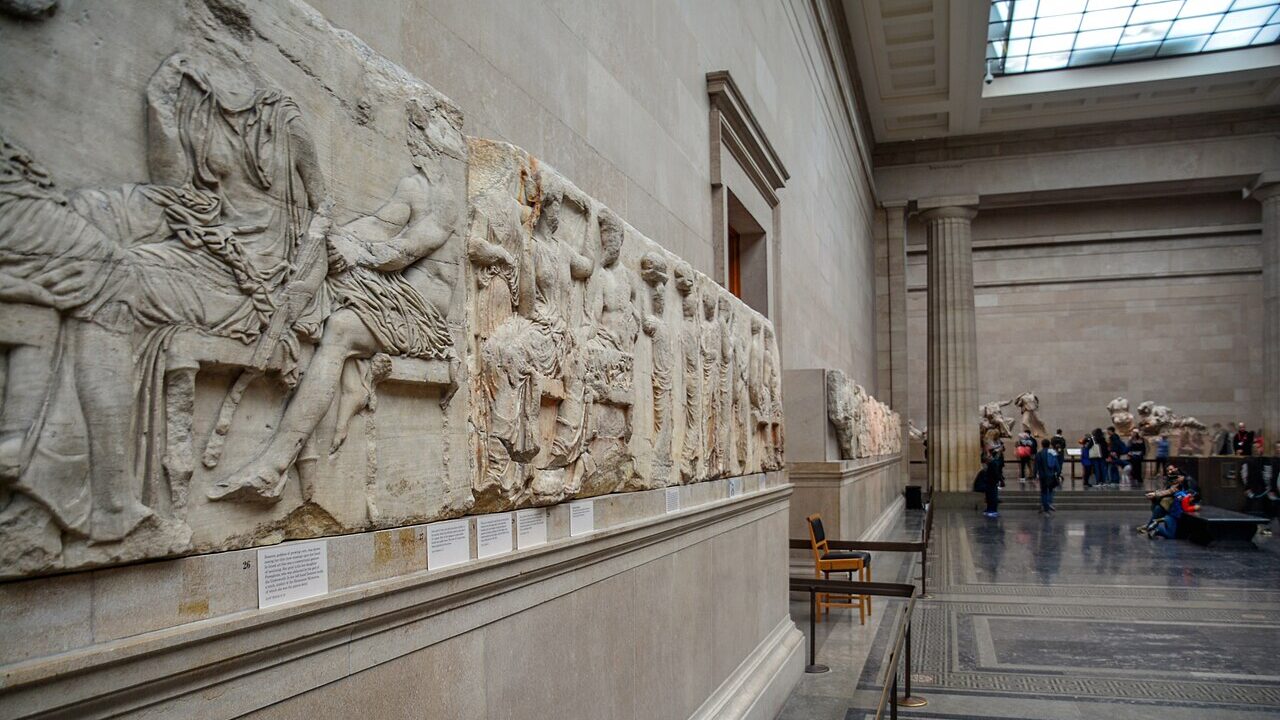
Elgin Marbles in the British Museum.
London Borough of Camden: British Museum – Elgin Marbles by Lewis Clarke, CC BY-SA 2.0, via Wikimedia Commons

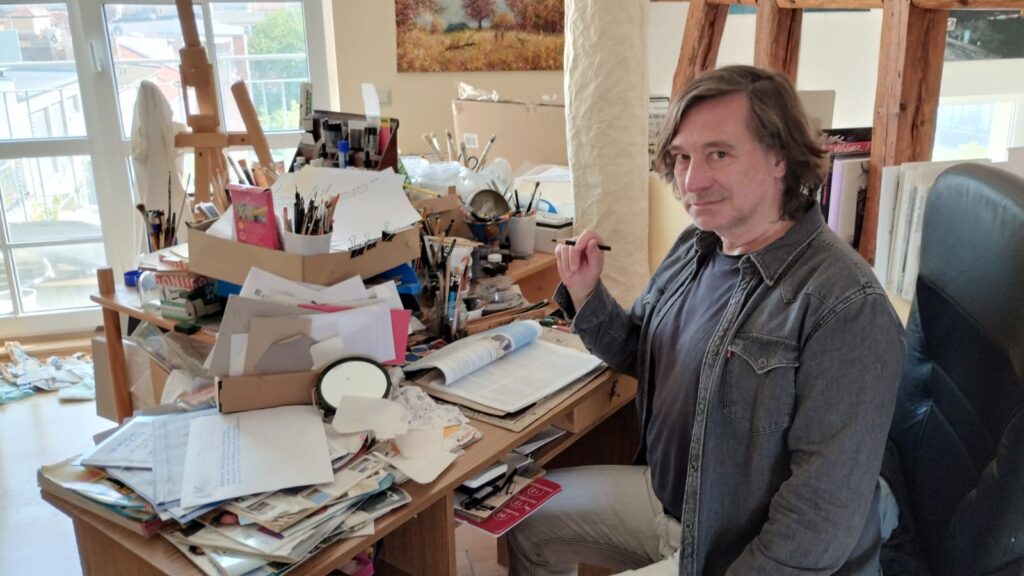
A classical archaeologist trained in Sicily and Athens, Mario Trabucco della Torretta’s expertise ranges from ancient Greek architecture to the ancient economy of Athens. Since 2022, he has been a prominent advocate for keeping the Elgin Marbles in the British Museum, with numerous articles and appearances in British and international media, both in print and broadcast. You can find out more at https://linktr.ee/elginmarbles or on his X profile.
This cancellation is a compliment of sorts, I guess. When the Acropolis Museum decides that an archaeologist is persona non grata simply because he refuses to genuflect before their repatriation dogma, they aren’t punishing me—they are exposing their own intellectual bankruptcy. They are terrified of an open debate because they know their case is built on sand. If you cannot endure a dissenting voice, you clearly lack the confidence in your own narrative. Unfortunately, this means they attack the person rather than the argument, which can be difficult at times. But it doesn’t stop me for a second.
As they often point out, they have been asking for them since soon after the formation of the modern Greek state. But it doesn’t matter how long you ask for something if you do it for the wrong reasons. One of these reasons is that they have construed the Parthenon as a national symbol, and therefore see the reunification of the scattered members of the temple as the completion of a project of national renewal. But all of this ideological machinery postdates Elgin’s acquisition of the marbles by decades. And like all ideologies, it doesn’t admit contradiction, not even in the face of historical evidence. But while all this is an argument to stop them from claiming them, it is not enough, on its own,to say we should keep them. It is not just a matter of not giving up to narrow ethnonationalism; it is a battle to preserve an authentically British cultural asset. The Marbles didn’t just materialise one day in the British Museum: their removal is a labour of antiquarian love, and a display of British ingenuity, which brought Lord Elgin to upend his entire life, career, and fortune, to rescue something he thought was at one time critically important and fatally endangered. This is a very British phenomenon, which can only be explained by looking at what was happening in the British cultural world after the Enlightenment. But the removal did not just have a British cause, it also had very British consequences, both in terms of the art which the Marbles inspired (from Alma Tadema to Mary Shelley, from Keats to our gold sovereign coins) and in giving a new birth to archaeology as a science. They deserve their place in the British Museum, and ripping them away from this new context would be an act of cultural vandalism, as Sir David Wilson once famously said.
It is a labour of rigour. My interest was sparked when the archaeological museum of my hometown of Palermo, in Sicily, decided to ‘return’ to Athens their own small fragment of the Parthenon Frieze, the so-called Fagan Fragment. This move, made for what we might call ‘woke’ reasons, struck me as a wound to Sicilian history and heritage. That bit of the Parthenon was our story; it was there for a reason. How could officials just erase this history and illegally take away a piece of the cultural heritage of Sicily as if it had no importance? As a classical archaeologist, I grew tired of the historical gaslighting. The narrative of ‘stolen goods’ is a toxic fairy tale sold to a public that has forgotten how to think critically. Since that moment, my quest is simple: to be the spanner in the works of this lazy, moralising, ‘decolonising’ industry, and to remind the world that historical objects have stories that go beyond the mere moment of their creation, and that these stories, which are also our stories, bring them around a lot. We have no right to pick and choose which pages of these stories we like and which ones we want to bury under the sand. So I started digging, so to speak, and it made only sense that I should take the bull by the horns and get stuck into the longest-running art-law dispute there is: the claim for the Elgin Marbles.
The Turkish delegation’s latest tantrum is a predictable comedy of errors. They claim the firman never existed because they cannot find a scribbled note in their own chaotic archives? [Editor’s note: Britain has historically cited a 1801 Ottoman firman, or a document referred to as one, obtained by Lord Elgin as legal permission to remove sculptures from the Acropolis.] Please. We have the Italian translation, we know the history of its drafting, and we have the corroboration of every traveller of the age (including Byron, the great enemy of Elgin!). On top of all this, we have official internal Ottoman memos which reference the previous permission and authorise the export. To pretend this official permission is a fiction because of a missing ledger in Istanbul is like denying that Alexander the Great never ever died, just because we can’t find his tomb. They are even looking in the wrong place, as we know that the original firman was brought to Athens by an Imperial messenger, and kept in the archives there. It is unfortunate that the Greek revolutionaries burned it down as soon as they started revolting against the Ottomans in 1821. Talking of the Ottomans, what are Turkey’s motives for backing Athens on this? Are they going for the Altar of Pergamon next, and maybe are building up support?
It is a disastrous descent into cultural balkanisation. The restitution lobby is obsessively parochial; they want to treat human history as if it were a game of musical chairs played by modern nation-states. Why should culture be bound by specific modern borders? It is narrow-minded and forgets that museums are places where we learn about differences rather than homogeneity. By visiting a museum, you discover that across time and space, humankind faced the same issues and struggles we do, but found countless different ways to deal with them. This appreciation and understanding of difference is a value we need to nurture now more than ever.
Universal museums are the product of a very specific intellectual project, the Enlightenment. Like all periods in history, it comes with good things such as the universal aspiration for individual freedom, universal suffrage, the separation of Church and State, and the immense trust in the human capacity to discover, understand, and improve the world. These museums are to be understood as instrumental to this civilisational mission, and the deeds of the men and women who contributed to those collections are their effort to be part of something greater than themselves, and for the benefit of us all. We must defend all this because it is part of our story, part of who we are. This doesn’t necessarily mean we must uncritically accept all of it or repeat that model as is. But instead of tearing the monument down, we need to study it, explain it, and learn from it.
That argument hasn’t become unfashionable because it’s incorrect, but because it is an impediment to the current project of cultural liquidation. To frame the British Museum as a ‘relic of empire’ is a lazy, reductive historical shortcut. It ignores the actual genesis of the institution. The museum was founded in 1753 on the bequest of Sir Hans Sloane, a private individual who wanted his immense, eclectic collection of books, natural specimens, and antiquities to be preserved for the ‘edification of the people.’ It was never a state-mandated monument to conquest; it was a pioneering act of private philanthropy aimed at public knowledge. The same goes for the Elgin Marbles, nothing imperial about their acquisition. Elgin acted independently from government, with his own private means, and for the progress of the arts in Britain, as he said himself.
The ‘universalist’ ideal, if we must call it that, is simply the belief that history is a shared human ledger. The British Museum operates as a permanent record of that ledger. When you begin to dismantle this by returning objects to the specific geographic borders where they were found, you are not ‘decolonising’ history; you are destroying the ability to compare, contrast, and contextualise human history. This argument has become unfashionable precisely because it relies on a long-term, objective view of human progress—a view that makes modern activists extremely uncomfortable. It is far easier to burst into righteous indignation about ‘imperialism’ than it is to deal with the complexities of how and why these items were actually acquired and why they have been so carefully guarded ever since. We are living in an era that prioritises immediate political satisfaction of identity groups over the long-term stewardship of the historical record. The activists don’t want the history of mankind to ‘belong to everyone’; they want to fracture that history into competing territories, so they can preside over their own little corners of the past and subjectively rewrite the narrative to their advantage.
These sculptures have spent 200 years in London, during which time they have been studied, documented, and debated by our greatest minds for generations. They are woven into the very fabric of our national story with monuments up and down the country referencing or openly copying them, and works of our artists being inspired by them. And all of this happened for a reason, because of our own feeling of being descendants and inheritors of this Classical legacy. They aren’t just Greek antiquities to us; they are a vital, inseparable chapter in the life of this country. The big mistake made by the Greeks is saying, in the same breath, that the Parthenon is a foundational moment in Western civilisation on the one hand, and that they are the only ones entitled to steward that legacy on the other. We have the same right to keep our Greek and Roman antiquities as they do, precisely because we share the same cultural roots, like cousins who share a cherished memory of a common grandfather.
The Western impulse to collect, document, and preserve has saved treasures that, left in situ, would have been ground down for mortar or blown to bits in the next local scuffle. To deride our custodianship is an act of supreme ingratitude—or, more likely, a deliberate historical amnesia that ignores the reality of what happens to unprotected heritage in the ‘real world.’ But if we, in a supreme act of self-sabotage, decide to forget all this and send heritage items back based on the idea that the acquisition was illegal, immoral, and unjust, then I find it ludicrous to add protocols and limitations to what the receiver wants to do with the assets. Either we recognise that we have a stewardship duty, and we keep the objects, or we give them back and forget about them. You can’t keep one foot in two shoes.
The modern caricature of the European explorer as a greedy plunderer is a dishonest, infantile fiction. These men were driven by an insatiable, romantic intellectual hunger. When they arrived in these territories, they didn’t just take; they documented, translated, and immortalised cultures that were already being obliterated by neglect, and their work represents, in many cases, the only way these cultures know anything at all about their own past. We are not talking about greedy bandits, but men of a grandeur of vision that the small-minded activists of today can neither understand nor forgive. We should be much more fair to their memory than we currently are. The Greeks should definitely think about a statue of Elgin under the Acropolis.
In this climate of self-loathing? Not a chance. We have lost the stomach for our own virtues. If someone proposed building a national museum of this scale today, they would be immediately strangled in the cradle by activists screeching about ‘appropriation.’ We have lost confidence in our own national institutions, and that is a far greater tragedy than any imaginary ‘theft’ of a statue. On the other side, there are places that still have an appetite for this kind of project, see, for example, in the Middle East, with projects such as the Louvre Abu Dhabi.
The principle is simple: The rule of law and the sanctity of historical fact. If an item was acquired legally under the prevailing laws of its time, then the debate is over. You cannot go back 200 years and apply the sensibilities of a Twitter mob to an 18th-century contract. Restitution is for unambiguous, recent, violent theft—not a pretext for rewriting the past to suit the political grievances of the present.
We are in a tailspin toward total cultural atomisation. We are trading a magnificent, established inheritance for a miserable, fragmented future where art is just another property dispute in the court of ‘identity.’ If we allow heritage to be stripped of its significance and handed over to competing tribes, we won’t just lose our museums—we will lose the ability to see ourselves in the history of others. We are, quite simply, losing our marbles.