Nicola Kedhi
courtesy of Nicola Kedhi
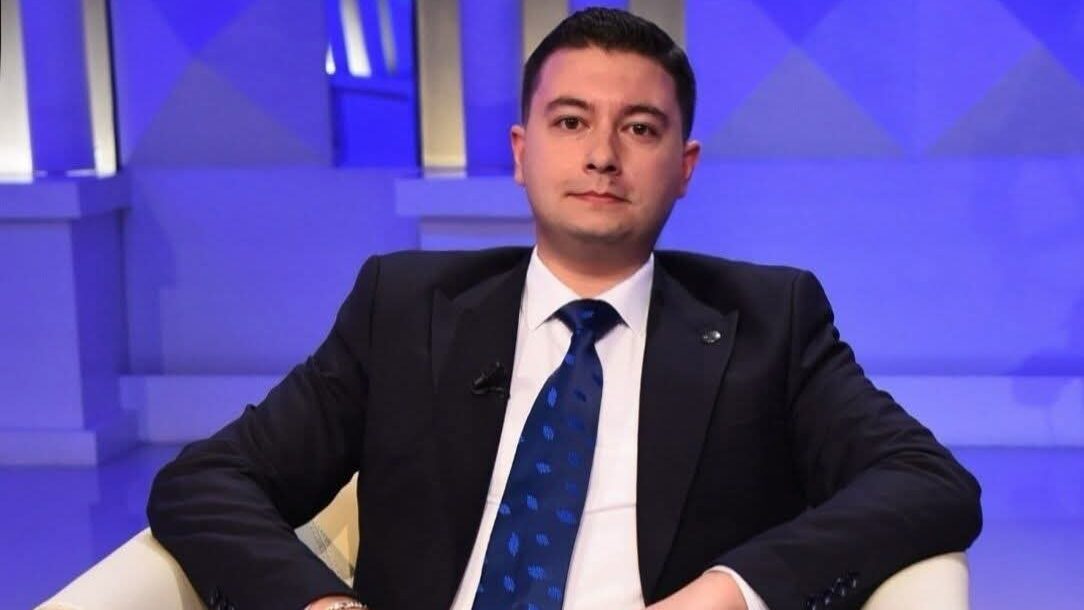
Nikola Kedhi is the Executive Director of the Albanian Conservative Institute (ACI), a think tank founded in 2024 in Tirana to give the Albanian center-right an institutional infrastructure beyond political parties. A visiting fellow at the Danube Institute (2024-2025), Kedhi has published extensively across Europe and the United States, with contributions in Fox News, Newsweek, the American Spectator, Il Giornale, andThe European Conservative Magazine.
Our objectives are to translate our conservative principles into policies on the issues that define this decade: hard and hybrid security, energy independence, productive economic reform, the rule of law, protecting the family and individual freedoms, and the governance of artificial intelligence and emerging technologies.
ACI was built to be a trusted partner of the transatlantic conservative family and of the alliance as a whole, in a region with fragile balances. We also believe think tanks should not just react to politics but shape it. We plan on publishing soon a foreign policy doctrine of Principled Realism, another economic doctrine that moves Albania from the economy of illusion to a productive economy, and other studies and proposals on education, healthcare, urban development, security, digital infrastructure, and EU integration. The next phase of our country needs a serious intellectual base, not slogans.
I am proud to say that we are the first Albanian organization to become a partner of the IDU, in addition to the two Albanian political parties, the Democratic Party and the Republican Party. For us, the partnership at Zagreb was not symbolic. We were there because we want to be, and intend to remain, a reliable partner for the IDU, our European partners and our American counterparts.
There were several important discussions and some conclusions that I would highlight. First, there needs to be a new strengthened transatlantic relationship in terms of defense industrial capacity, and the security of critical infrastructure. The world has changed. In this environment, NATO and the wider transatlantic community cannot rely only on declarations. They need concrete steps and actions.
That means a new transatlantic compact built around defense-industrial production, technological superiority, and the protection of critical infrastructure. The question is not only whether the West has the right values, but whether it has the productive power, industrial base, and institutional resilience to defend them. I think today it has become clear that values without power are vulnerable, and alliances without industrial capacity are fragile.
There were also broader conversations on demographics, migration, and the technological transformation that is reshaping our economies. Europe is aging, the Balkans are emptying, and the artificial intelligence transition will redraw labor markets in ways the current Albanian governance model is wholly unprepared to manage. The center-right needs a coherent answer that goes beyond either open borders or pure deterrence, and that takes the AI and energy transitions seriously as questions of national sovereignty.
It seems close on paper, but much further in substance, and the contrast between Montenegro and Albania makes the point clearly. In April, the EU approved an ad hoc working group to begin drafting Montenegro’s accession treaty, with Podgorica targeting full membership by 2028. Montenegro is moving toward integration, but not Albania. The report by the European Parliament’s Committee on Foreign Affairs (AFET), adopted on May 5, makes it clear: Albania’s progress in opening negotiation clusters is viewed positively, but it conditions everything on what comes next. MEPs stress the need for restoring the rule of law and the fight against corruption, and the report itself notes that Albania has fallen 11 places in the 2025 Transparency International Corruption Perceptions Index in one year. It raises concerns about the misuse of administrative resources, the blurring of the line between state and the party in power, vote-buying allegations, voter pressure, judicial pressures, and the implementation of Constitutional Court decisions. These are not opposition talking points anymore. They are the European Parliament’s own language.
The AFET report is explicit that the credibility of enlargement depends on strict conditionality, merit-based progress, and real implementation of reforms, not the formal adoption of legislation. For us, that is the right line.Integration means meeting standards for our own sake first, and for the strength of the continent second. It is not homework imposed on us from outside.
There have been 8 international resolutions on Albania in the last 14 months. V-Dem Institute’s 2026 ranking classifies Albania as an “electoral autocracy.” The OSCE/ODIHR report on the May 2025 elections mentions the blurring of the line between state and party, the use of state resources for electoral purposes, the pressure on voters and for the first time, the influence of criminal groups. A report of the United States State Department identifies Albania as a hub for narcotrafficking. The European Parliament’s own resolution calls for intensified action against money laundering and drug trafficking networks.
On the other hand, the Special Prosecution Office indicted the deputy prime minister on charges of corruption in major infrastructure tenders. The parliamentary majority refused to lift her immunity, which was a main factor for the EU integration process being slowed down. The government then pushed amendments to shield cabinet ministers, and even the prime minister, from judicial suspension during investigations.
Other serious examples include the operation against the National Agency for the Information Society (AKSHI)—the body that manages the state’s digital and surveillance infrastructure—which exposed activities carried out within the framework of a structured criminal organization, and the concession of the Port of Durrës to operators linked to sanctioned entities associated with Russia. A surveillance infrastructure contract was signed with a foreign vendor whose military-intelligence linkages have been flagged in the United States Congress.
The protests have not ended. They have continued, in different forms, since December.The question is not why people are protesting. It is why they are not protesting more. Albania today is what one might call an exit society. Since 2014, more than 1.1 million Albanians have fled towards the Schengen area alone. In seven of our regions, deaths now exceed births. Sadly, the residues of the communist dictatorship, the instinct to withdraw from the public sphere because it is dangerous, still shape how Albanians think about political risk. Breaking that pattern is genuinely difficult.
And yet the center-right and the free citizens of this country are resisting, and they need solidarity from our European and American partners because what is being defended in Tirana is not only Albanian democracy. It is the eastern frontier of European democratic order.
The Albanian conservatives, led by the Democratic Party, have a vision for this country, and we have the policies, the team, and the plan to deliver it. Between 2005 and 2013, under the center-right leadership of the current opposition leader Sali Berisha, we moved in the right direction: NATO accession, energy reform, the construction of the Trans Adriatic Pipeline that strengthened Europe’s energy security and reduced dependence on Russia, visa liberalization, tax cuts, and policies that encouraged production. That period is proof that this country can move, and move quickly, when it is governed seriously.
The situation has shifted. The State Department under the new administration has indicated that Secretary Blinken’s decision to declare Berisha non grata was considered a political act of the previous administration.
The 2021 measure was always politically motivated: The Biden State Department, with the active encouragement of the Albanian PM and the broader network that operates around him, such as the Open Society Foundation, used persona non grata not as an anti-corruption instrument but as a political weapon against the conservative leader of the Albanian opposition. Trump’s victory has not erased that injustice overnight, and we do not pretend otherwise, but ended the bipartisan American cover that the Socialist government had enjoyed for over a decade. The relationship is being rebuilt on a more honest basis, with the recognition that Albania’s center-right is the natural ally of the United States in this part of Europe. That is the real shift, and it is more important than any single visa decision.
The strategic partnership between Albania and Italy was not invented by Edi Rama. It was sanctioned in the Declaration of Strategic Partnership signed and entered into force on February 12, 2010, between the Berisha and Berlusconi governments. Albania’s own Ministry for Europe and Foreign Affairs still refers to that declaration as the basis of the strategic partnership between the two countries. This matters because it shows what serious statecraft looks like.
The current agreement on migrants, as was negotiated, has been an operational failure. The reported cost has reached around 670 million euros for the 2024–2028 period, while the centers have struggled to function as initially intended. Rama and Meloni have signed a flagship deal that has produced a near-empty facility and a diplomatic liability.
What did Albania actually receive in exchange? Some EU goodwill, a photo opportunity with Prime Minister Meloni, and a precedent of hosting another country’s migration processing on Albanian soil without genuine parliamentary scrutiny.
The deeper problem is method. Rama treats foreign policy as personal branding. Albania can be a serious partner of Italy, the European Union, and the transatlantic alliance, including on migration, but only if we negotiate as a state with a strategy, not as a stage for one man’s diplomatic theater.