Morocco’s 2-0 defeat to France in the World Cup quarter-finals produced sharply contrasting scenes across Europe. Paris, where authorities had feared the most serious incidents, passed through the night without major disruption. In London and Düsseldorf, by contrast, Morocco’s elimination ended in clashes, objects being thrown and police officers being injured.
The unrest in London was concentrated on Edgware Road, one of the areas of the British capital with the largest Arab population. Dozens of supporters occupied the road after the match, disrupted traffic and surrounded the officers sent to the scene.
Footage shared on social media shows flares, thick smoke, objects being thrown and riot police units advancing with shields between police vehicles. One Metropolitan Police officer suffered head injuries and had to be hospitalized after allegedly being struck with a glass bottle. Four people were arrested over the incidents, which British police described as “violent disorder.”
🇬🇧 London Riots last night due to Morroco being knocked out of the World Cup.
— H A Y L E Y (@Gruodis80) July 10, 2026
England shouldn’t be being affected by African football results! Deport the lot of them! pic.twitter.com/qYXJQZapnp
Disorder was also reported in Düsseldorf, Germany, where around 1,500 supporters gathered near the central railway station. The atmosphere was initially peaceful but later turned aggressive, according to the police. Firecrackers and glass bottles were deliberately thrown at officers, injuring three of them. One officer was hurt badly enough to be unable to continue his duty. Two men were arrested and several criminal investigations were opened.
German police chase rioting Moroccan fans in Düsseldorf after Morocco lost to France in the World Cup
— Visegrád 24 (@visegrad24) July 10, 2026
🇩🇪🇲🇦🇫🇷 pic.twitter.com/HqIFW3ofIn
The contrast with France was particularly visible on this occasion. The French government had mobilised more than 20,000 police officers and gendarmes across the country amid fears that the match could trigger clashes between supporters of both teams. Around 8,000 officers were deployed in Paris alone.
The operation included surveillance drones, traffic restrictions and the temporary closure of metro stations near the Champs-Élysées, Place de la Bastille and other locations considered sensitive. Authorities also blocked vehicle access to several streets and warned that the use of pyrotechnics, as well as attacks on shops or the security forces, would not be tolerated.
The security operation reflected memories of the unrest recorded after other major sporting events, including the World Cup semi-final between France and Morocco in 2022. This time, however, celebrations by French supporters prevailed on the Champs-Élysées and elsewhere in the capital, without the kind of escalation that authorities had feared.
The incidents in London and Düsseldorf follow unrest involving groups of Moroccan supporters during earlier stages of the tournament in Dutch cities such as The Hague and Rotterdam, where police were attacked with stones, glass and fireworks.
British police officers fleeing rioting supporters of Morocco in London after the France-Morocco game
— Visegrád 24 (@visegrad24) July 10, 2026
🇬🇧🇲🇦🇫🇷 pic.twitter.com/2wd5jGyGpo
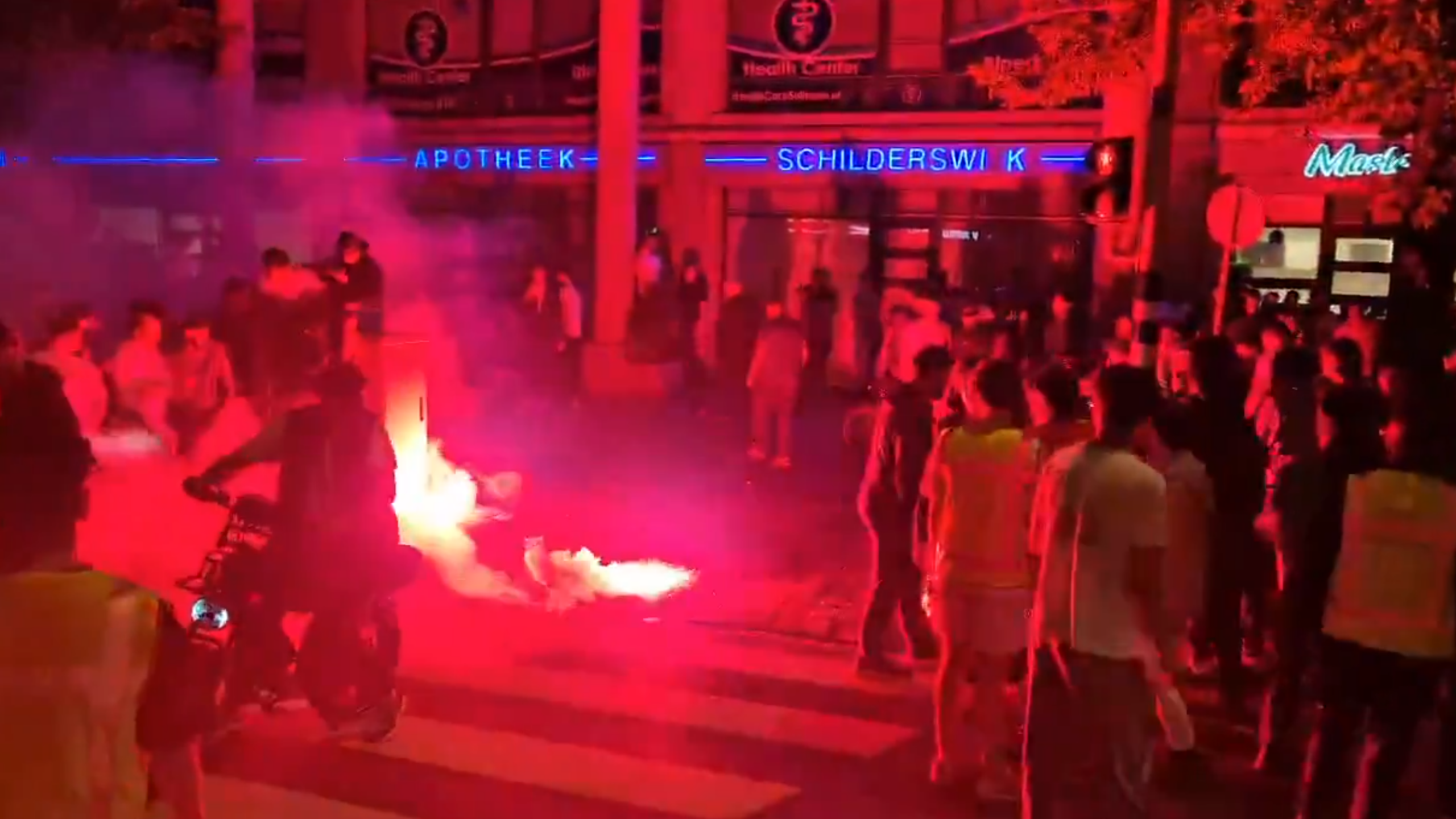
Disorder was also reported in the Netherlands. Riot police intervened in Amsterdam, Rotterdam and The Hague after groups of Moroccan supporters remained on the streets following the defeat. Eight people were arrested in Amsterdam for public-order offences, dangerous driving and allegedly throwing a brick at a police officer. In Rotterdam, riot police dispersed several hundred people who refused to leave, while officers in The Hague’s Schilderswijk district were targeted with glass bottles.
The fact that the situation did not escalate in Paris and elsewhere in France is most likely the result of the authorities’ preventive capacity. France put an exceptional security operation in place before the trouble began. In others, police had to intervene after large crowds had already gathered and the situation had begun to deteriorate.