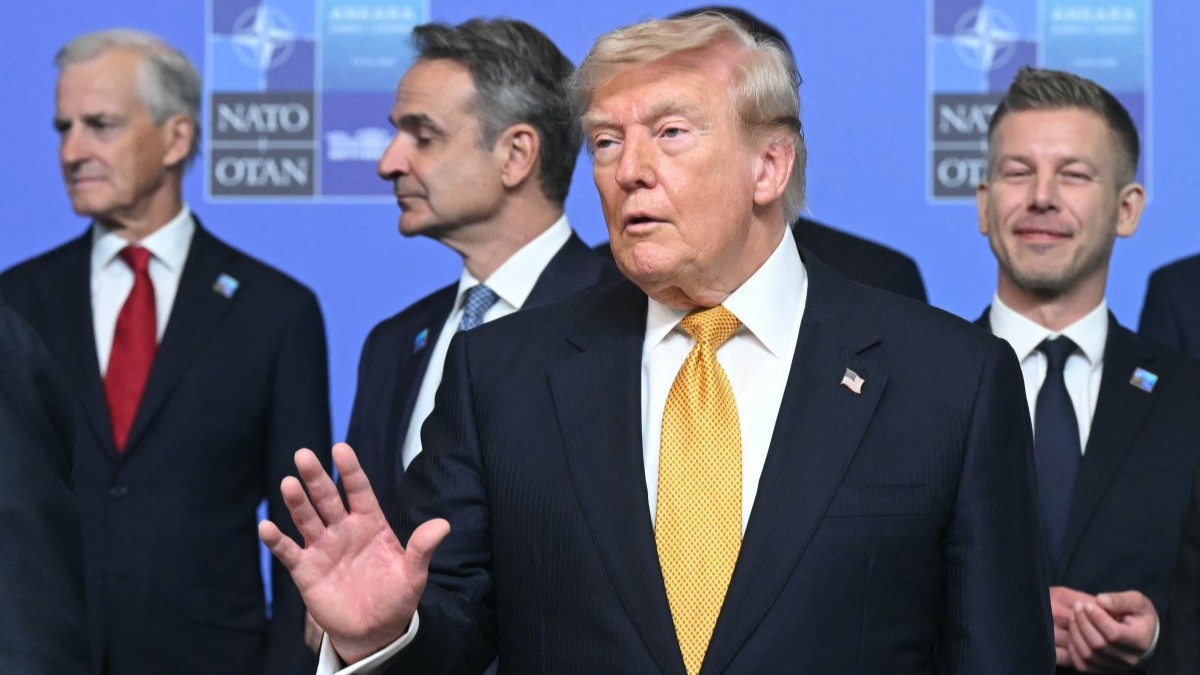
Hungarian Prime Minister Péter Magyar is finding it hard to explain to his voters why U.S. President Donald Trump seemingly ignored him at the NATO summit in Ankara two days ago.
The widely shared video shows Trump turning towards European prime ministers standing behind him at the NATO leaders’ official group photograph. He seems to extend his hand to greet Magyar, only to then shake Icelandic Prime Minister Kristrún Frostadóttir’s hand.
Magyar appears to expect the gesture to be directed at him, and looks embarrassed when he realises this is not the case.
Itt jobban látszik. Hatalmas átverés! Nagy troll ez a Trump elnök… Figyeld a nyakkendőjét (üzenet1 – utálja a narancs színt) és tudd, hogy KERÜLŐÚTON, Magyarország légterén keresztül ment az Airforce One Ankarába! (Üzenet2) pic.twitter.com/ZjwNumxul7
— Csaba Attila Nagy (@CsabaAttilaNag) July 9, 2026
The moment quickly spread across social media, with political commentators debating whether the Hungarian prime minister had been publicly snubbed.
Magyar has rejected that interpretation, insisting that he and Trump had already met privately beforehand, and that they had shaken hands during the rehearsal for the group photograph, before television cameras and photographers were let into the room.
Magyar claims Trump congratulated him on becoming Hungary’s new prime minister.
Responding to the controversy, Magyar once again took the opportunity to take a swipe at right-wing media outlets, saying he was pleased they had found “some joy before they disappear.”
Whether a handshake did indeed take place or not, publicly snubbing Magyar could easily have been the intention of Donald Trump.
Before Hungary’s April election, Trump publicly endorsed conservative leader and then-Prime Minister Viktor Orbán for re-election, describing him as a “strong and powerful leader” and a “true friend.”
Their longstanding political alliance stems from their shared conservative positions on issues including migration, traditional family policies, Christian values, and national sovereignty.
Orbán’s defeat by Magyar’s Tisza Party marks a significant shift in Hungarian politics after sixteen years of conservative rule. The new government is already showing signs of wanting to follow a globalist path and implement EU-aligned policies.